The quietest hours of your week happen when nobody is home. Or else the quiet presses hard enough to send you out into the city simply to be near people. The same evening works as a reward and as a sentence, depending on the week. The phone is full and there is nobody to tell. Thirty cards later, here is what the archive knows.
YOUR COMPASS ON THIS ROUTE
STATION 1 / 12
Whoever lives alone at thirty and needs nobody is missing something that matters.
Aristotle treated the need for other people as a fact about the species, and he never called it a weakness in individuals. A human being comes into his own shape among others, the way speech becomes speech only between two people, and the city is where the capacity gets exercised. Hence the line about the man who lives outside it by his own nature and has to be either less than human or more. In the Ethics he presses further: nobody would choose to live without friends even holding every other good, because a friend works as a second self, a surface on which your own life becomes visible. Self-sufficiency at thirty breaks no rule. On Aristotle's account it leaves a person examining himself with no mirror in the room and fairly confident that he can see everything.
He who is unable to live in society, or who has no need because he is sufficient for himself, must be either a beast or a god: he is no part of a state.
Cicero's book on friendship is put in the mouth of an old man remembering a dead friend, which is already part of the argument: the loss shows the size of the thing. His test came to him third-hand from Archytas of Tarentum and it works on anybody. Imagine the finest sight available, the order of the universe laid open, and imagine having nobody to tell about it. The pleasure collapses. Cicero's own formulation asks what is sweeter than someone with whom you dare to speak of everything as you would with yourself, and he adds that a friend doubles a joy and lightens a grief. A best day spent alone and reported to no one is, on this measure, merely a long day. You said it would lose nothing. Cicero would ask something narrower: whether the silence was chosen or simply unbroken for want of anybody.
If a man could ascend to heaven and get a clear view of the natural order of the universe, and the beauty of the heavenly bodies, that wonderful spectacle would give him small pleasure, though nothing could be conceived more delightful if he had but had some one to whom to tell what he had seen.
Epicurus arranged his school as a household. Friends lived in one garden and saw each other daily, and the arrangement cancelled the need to arrange anything: an unannounced evening was simply an evening. He ranked friendship highest among the things a person can secure for himself, above almost every other good, because it is the one possession that keeps anxiety away without help from fortune. The move is worth watching, since he also taught that pleasure is the measure and pain the thing to avoid. A knock at the door costs you an evening you had plans for. It buys a decade of not being afraid. He would never send you knocking on the doors of strangers: the Garden was small and chosen. You counted the unannounced visit a kindness. Epicurus built an institution on that arithmetic and lived inside it to the end.
Aquinas worked with debts a person never contracted. What we owe parents can never be settled, since they handed over existence itself, and alongside it runs the debt of piety toward the people and the place that raised us. On top of that sits his account of friendship, which he treats as a form of the love owed to a neighbour and therefore as a thing with obligations attached. A man who has chosen to live alone made the choice as a creature fed by others, in a language he did not invent, with a trade somebody taught him. His conclusion is measured: solitude is a legitimate state, and monks live in it under a rule and inside an order. You voted that the solitary owes his visitors nothing. Aquinas would grant it about strangers and then ask who exactly is standing at the door.
Paul answered a practical question from Corinth and answered it without decoration. He preferred the unmarried state and said so plainly, because a man with no household has his attention free for one thing. Then he named the limit. The capacity to carry solitude is a gift given to some, and whoever lacks it should marry, with no shame in it: better to marry than to burn. That makes marriage, in one of its aspects, a remedy, which sounds insulting until you notice that Paul thought remedies good and prescribed them. The care he asks for runs both ways: the married carry obligations the single do not, and he tells them to keep them. Your card says the married are first of all those who cannot bear being alone. Paul would sign it and add that solitude borne well brings nobody closer to God by itself.
But if they cannot contain, let them marry: for it is better to marry than to burn.
Pascal gathered nearly all human restlessness under one heading. Men go to war, buy a commission at a ruinous price, gamble, hunt, quarrel, take a post that eats their years, and the common factor is an inability to sit quietly in a room. Diversion is the name he gave it, and he refused the cheap moral. Diversion consoles us, he wrote, and it is the only thing that does; a man deprived of it stands in front of his own condition with nothing in between. The phone finishes the design. It is a room you can leave without standing up, always stocked, and it arrives before the question does. You said the phone stands in for company and that this is enough so far. Pascal would sign beside you and underline the last two words, because the question he meant keeps its own schedule.
All the unhappiness of men arises from one single fact, that they cannot stay quietly in their own chamber.
Rousseau put the trouble outside the person. In the state he imagined before society, a man is whole and unhurried, and what spoils him is the arrival of the comparing eye: property, and the need to be seen as something. Company brings that eye into the room. Living with other people means living inside their estimate of you, and the estimate asks for a performance that a solitary hour switches off. He spent his last years writing down walks taken alone and called the notebook a record of the hours in which he was most himself. He also broke with every friend he had, which he explained by their treachery and which his readers have explained otherwise. You said the calmest hours are the ones with nobody home. Rousseau would recognise the feeling and warn you that the comparing eye follows you indoors.
Schopenhauer derived the cost of company from a rule about groups. Every society runs on mutual accommodation, so the larger the gathering the smaller the portion of anyone that gets admitted to it, and a full room reduces everybody to what everybody can share. Fatigue after an evening is the bill for that reduction. He pushed the argument further than most readers want: whoever has inner resources finds solitude cheap, while whoever lacks them feels the whole weight of himself in an empty flat, so a verdict on company doubles as a verdict on the person. He kept a poodle and dined daily at the same table, which is a modest correction to his own portrait. You count the fatigue no fault. Schopenhauer would agree and add that it says something about the company and something about you.
All society necessarily involves, as the first condition of its existence, mutual accommodation and restraint upon the part of its members. This means that the larger it is, the more insipid will be its tone.
Descartes needed a place where nobody would interrupt him and found it inside a crowd. He chose Amsterdam over the salons of his own country and explained the choice in a letter: among a great busy multitude, each of them minding his own affairs, he could live as retired as in the loneliest desert, with the advantage that the bread arrived. Solitude, for him, was a working condition. The plan of the Discourse required clearing away every inherited opinion and rebuilding from one certainty, and that operation cannot be done in company, since a conversation keeps handing you other people's premises. Strangers suit it perfectly: present enough to keep the room warm, indifferent enough to leave your argument alone. You went out at two in the morning to be among people who owe you nothing. Descartes did his best work in that exact arrangement.
Marcus Aurelius wrote his book in camp on the Danube and addressed it to himself, which is what the Greek title says. No reader was wanted. The entries remind an emperor how to take an insult, how to handle a courtier, how to expect no gratitude, how to die, and they repeat because he kept needing the reminder. Behind the practice sits his claim that a person can withdraw into his own mind at any hour and find more quiet there than in any country house, provided there is something worth meeting inside. Writing makes the withdrawal checkable. A thought put into a sentence can be inspected tomorrow, which is more than a mood allows. In the notebook he was honest about the things that shamed him. You keep one nobody will read. Marcus would ask only whether you write down the parts you would rather leave out.
It is in thy power whenever thou shalt choose to retire into thyself. For nowhere either with more quiet or more freedom from trouble does a man retire than into his own soul.
Skovoroda came out of the Kyiv-Mohyla Academy with everything a career needs and declined the offers in sequence, ending as a teacher with no address, walking the roads of the Left Bank with a Bible and a flute. The refusals follow from one idea. Every person has a kindred labour he was made for, and outside it he wastes away however many friends sit at his table, while the work of finding it is done in one's own company. He read the command to know yourself as an order nobody can carry out in a crowd, and his epitaph says the world hunted him and failed to catch him. A year of silence is a cheap price on that accounting. You would trade a year with your friends for it. He would warn you about the second half: the road is easy, and listening once you have stopped is the labour.
Heidegger built his analysis of death on a feature of it nobody can arrange around: another person can die in your place, and then he is the one who dies. Your own dying stays yours and cannot be delegated, and it is the only item in a life about which this holds strictly. From there he drew the odd consequence that death is what first makes a life somebody's, since a run of days that could equally belong to anyone belongs to no one in particular. Being alone at the end is, on this reading, the same structure as owning the life. He was describing, and he offered no comfort. Your fear is of facing it with nobody there. Heidegger would say the friends at the bedside are real, that they walk you to a door which admits one at a time, and that this takes nothing away from you.
The deck drew one line and put everybody on it. At one end, solitude as a lack: a mirror missing from the room, and a debt to the people who raised you. At the other, solitude as the only condition in which a person stands at full height and can hear what he actually wants. Your swipes have set you somewhere along it, and the position shifts with the season. If your thumb kept siding with the city, open the record on Aristotle. If it kept siding with the road, start with Skovoroda's dossier.
SOURCES
Aristotle, Politics (tr. Benjamin Jowett) (tr.: ред.) · classics.mit.edu
Marcus Tullius Cicero, Laelius de Amicitia (tr. E. S. Shuckburgh) (tr.: ред.) · www.gutenberg.org
Paul of Tarsus, 1 Corinthians (King James Version) (tr.: ред.) · en.wikisource.org
Blaise Pascal, Pensées (tr. W. F. Trotter) (tr.: ред.) · www.gutenberg.org
Arthur Schopenhauer, Counsels and Maxims (tr. T. Bailey Saunders) (tr.: ред.) · www.gutenberg.org
Marcus Aurelius, Meditations (tr. George Long) (tr.: ред.) · classics.mit.edu
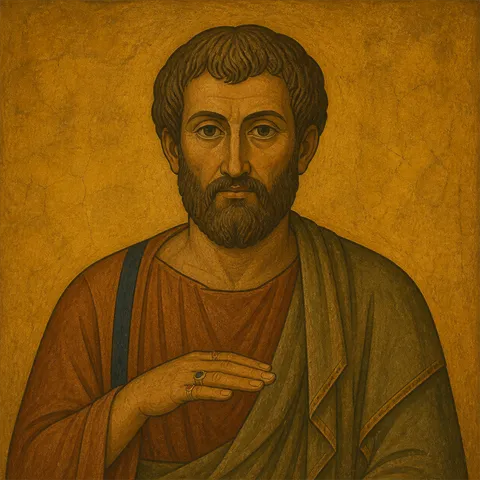 Aristotle
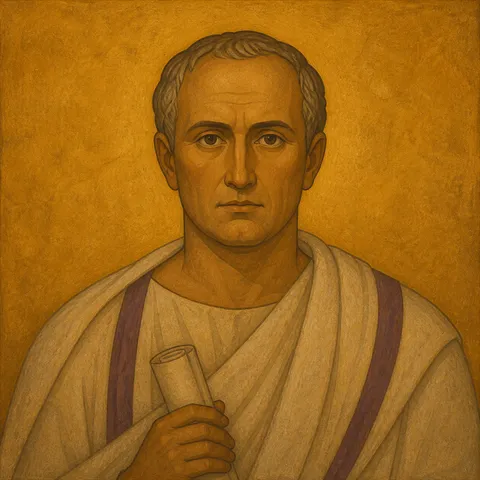 Marcus Tullius Cicero
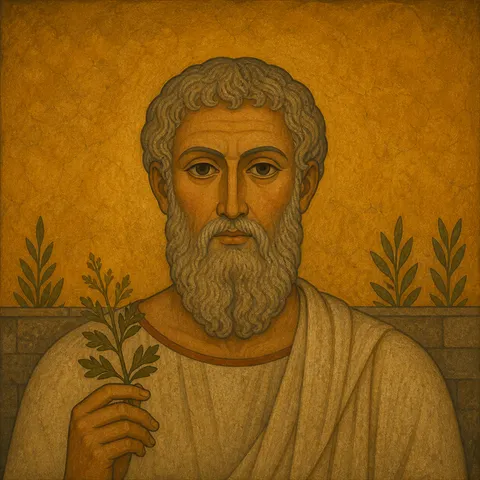 Epicurus
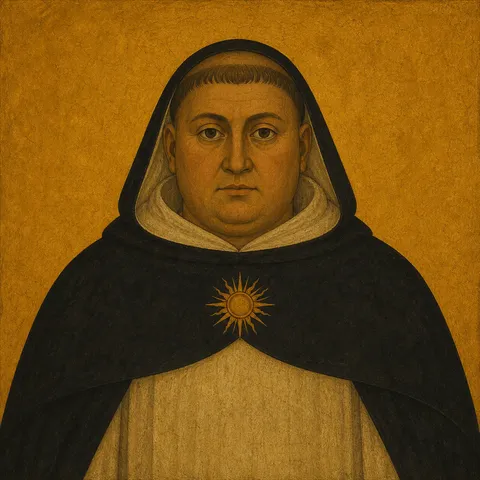 Thomas Aquinas
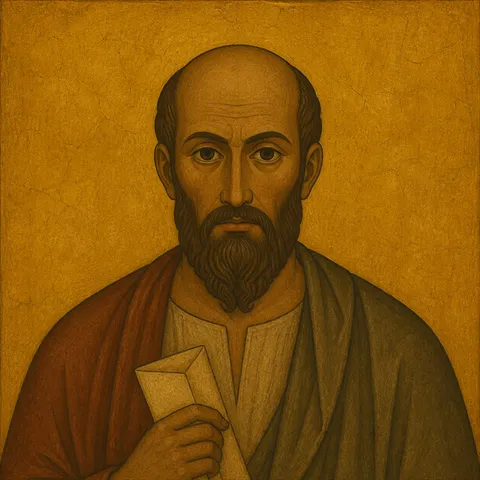 Paul of Tarsus
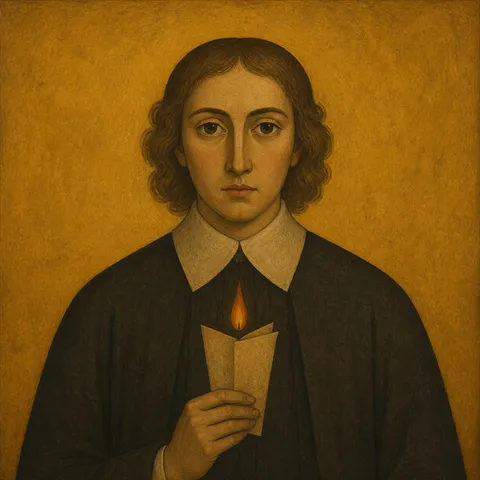 Blaise Pascal
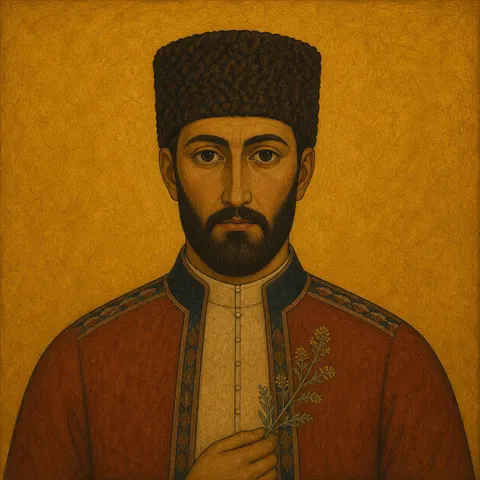 Jean-Jacques Rousseau
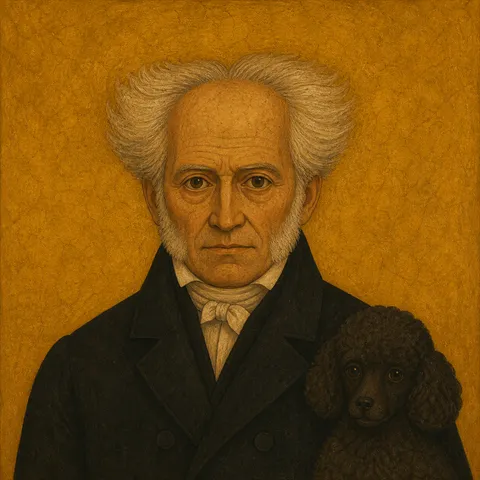 Arthur Schopenhauer
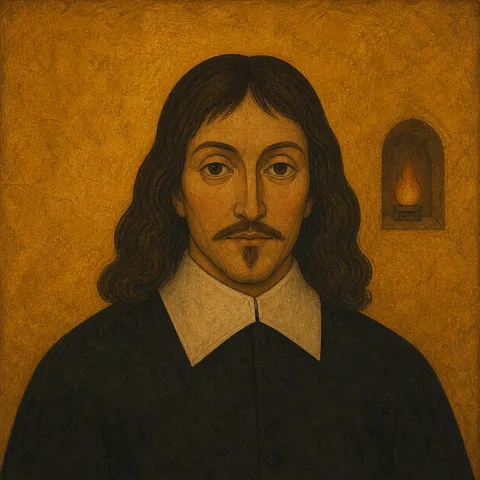 René Descartes
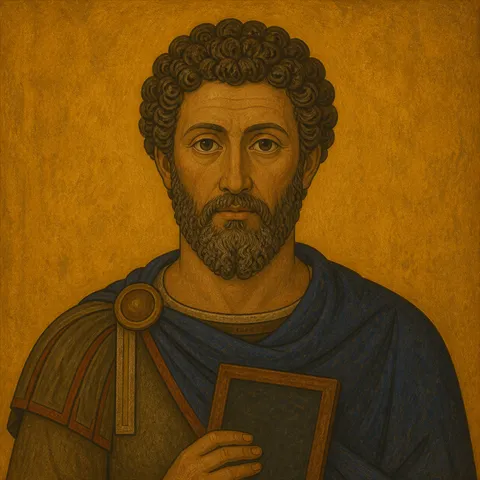 Marcus Aurelius
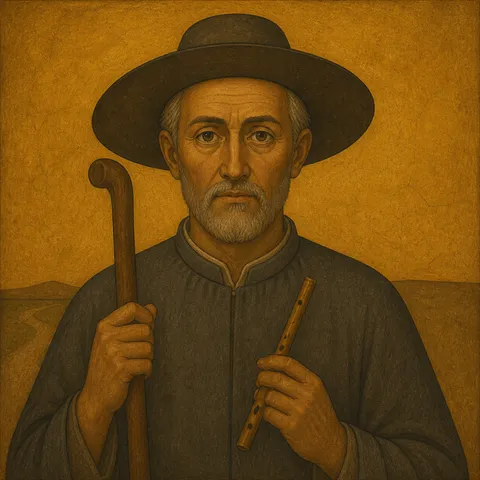 Hryhorii Skovoroda
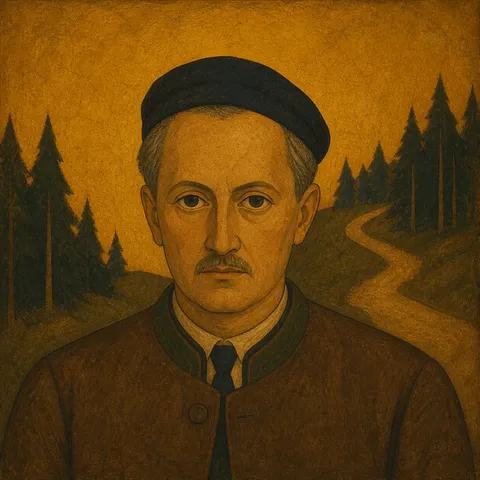 Martin Heidegger