You pay every day and you are paid every day, and you almost never ask what you handed over. What an hour of your life costs. Who has a claim on you besides the bank. Whether a person is altered by the number the account screen shows. Thirty cards are behind you; ahead stand twelve people who asked the same questions in their own century.
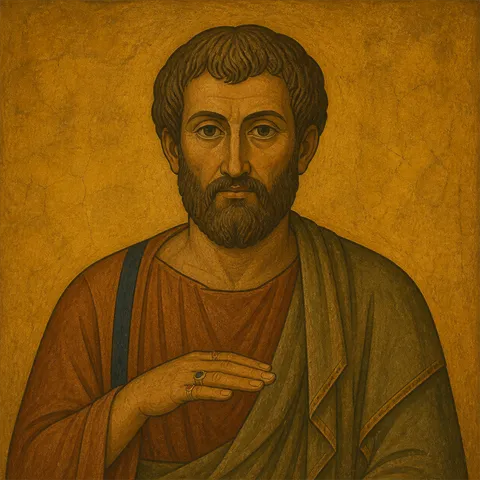
Aristotle asked about money the way he asked about everything: what work does it do. A coin exists by settlement, by nomos, which is why he calls it nomisma – its worth rests on the agreement of a city, and the metal is a secondary matter. The work is modest: make unlike things commensurable, so that a shoemaker and a builder can trade labour without force. While the coin stays a middle term, it does that work. Lend it at interest and it begins to breed from itself, and the middle term becomes a source, though Aristotle found no source in it. Hence his verdict on usury, the most hated of trades, since the gain there is squeezed out of money itself. Whoever swiped yes on interest has bet that time carries a price and that the price can be invoiced. Aristotle held that labour carries the price, and that time belongs to nobody at all.
And this term interest, which means the birth of money from money, is applied to the breeding of money because the offspring resembles the parent.
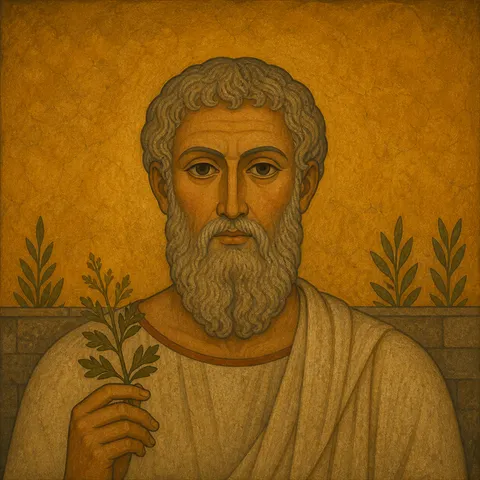
Epicurus sorted desires by one mark: whether they have a floor. Hunger has a floor, and bread closes it. Thirst has a floor. Wanting the thing everyone already has has no floor, because its measure is set in the neighbour's yard, and the yard raises the bar every season. The Garden outside Athens existed as proof of that arithmetic: water to drink, plain food, a little cheese on a feast day counted as luxury, and people who could have lived broadly chose to live narrowly so as to guard less. Whoever finds a little too little will find nothing enough. Epicurus would measure a phone bought on credit by how much anxiety comes through the door with the box, and the monthly payment is a detail. For twelve months you pay for an object whose main labour is to cancel a glance you never actually caught. The yes here is honest: the glance is real. His question is who invented it.
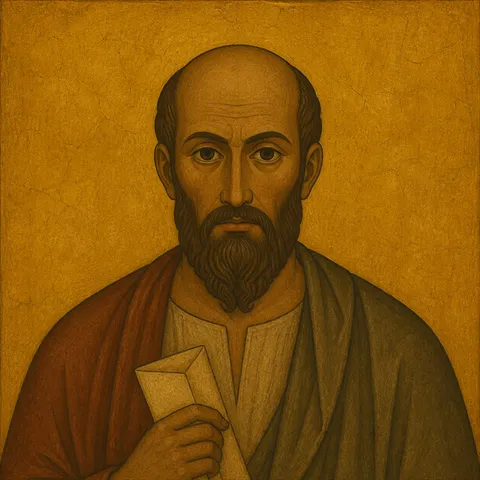
Paul stitched tents, and that matters here: the rule about bread was written by a man with calluses, who kept himself by his own trade so as to be a burden to nobody and to sell no sermons. It was addressed to a small community where several people had decided the end was close, which made living out of someone else's basket look reasonable. Paul calls them disorderly and tells them to eat their own bread quietly. The same Paul spent years collecting money in the Greek churches for the poor of Jerusalem, and wrote that a man who fails to provide for his own household is worse than an unbeliever. So his severity has a precise address: the able-bodied person who chose another man's pocket while knowing whose it was. No widow appears in that sentence, and no sick man either. Your yes on this card split people into two lists, and Paul split them too, along the willingness to work.
For even when we were with you, this we commanded you, that if any would not work, neither should he eat.
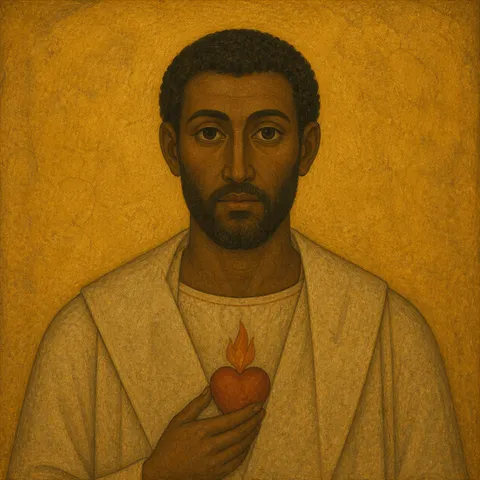
Augustine opened the Confessions with a heart that stays restless until it rests, and the rest of the book shows that restlessness hunting for an object. He distinguished use from enjoyment: some things we use in order to get somewhere, others we enjoy as the end of the road. Disorder begins when those two attitudes trade places – when you enjoy what was there to be used, and use the people who were there to be loved. A balance on a screen is built for that substitution: it always shows something and never finishes the sentence. Your mother finishes her sentences, which is exactly why the letter costs more than the glance at a figure. Augustine would not lecture you on thumb discipline; he held such advice idle while a person still cannot say what he is looking for. He would ask which rest you expect from that number, since it carries a promise that tomorrow is covered.
Aquinas split two things inside ownership, and his whole answer rests on that split. As to holding, the division of property is lawful: a man tends his own more carefully than the common store, boundaries quench quarrels, order comes cheaper that way. As to use, the thing is bound to the common good, and the surplus of the rich already belongs to whoever is in need, though no paper was ever drawn up for it. Then comes his hardest line: in extreme necessity all things become common, so a person who takes bread to stay alive has committed no theft. A tenth, inside that frame, reads as an invoice issued long before your decision, and the word gift belongs to the payer's side of the ledger. Whoever swiped no is usually defending the lawfulness of holding, and Aquinas stands right there, having argued for it himself. The divergence opens at the second step, over what holding settles.
Machiavelli described fortune as a river that bursts its banks every few years and carries off whatever nobody troubled to anchor. Against it stands virtù, the skill of acting while the water is still low. Hence his praise for those who seize an occasion: it arrives once, it keeps no timetable, and the man who waits for certainty collects what the bold leave behind. Florence taught him the other half of the rule as well. Whoever leans on fortune alone falls when she does, since she changes her favour without notice, and a man with no dike is simply standing in the water watching it go. Going in with every hryvnia of savings puts faith in the river. Machiavelli would approve the speed of the move and would immediately ask where the dike is: what exactly you built during the quiet years, while your friends had not yet made a thing.
Locke derived property from the body. Every man owns his own person, and so owns the labour of his hands; when he draws something out of nature's common store and mixes his work into it, the thing passes to him without anyone's leave. An acorn picked up under an oak belongs to nobody else. From that root grew the modern claim on any income at all: you get as rich as your labour is worth to other people, and your neighbour's consent is not required. Locke himself attached two catches: spoil nothing you take, and leave others as well provided as they were before you. Then he makes a move worth reading slowly – money, which does not rot, lifts the second limit, since gold can be piled up indefinitely without taking food from anyone's table. Whoever swiped yes leans on the first half of the proof, and that half is solid. The second half Locke left open.
The labour of his body, and the work of his hands, we may say, are properly his.
Hume described human sympathy as a force that thins with every step away from us: it grips the household hardest, neighbours more weakly, and somewhere on the third ring it turns into a theory. Morality for him begins in feeling, so an honest morality has to admit that unevenness and drop the performance of equal affection for everything alive. Hence his calm about your card: helping the people you can see is sympathy in its natural shape, and there is nothing to apologise for. Then comes the second half, without which Hume collapses into advice to live narrowly. Precisely because private affection is unreliable, he derived justice as an artificial virtue: rules and courts exist to do what feeling cannot, and they hold because everyone can see the use of them. Your yes describes your heart accurately. Hume would add that law was invented for everyone your heart never reaches.
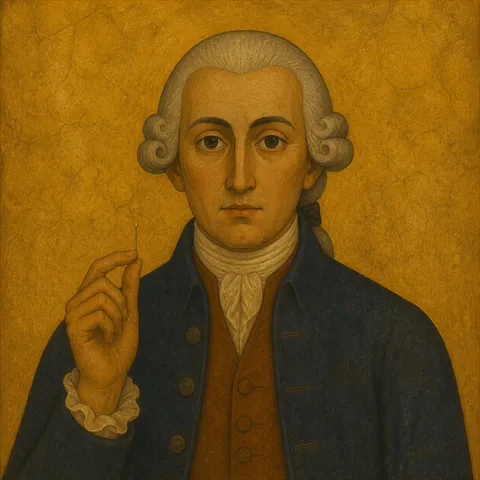
Smith is remembered as the prophet of markets, though he held a chair of moral philosophy for thirteen years, and his first book asked how a self-loving creature arrives at judgement on itself. The answer was the impartial spectator, an imagined figure in the breast through whose eyes we appraise ourselves when we want the appraisal to be fair. He wrote about tariffs out of that same laboratory. A merchant who asks for protection is asking for a tax on his neighbours, and the buyer pays it without ever being told. Division of labour puts a good coat within reach of a bricklayer, and for Smith that is where the wealth of a nation becomes visible to the hand. He also set free trade aside where defence was at stake, and wrote that a man of humanity naturally prefers his own country. Your yes he would cut in two, asking who collects the premium.
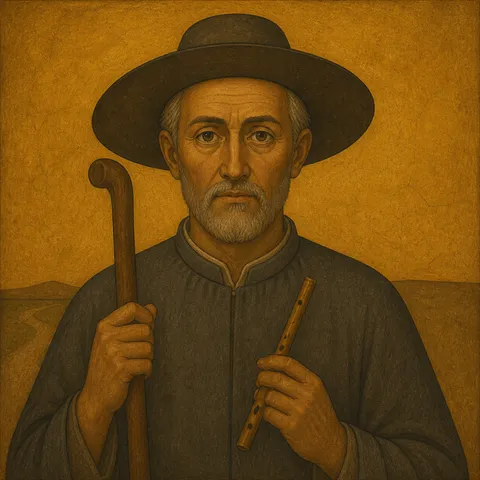
Skovoroda held every document a career in the empire required: the Kyiv-Mohyla Academy, the court choir, languages that opened doors. He refused both in turn – the chair and the monastic habit – and spent his last decades walking the roads of Sloboda Ukraine with a satchel, a flute and a Bible. His doctrine of kindred work says it plainly: each person is born for a particular task, outside it he torments himself and everyone near him, and wages for unloved work are ransom paid for an hour taken away. Half a salary for the absence of a boss would have struck him as a cheap price; he paid the whole and never complained about it aloud. Beside it lies the other half of the picture, which this archive states plainly: the freedom of a wandering teacher rested on other people's hospitality, and he accepted that dependence knowingly.
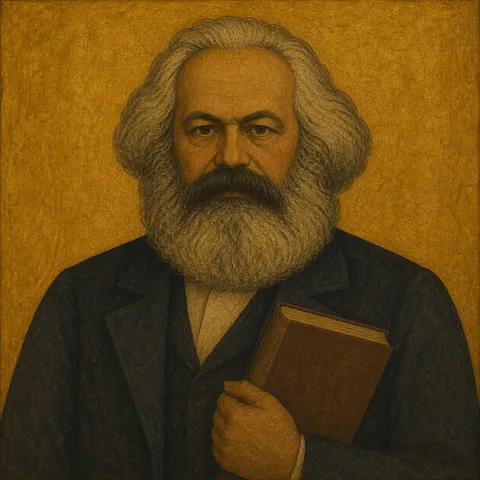
Marx asked one thing about a billion: which hours it is made of. A worker sells a day and is paid for the capacity to work, and somewhere inside that day the product already exceeds the wage. That is where profit comes from, on his account, and the founder's brilliance stays a secondary detail. Hence his physiological description of capital, dead labour that lives by draining the living kind. He never once called capitalism barren; in the Manifesto the productive power of the bourgeoisie draws something close to awe out of him, with no nostalgia for the village anywhere in it. His quarrel ran with whoever signs off the length of the working day. Whoever swiped yes on the honest billion leans on what got built: roads, cheap medicine, payrolls, cities that rose inside one lifetime. Marx would answer with a question about the entrance fee.
Capital is dead labour, that, vampire-like, only lives by sucking living labour, and lives the more, the more labour it sucks.
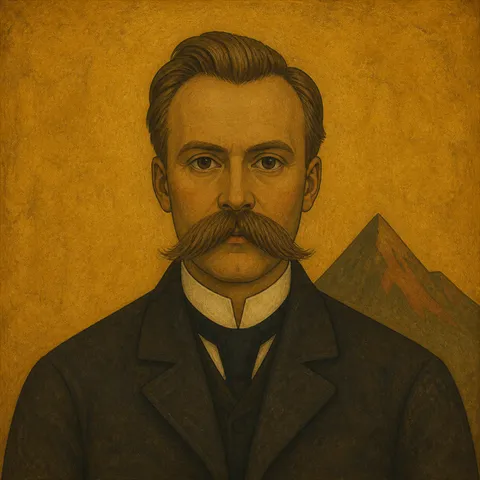
Nietzsche read moral feelings as traces of old debts. In the Genealogy guilt grows out of the relation between creditor and debtor, and whole systems of value grow out of the experience of the weaker party, who had to interpret his own weakness to his advantage somehow. Ressentiment works delicately in his hands: it never shouts, it revalues. A friend's income turns into luck, while your own place in the story is quietly promoted to that of the finer soul. Nietzsche thought that work stayed almost invisible to whoever performs it, which is what made it dangerous. Hence his interest in your card. Whoever swiped yes and truly rejoices without an admixture is, for him, a rare instance of strength, since gladness at another's power promises the weaker man nothing. Whoever swiped no did what he demanded most often: named a feeling before it dressed as morality.
Twelve stations drew two axes. Money is either a measure you hold or a means spent on something outside itself; obligation is fixed either by the nearness of whoever asks or by the need itself, wherever it sits. Look at which quarter of that cross your yes cards gathered in; that is where your compass stands on this deck. Two records in the archive read the same map from opposite sides: one asks what money is, the other asks who decides how much goes to whom, and what becomes of the allocator afterwards.
SOURCES
Aristotle, Politics, Book I (tr. Benjamin Jowett) (tr.: ред. (український переклад цитати)) · classics.mit.edu
Paul of Tarsus, 2 Thessalonians 3:10 (King James Version) (tr.: ред. (український переклад цитати)) · en.wikisource.org
John Locke, Second Treatise of Government, §27 (tr.: ред. (український переклад цитати)) · www.gutenberg.org
Karl Marx, Capital, vol. I, ch. 10 (tr. Moore & Aveling) (tr.: ред. (український переклад цитати)) · www.marxists.org
 Aristotle
 Epicurus
 Paul of Tarsus
 Augustine of Hippo
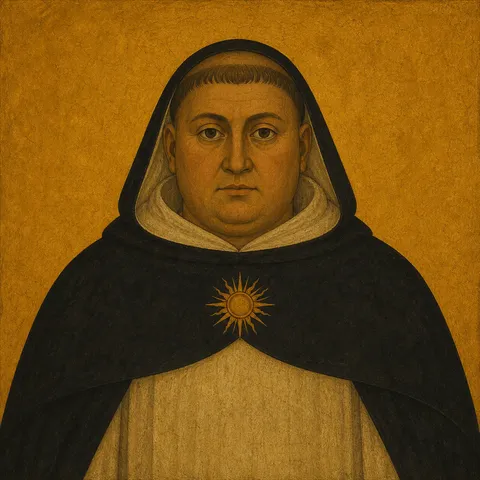 Thomas Aquinas
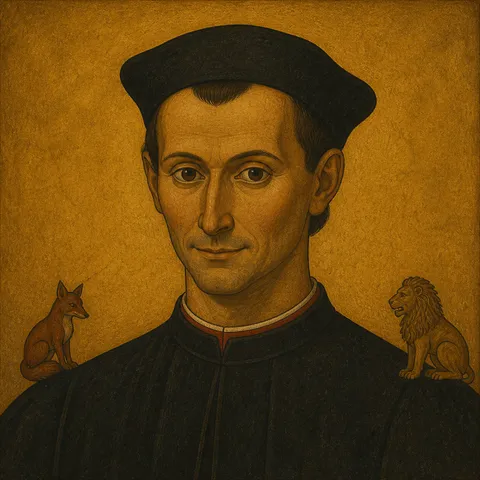 Niccolò Machiavelli
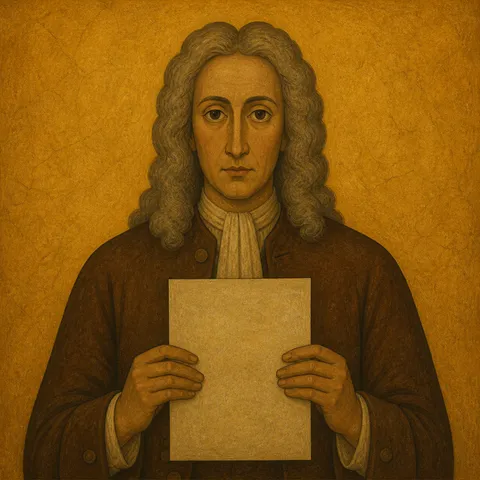 John Locke
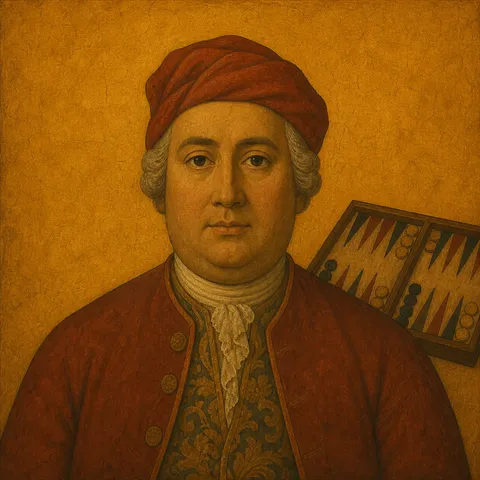 David Hume
 Adam Smith
 Hryhorii Skovoroda
 Karl Marx
 Friedrich Nietzsche