Someone from your year has already moved on to something larger, and you learned it from a feed. The question growing out of that is older than the feed: what measures the work you have done. By another person's eye, or by your own skill measured against the years still left. Ahead stand twelve people who asked it without a phone in hand and answered it in incompatible ways.
YOUR COMPASS ON THIS ROUTE
STATION 1 / 12
Thirty, with no flat and no car, but a master of his trade – that counts as success.
Aristotle asked about happiness the way he asked about any object: what is its ergon, its proper work. A knife's work is cutting, a flute-player's is playing, an eye's is seeing, and a human being's is to live by the activity of the soul in accordance with reason and virtue. Hence his answer about success: it sits in the activity itself, performed well, and property serves that activity as a tool. A craftsman of thirty is inside the activity every day, and renting his flat leaves it no worse. The second half of the teaching is stricter, and modern quotation usually hides it. External goods are genuinely needed: without friends and some means, virtue works in cramped quarters, and poverty makes certain good actions impossible outright. So Aristotle would look at the flat and at the work of the hands alike, then decide on a life taken whole, from one end to the other.
One swallow does not make a summer, nor does one day; and so too one day, or a short time, does not make a man blessed and happy.
Fame belonged, for Cicero, among the working conditions of the trade, and he had the proof in his own career: a man from Arpinum with no ancestors on the consular lists reached the highest office in Rome by voice alone, with no inheritance and no army behind him. A republic rests on speech, speech is heard by people who know the speaker's name, and an anonymous advocate defends nobody. In the speech for Archias he says it outright: even philosophers who write books despising fame sign those books with their own names. Then comes the price. The same hunger for a name left him open to flattery, made him versify his own consulship, and eventually put him on the proscription list under which he was killed. Whoever swiped yes at thirty-five inherits both halves of that legacy – the force of a public voice and dependence on the mouths that carry it.
Machiavelli wrote his book as an exile from the Florentine chancery and asked one question only: what must a man in power do to keep his footing. Hence his occasione, the opening that stays available for a short while and belongs to nobody until somebody takes it. A mentor's post opens once, and gratitude will not hold it open. Machiavelli would add that refusal preserves nothing here: a third party takes the chair, your decency stays a private matter, and the mentor leaves regardless. Cruelty for pleasure he never recommended. Harsh things are done fast and once on his account, favours are handed out slowly, and whoever stretches a blow over months collects more hatred for less advantage. Your no on this card he would read as a bet on the reputation of a decent man, a bet he placed himself in the years when it paid.
Epicurus kept his school behind the wall of a garden and advised living unnoticed. The advice looks cowardly until you see its ground: he held that most fears arrive ready-made from other people's appraisal, and that they grow in step with the number of spectators. Fame falls, in his classification, among the desires with no floor – its measure is set by approval, and approval turns faster than weather. The Garden was a technical answer: a circle of people, few in number, who know you apart from your achievements, and in front of whom a failure stays an event. He ranked friends above civic honours and wrote that for friendship a wise man will take a risk he would never take for recognition. Your fear of the feed he would not call foolish. He would ask how many people in it you know by name, and how many you telephoned this month.
Marcus Aurelius wrote his notebook on the frontier, in a tent, holding power over the whole known world and having nobody to catch up with. The entries return again and again to one motion: cut away the surplus. He sorted every matter into what depends on you and what does not, and in the first heap he left judgement and action. A goal set in the same week would have looked to him like a symptom: a person afraid to stop has not yet found what he is looking for. So the notebook carries a short rule about few things, and right behind it the qualification that saves the rule from idleness – do what is necessary, and to the degree that the reason of a creature made for common life requires. Whoever swiped yes is counting speed. Marcus Aurelius counted direction, and asked who chose the next goal.
Occupy thyself with few things, says the philosopher, if thou wouldst be tranquil.
In the tenth book of the Confessions Augustine goes through his temptations in order and arrives at the one he considers the most cunning. Greed is visible, anger is visible, and the love of praise lives inside good deeds and feeds on them. He describes noticing his own gladness when a sermon is approved, and how that gladness swaps the subject: the truth spoken aloud gives up the centre to the man who spoke it. The worst of it, for Augustine, is that the trap has no simple exit, since refusing praise turns easily into praising yourself for refusing. He leaves the question open, and you can hear it in the prose. Your yes on this card he would take as a diagnosis made in time, because a person who has admitted the gladness is already looking at it from outside.
Pascal described this habit as a general law under which everyone falls. We never hold to the present: the past we revisit to correct it, the future we hurry because it comes too slowly, and the only time that actually belongs to us goes by empty. Hence his diversion, divertissement: a person arranges a hunt and a career so as to avoid sitting in a room alone. The next achievement works perfectly inside that machine, since it is always ahead and always promises that real life begins on the other side of it. Pascal does not moralise here. He is a mathematician doing arithmetic: if we are forever preparing to be happy, we shall never be happy. Your yes on this card puts you in his queue, and the queue is long, since it also holds everyone who reached the next goal and is now setting another.
we are always preparing to be happy, it is inevitable we should never be so.
Rousseau drew a line between two feelings, and his whole account of society rests on that line. There is love of self, amour de soi, the plain care a living creature takes of its own life. And there is amour-propre, which is born only among people: it compares, keeps score, and needs somebody to stand lower. The second arrived, on his telling, with the first village, where people began to look at one another and appraise what they saw. The tightening you felt at someone else's success he would call an exact symptom of that second feeling, and the symptom testifies about the society you grew up in. He excused himself from none of it. In the Confessions his own envy is described more closely than anyone had described it before him, and he eventually quarrelled with every friend who did well.
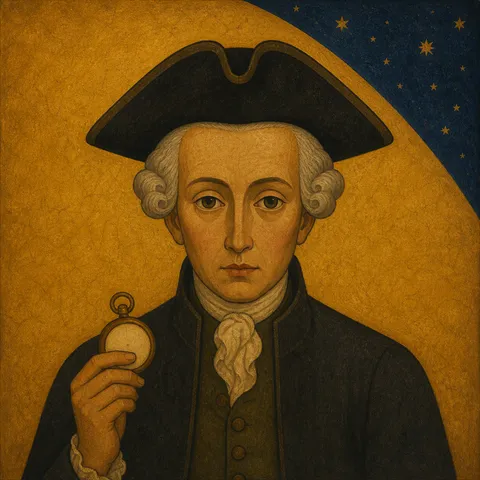
Kant framed the question of talents so that the answer would not depend on mood. In the Groundwork he considers a man given abilities who prefers to spend his life in comfort and leave them unused. Such a man can will that an idle life become a universal law, and no outright contradiction appears yet: a world of idlers is possible. Then comes the Kantian step. As a rational being he still cannot will it, since abilities are given for some end, and a will that wishes impotence on itself works against itself. He called this an imperfect duty: the law requires that you develop something, while the measure and the direction are yours to choose. So the Kantian yes on this card makes no demand for the limit of the possible. It demands that you never be able to tell yourself you had no choice.
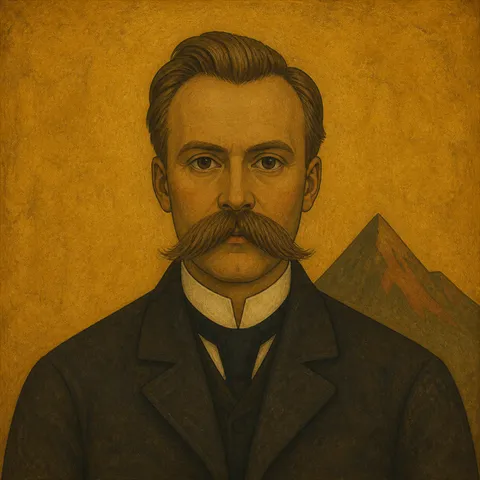
Nietzsche looked at any height in a culture and saw a long obedience in one direction underneath it. Morality and great art, on his reading, grew where people put up with narrow frames for centuries and never asked whether it was pleasant. Hence his contempt for anyone who wants the result without the decade: he called it the craving for a small happiness in which a man swoons over his own moderation. Ten years in the shade for one flawless thing he would sign without hesitation, because the formula contains a hierarchy: one thing is set above everything else, and the rest serves it. His own bill lies right beside it, and this archive does not hide it. He wrote those books almost without readers, paid the printers out of his own pocket, and reached a street in Turin where he embraced a horse and never came back to himself.
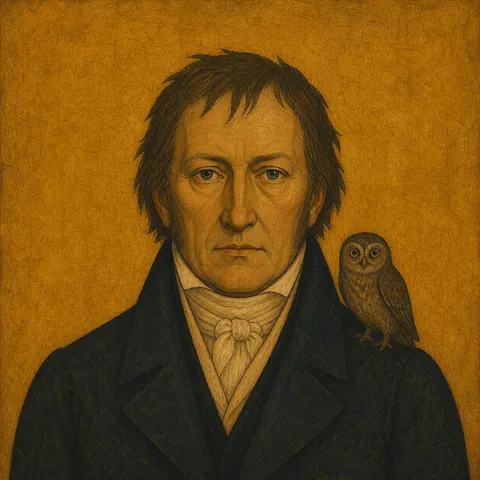
Hegel would deny that the experiment is even possible. Self-consciousness does not arise alone: to be someone for yourself you need another person to recognise you, and the whole history of spirit starts from that need. Hence the famous scene: two meet, each demands recognition, and out of the collision come a master and a servant whose roles labour later inverts. The servant's work forms a world and by that very work brings him to himself, while the master, who holds recognition only, stays empty. Spectators in Hegel are therefore no supplement to an activity; they are its element, the way water is for a fish. Whoever swiped yes is describing a person with no witnesses, and Hegel would ask where that person got the language he said it to himself in, and whose approval sounds inside the word flawless.
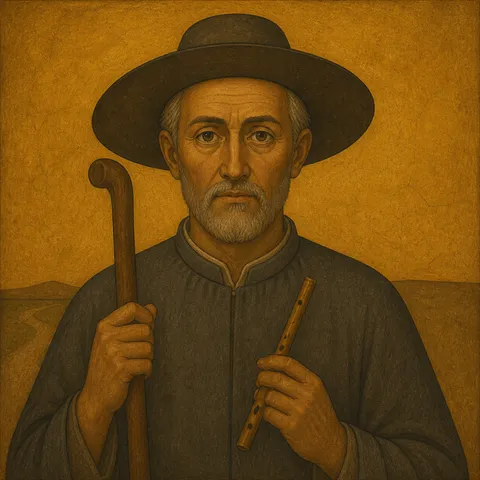
Skovoroda called it kindred work and held it to be the central question of a life. Every person, on his account, is born to a particular task, and nature gives no ability without an inclination toward it: a man born to learning suffers in the courts, a man born to the soil withers in an office. Unkindred work harms twice over in his description – it makes the person miserable and it spoils the task, since the task is done badly. So he walked away from offers other people counted as luck: the chair and the service at court. Your yes on this card is an admission of the gap, and Skovoroda would put his own question next. He asked about signs: what you do easily, what never tires you, what you would do unpaid, and what you would keep doing even if the money were somewhere else. Those answers he took as instruction enough.
Twelve stations laid out two axes. Success is measured either by witnesses or by the work itself; a life either runs now or waits on the next achievement. Your swipes have already put a mark on each axis, and the interesting thing is how rarely the mark sits in one quarter. Two records in the archive grip this map from opposite sides: one is about a man whose name was a condition of his work, the other about the single individual, for whom the crowd was untruth.
SOURCES
Aristotle, Nicomachean Ethics, Book I (tr. W. D. Ross) (tr.: ред. (український переклад цитати)) · classics.mit.edu
Marcus Aurelius, Meditations, Book IV (tr. George Long) (tr.: ред. (український переклад цитати)) · en.wikisource.org
Blaise Pascal, Pensées, 172 (tr. W. F. Trotter) (tr.: ред. (український переклад цитати)) · en.wikisource.org
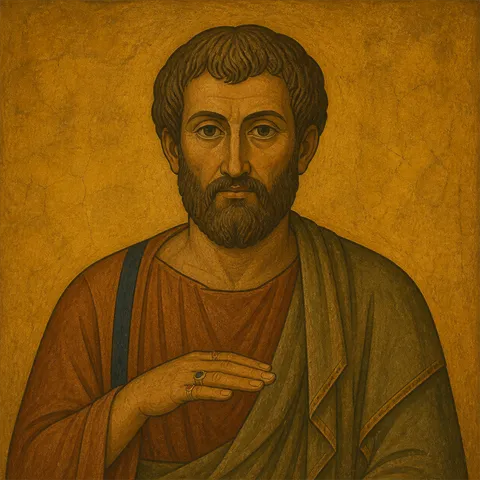 Aristotle
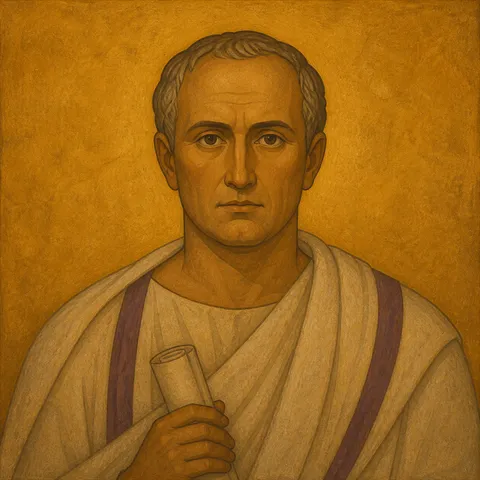 Marcus Tullius Cicero
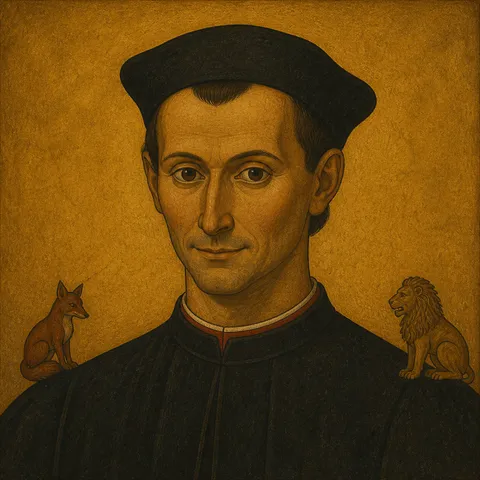 Niccolò Machiavelli
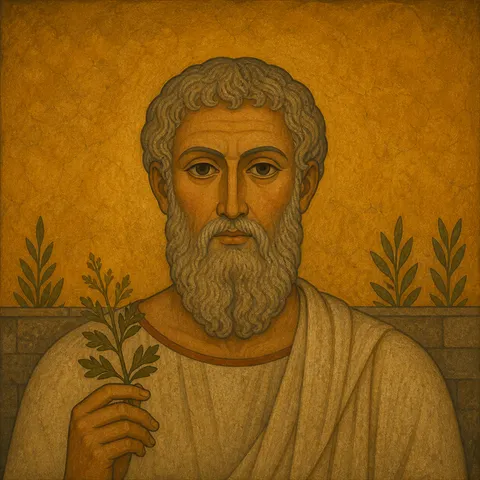 Epicurus
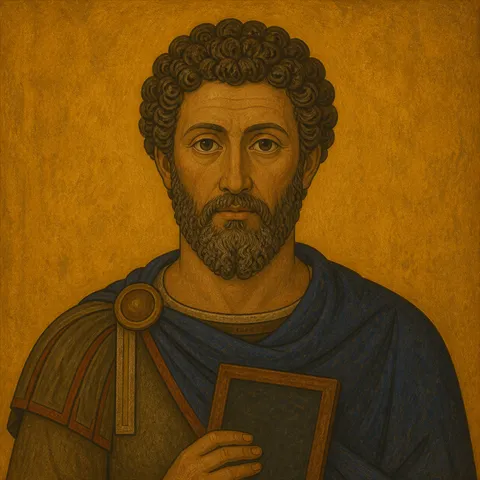 Marcus Aurelius
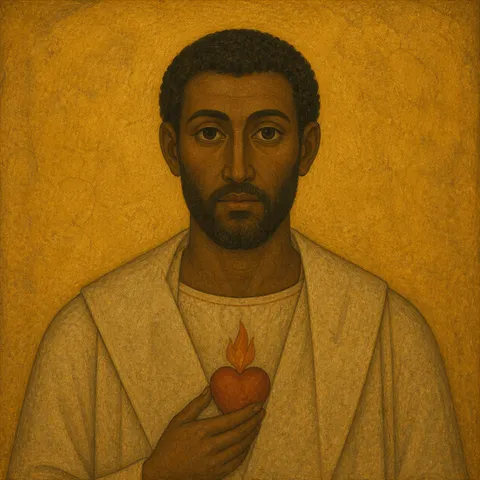 Augustine of Hippo
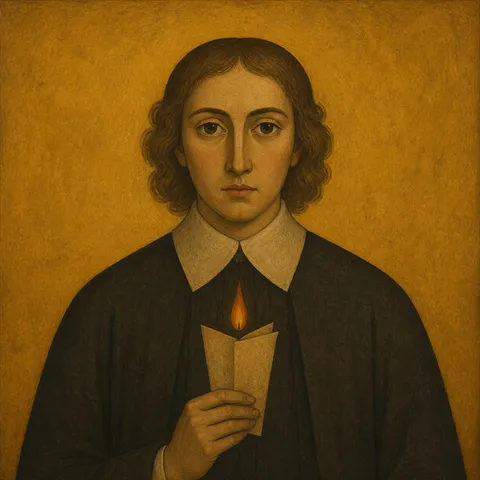 Blaise Pascal
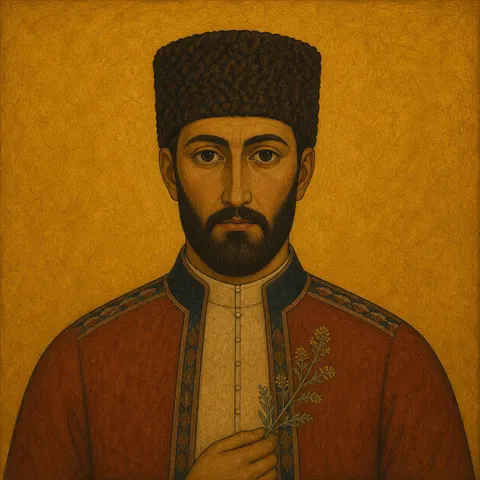 Jean-Jacques Rousseau
 Immanuel Kant
 Friedrich Nietzsche
 G.W.F. Hegel
 Hryhorii Skovoroda