Somebody asks what you do for a living, and you hear a question about what you are worth. Thirty cards have already shown what you will trade for a wage and what you will not trade at any price. Ahead stand twelve who also got up early and had to decide whether work makes a person, or prices a life happening elsewhere.
YOUR COMPASS ON THIS ROUTE
STATION 1 / 12
I judge a day by how much I got through, and rarely by anything else.
Aristotle put work in the service of what comes after it. Leisure for him is the point of the effort: a man makes war in order to have peace, and works in order to have free time in which nothing is owed. The highest activity is highest precisely because nothing comes out of it: contemplation is loved for its own sake, and in it the philosopher depends least on other people's hands. Hence his verdict on a day measured by output. Such accounting takes as its unit what Aristotle called a means, and leaves blank the column where a life is supposed to stand. Whoever swiped yes on that card knows the feeling of a completed evening, and he counted that feeling as human. His question would be different: whether an hour goes unreported in your week, and whether you can bear it.
And happiness is thought to depend on leisure; for we are busy that we may have leisure, and make war that we may live in peace.
Cicero wrote his son a manual on duty and came to the matter of how a man feeds himself. Here his text turns uncomfortable for us. He lists the trades that draw hatred, puts usury and tax-collecting among them, and then denies dignity to everyone paid for physical labour alone, since he read such a wage as a pledge of slavery. Petty retail is likewise base in his account, having no profit in it without lying. As respectable he allowed medicine, building, teaching and large-scale trade that brings ships in and feeds cities. The modern sentence that no honest work is degrading would have surprised him: he held that an occupation shapes a person, and a person shaped only by the obedience of his hands he would keep out of the city's council. Whoever swiped yes stands on the far side of that account, and reading him will show how much was learned after him.
Unbecoming to a gentleman, too, and vulgar are the means of livelihood of all hired workmen whom we pay for mere manual labour; for in their case the very wage they receive is a pledge of their slavery.
Paul stitched tents and kept returning to it in his letters, because the trade was part of his argument. He had a right to be kept by the communities and deliberately declined it, so that nobody could say the preaching was for sale. Hence his insistence that each man mind his own business and work with his own hands, and that quiet labour stand as testimony to outsiders. It goes furthest in the sentence about bread: an able-bodied man who has chosen somebody else's basket should not eat. No widow appears in that sentence, and no sick man, since for those he spent years collecting money in the Greek churches. The duty to work therefore falls hardest on a person with means: labour here is the way to have something to give away. Whoever swiped no sees property as a right to rest; Paul saw an obligation attached to every pair of hands.
And that ye study to be quiet, and to do your own business, and to work with your own hands, as we commanded you.
Aquinas measured a bargain by something the bargain itself does not contain. Human law for him stands under natural law, and where written law licenses open injustice it stops being law in the full sense. An exchange has to be equal: whoever sells above the worth of a thing, or pays below the worth of the work, takes what belongs to another, however mutual the signatures. Hence his conclusion about an employer. Paying on time closes the coarsest obligation, and the question of the amount remains open, since agreement settles nothing where the worker consents under the pressure of need, and that need is priced into nothing. Aquinas would add a second point: whoever disposes of people answers for their ability to live as people, beyond his standing in the ledgers. Whoever swiped yes is defending the purity of a contract, and he would ask how freely the worker agreed.
Skovoroda held that for every person there is one task her nature fits, and outside that task no wage will save her. His own he found early and kept to the end: having left the Kyiv-Mohyla academy, he refused every post offered him and spent his last decades as a wandering teacher on the roads of the left bank, with a flute and a Bible in his bag. Knowing yourself, for him, meant exactly that: finding your own affinity and declining to trade it. A person driven into alien work he compared to a martyr labouring with no hope of joy, and in that fate he saw the chief source of human misery. Whoever swiped yes on that card already assumes such a task exists and is waiting. Skovoroda would add the soberer half: the search runs inward, past any list of professions, and it costs the years it takes.
Marcus Aurelius kept a private notebook in field camps, and the opening line of Book Five is an argument with his own blankets. He reminds himself that he is rising to do the work of a human being, and asks why he should be dissatisfied when he goes to do the things he exists for. Then comes his favourite move: look at the birds and the bees, putting their part of the universe in order without a single lecture. Duty for a Stoic is a place in nature, and to leave that place is to leave your own nature. So evening shame over an empty day he would call just, adding one limit: nature has set bounds to rest as well, and those bounds get broken more often than the bounds of work. Whoever swiped no defends the right to be simply alive, and he would answer that you are alive in doing your own part.
I am rising to the work of a human being. Why then am I dissatisfied if I am going to do the things for which I exist and for which I was brought into the world?
Kant distinguished an act that agrees with duty from an act done from duty. A shopkeeper who does not cheat because cheating hurts trade is doing the right thing out of calculation; the telling case is the one where inclination pulls the other way and the person does his part anyway. So going in to work with a fever would read to Kant as a clean instance of a moral act, with the motive visible and unmixed. Beside it stands a second demand that gets forgotten: developing one's own capacities he held to be a duty owed to oneself, since no reasonable person can will a world where everyone lets his talents lie. Hence a limit as well: health is the condition of those same capacities, and burning it on one delivery destroys what you were obliged to administer. Whoever swiped yes acted against himself, which is exactly what Kant called moral.
Smith began with a pin and showed that eighteen separate operations yield a quantity a lone craftsman cannot reach. Everything else grew out of that observation. Dinner arrives thanks to a baker attending to his own gain, and benevolence plays no part in it; advantage makes each man do his own work well, since bad work loses a customer. So the man who simply bakes good bread is already feeding the street, and thanking him for it is superfluous. The second half of Smith's thought holds up the first: exchange stays useful while neither side is buying the laws, and merchants gathered in one room usually take counsel against the public. Whoever swiped yes on that card stands with him. Smith would add that the word good is measured here by the buyer, and work praised only by the man who did it falls outside the account.
Hegel saw in work the procedure by which consciousness first acquires itself. Desire simply eats the object and vanishes with it, so enjoyment leaves a person exactly as she was. Labour holds desire back and delays the vanishing: it gives the object form, and in that form the worker meets himself outside himself, in something that lasts without him. Hence his strange conclusion about master and servant. The master consumes and therefore does not grow, while the one who serves and works on the thing gradually shapes himself into a man with a mind of his own. So a work chat switched off at six would read to Hegel as a break with the very resistance that hardens a person. Whoever swiped yes is defending his evening, and defending it justly. Hegel would ask in what task you meet yourself on the evenings when you report to nobody.
Labour, on the other hand, is desire restrained and checked, evanescence delayed and postponed; in other words, labour shapes and fashions the thing.
Marx took Hegel's labour and asked what happens to it in a factory. The product leaves your hands and at once becomes a power independent of the maker: the more things are created, the cheaper the creator himself becomes. Hence his description of alienation. The work lies outside the worker, it does not belong to him, and in it he denies himself; his human part he feels only away from the work, and inside it he is not at home. The test is simple: the moment compulsion lifts, such work is shunned like the plague. So five years given to a mastery that will never pay well is, for Marx, a choice against that mechanics: you keep what you make, along with the right to your own product. Whoever swiped no is counting the money lost. Marx would count what survived.
He feels at home when he is not working, and when he is working he does not feel at home.
Russell went after a conviction nobody had checked: that work is virtuous in itself. He showed that humanity has long been technically able to keep itself on a few hours a day, and asked why, in place of a short day for everyone, we got a long day for some and unemployment for others. The blame he laid on a morality inherited from centuries when surplus really was scarce. Then comes his main argument: free time is the condition of civilization, since science and music grew where somebody could afford to be unhurried. Leisure, Russell says, has to be filled well, and a person used to twelve hours of labour will be at a loss on a free evening. Whoever swiped yes on that card has already put the evening above the raise, and he would welcome the decision. His one question is what you fill that evening with.
Epicurus treated time as the one thing nobody lends. We are born once, there will be no second occasion, and tomorrow belongs to no one; meanwhile a person makes plans as though the supply were endless, and postpones joy to a season that may not arrive. So three years of dull work taken on in advance is, for Epicurus, a bargain between unequal parties: the promise goes to you, while the payment falls due now and is paid in something unrecoverable. The garden outside Athens was his answer to that account. They lived small there, on water and bread, because a small need frees you from a long hire, and friendship on his reckoning buys more security than a post does. Whoever swiped yes is counting on a future self who still wants the same thing. Epicurus would ask about the rate: how many people that plan actually worked for.
The route pulled one axis into view: work as the place where a person hardens, and work as the price paid for a life lived elsewhere. Hegel and Kant stand on the first side, Epicurus and Russell on the second, while Skovoroda moves the question sideways, from how much you work to which work belongs to you. Look now at the way your thirty swipes leaned, and whose name kept coming back. Two doors stand open: Cicero on the trades fit for a free man, and Aristotle on the hour you report to nobody.
SOURCES
Aristotle, Nicomachean Ethics, Book X (tr.: W. D. Ross) · classics.mit.edu
Cicero, De Officiis, Book I (tr.: Walter Miller) · www.gutenberg.org
Paul of Tarsus, 1 Thessalonians (King James Version) · en.wikisource.org
Marcus Aurelius, Meditations, Book Five (tr.: George Long) · classics.mit.edu
G. W. F. Hegel, The Phenomenology of Mind (tr.: J. B. Baillie) · www.marxists.org
Karl Marx, Economic and Philosophic Manuscripts of 1844, Estranged Labour · www.marxists.org
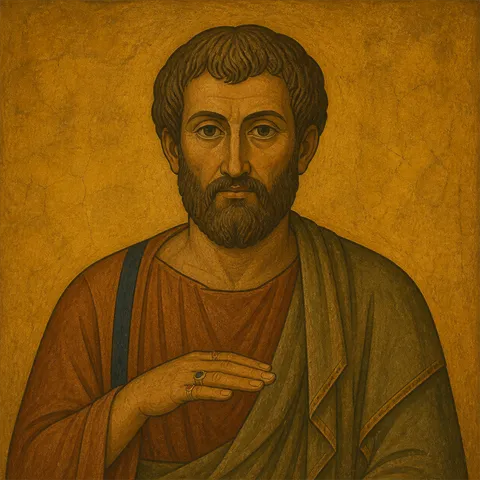 Aristotle
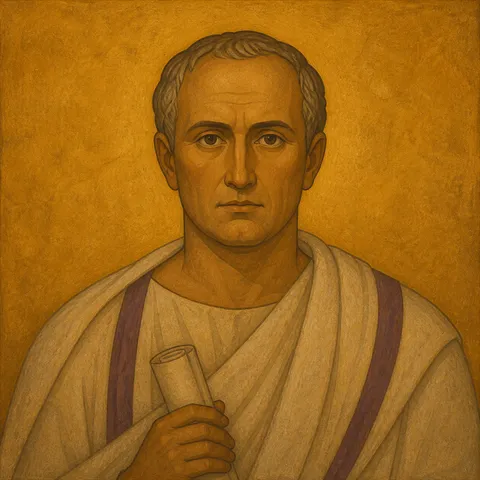 Marcus Tullius Cicero
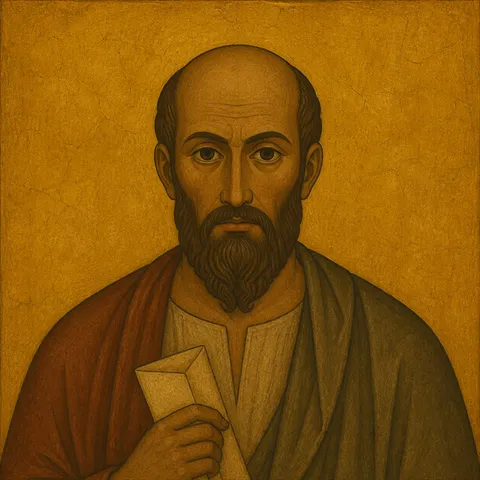 Paul of Tarsus
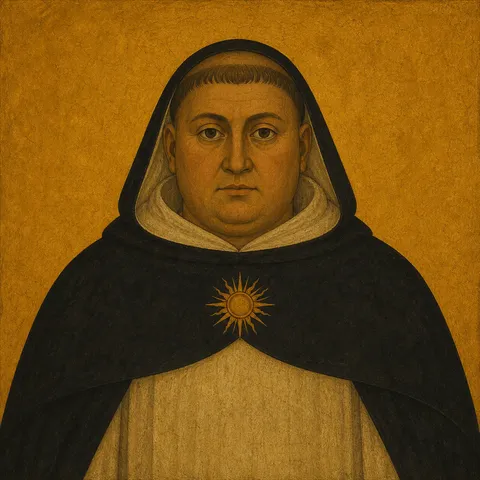 Thomas Aquinas
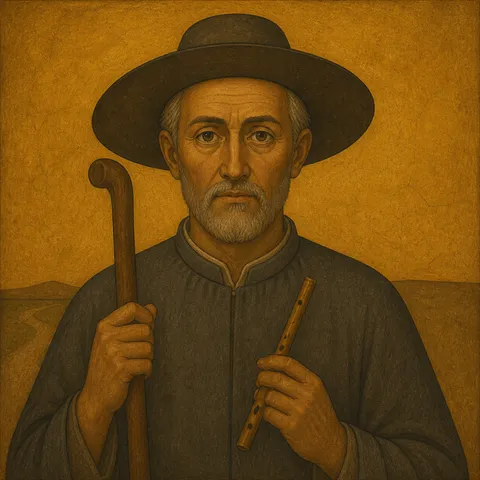 Hryhorii Skovoroda
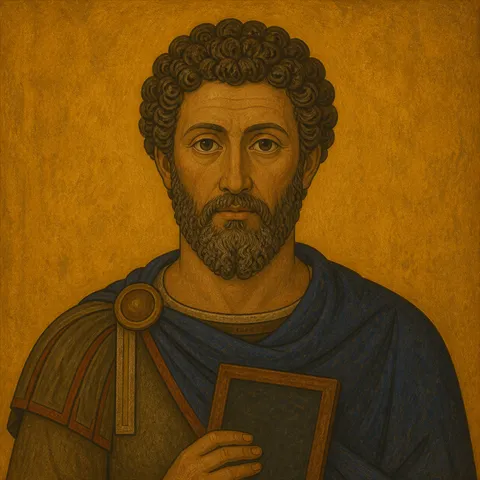 Marcus Aurelius
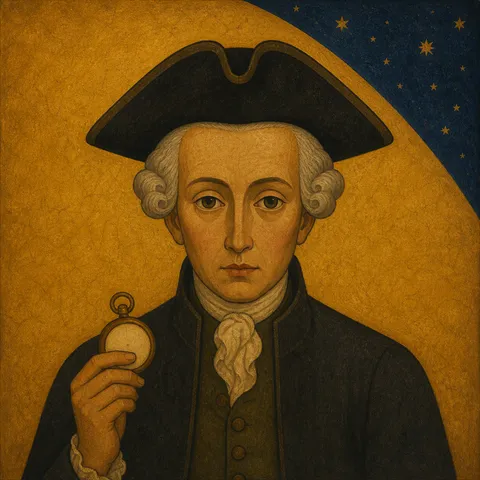 Immanuel Kant
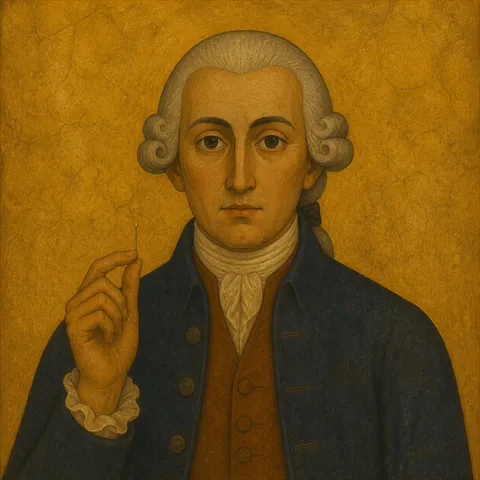 Adam Smith
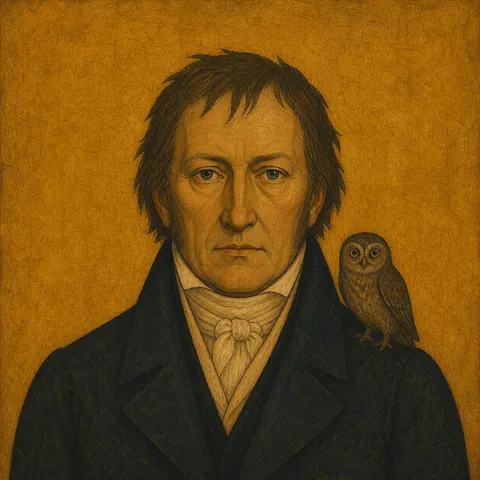 G.W.F. Hegel
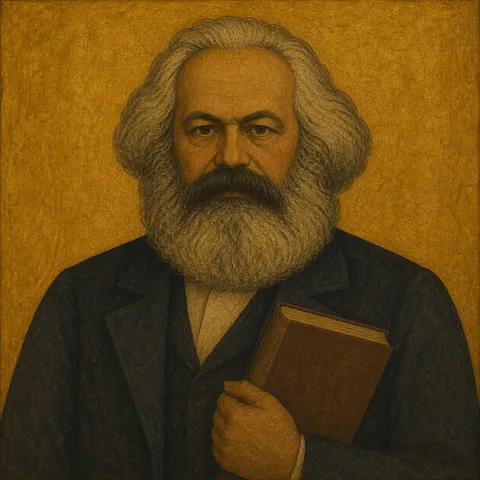 Karl Marx
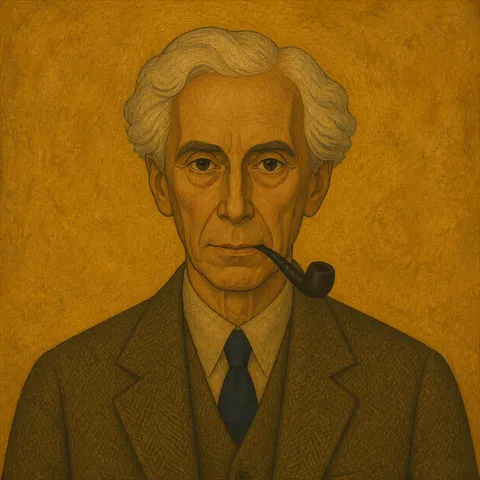 Bertrand Russell
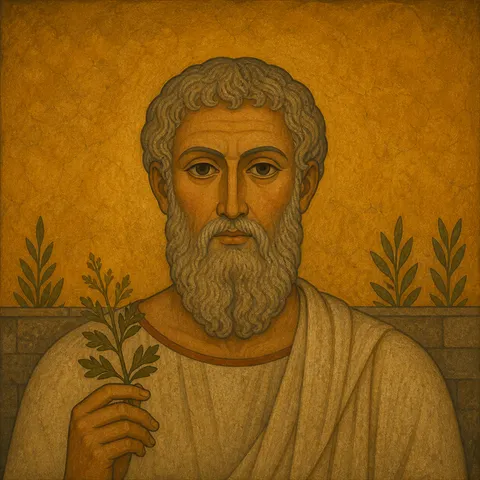 Epicurus