A song got you through a bad week, and you could not say why that one. A painting stopped you in a corridor. Meanwhile a machine turns out a passable image in ten seconds, and a museum ticket costs what dinner costs. Somebody is always on hand to explain what you should have felt. Thirty cards in, the question is plain enough: what is a made thing for?
YOUR COMPASS ON THIS ROUTE
STATION 1 / 12
You sign a complaint to have a play pulled from the billing that you have not seen.
Plato had loved Homer since childhood and still voted to put him out of the city, which tells you he thought the danger real. His reason lies in the route art takes. Rhythm and harmony go past argument and lodge in the part of a person that forms before reasons arrive, and they build the taste that will later do his judging for him. A child raised on the right songs will hate what deserves hating years before he can say why. On that picture a work is a piece of education whether anyone intended one or not, and a city handing out educations without looking at them has stopped governing. So the guardian who bans a play unseen is doing his job; a man need not drink a poison to know it. You signed the complaint. Plato would require one thing, that you know something true about what you signed against.
Rhythm and harmony find their way into the inward places of the soul, on which they mightily fasten, imparting grace.
Aristotle separated two ways of telling what people are like. The historian records what one man did on one afternoon; the poet shows what a person of that sort would do in that situation, by probability or by necessity. The second trade is the more philosophical one, because it reaches the general case. A study of people arrives at an average and can tell you that four in ten will lie under pressure. A novel shows the pressure arriving, the excuse assembling itself, the voice the man uses on his wife afterwards. Both are exact, and they are exact about different objects. His interest here was technical: the tragedians were his evidence for how character produces action. You said a good novel shows a person more precisely than any study of people. Aristotle would sign that and then ask which novels you have actually finished.
Poetry, therefore, is a more philosophical and a higher thing than history: for poetry tends to express the universal, history the particular.
Plotinus read the shudder in front of a beautiful thing as information about the one shuddering. The soul recognises something of its own and remembers where it came from, which is why the recognition arrives ahead of any verdict about technique. That gives him a strict condition: the organ has to resemble already what it wants to see. An eye that has grown no likeness to the sun will register a bright patch. He drew the practical conclusion in the sixth treatise of the first Ennead, where the reader is told to shut his eyes and wake a second sight everyone owns and almost nobody uses. A painting, on this scheme, is a stair, and stairs are for climbing past. You would hand over a month's pay for one work that shook you. Plotinus would call the tremor the evidence and the painting the receipt.
Never did eye see the sun unless it had first become sunlike, and never can the soul have vision of the First Beauty unless itself be beautiful.
Augustine remembered a schoolboy weeping over Dido's suicide while his own condition left him dry-eyed, and he used the memory as a diagnosis. Invented grief asks for tears and nothing further. Real grief in the next room asks you to get up. So the cheaper article sells better, and a theatre full of people has paid to suffer where suffering costs a handkerchief. He refused to let the argument stay comfortable, since the same imagination that carries me into Dido's death carries me into my neighbour's, and pity has to be learned somewhere. His complaint is about where it stops. You weep at fiction more easily than at trouble beside you. Augustine wept there too, wrote it down, and built a confession on it. The confession, in his hands, is the part that turns a diagnosis into a change.
I was forced to learn the wanderings of one Aeneas, forgetful of my own, and to weep for dead Dido, because she killed herself for love; the while, with dry eyes, I endured my miserable self dying among these things.
Aquinas defined art as right reason about things to be made and filed it among the virtues of the practical intellect, next to prudence. That locates the art inside the maker: a habit grown in a person who knows why this line falls here and what it would cost to move it. A generated image has the outcome and none of the habit. The calculation ran; the reason was absent. He would concede everything about the result, including that it can be lovely, since he held beauty to be what pleases on being seen and asked for no certificate of origin. The claim is narrower and harder to dodge: a work of art is the act of a rational agent, and where no agent stands the word is being used by courtesy. You refused to count the ten-second picture as art in the same sense. Aquinas supplies the distinction that says why.
Skovoroda studied at the Kyiv-Mohyla Academy, and the posts the empire thought a man of his gifts should want came to him unasked. He turned them down one after another to walk the roads of the Left Bank with a Bible and a flute in his bag. Behind the refusals sits one idea. Every person has a kindred labour, the work he was made for, and doing it is already the wage. His image for it is a bee gathering honey, and the bee keeps no eye on the market. Work outside your kinship wears a man down however well it pays; work inside it feeds him with nobody watching. An hour of drawing each evening with no prospect of greatness is the exact case the idea was built for. You draw anyway. Skovoroda would count the hour itself as the payment.
Locke derived property from labour and the handling of property from agreement. A man owns what he has worked on; what he does with it afterwards is settled by the terms he consented to, and consent freely given binds the one who gave it. A film is made with other people's money on a contract the director read before signing. On Locke's account the investor bought a share of the decisions along with the risk, the way a house buyer buys the right to move the walls. The awkward half is this: Locke also held some things unalienable, and a maker who has signed the ending away may find he signed away what could not be sold. You granted the payer his say. Locke forced nobody to sign, and he insisted that signatures hold, with no special exemption for art.
Hume held that beauty is no quality in things themselves; it lives in the sentiment of the one looking, which sounds like a licence to blame the work and stop there. He then spent a whole essay closing that exit. Taste has a standard because human nature is uniform enough for qualified judges to converge, and where judgements diverge some fault in the faculties can usually be found. His list of requirements for a judge is short and expensive: a fine sense, practice on this very kind of thing, comparison with worse examples and better ones, and a mind cleared of what his age and country take for granted. Few people, he remarks drily, answer the description. A work can indeed be empty. You voted that the fault lies in the work. Hume asks how much comparison stands behind the verdict.
The general principles of taste are uniform in human nature: Where men vary in their judgments, some defect or perversion in the faculties may commonly be remarked.
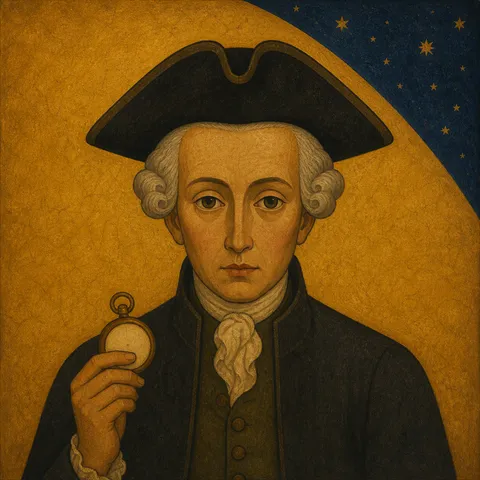
Kant's third Critique makes a judgement of taste strange on purpose: it claims to hold for everyone while resting on no rule anyone could teach you. You look, something in you agrees, and no concept did the work. Which is why an explanation delivered before the painting has begun working converts the painting into an illustration of a sentence, and then the sentence is what you admire. Kant also blocked the lazy reading of his own position. He drew a hard line between the beautiful and the merely agreeable, and the free play he describes takes years to acquire, since seeing without concepts is a discipline. You said art should be understood without explanations. Kant wrote the defence of that sentence, and he would hand you its harder half: nothing in the doctrine promises that what you happen to feel is a judgement of taste.
The Beautiful is that which apart from concepts is represented as the object of a universal satisfaction.
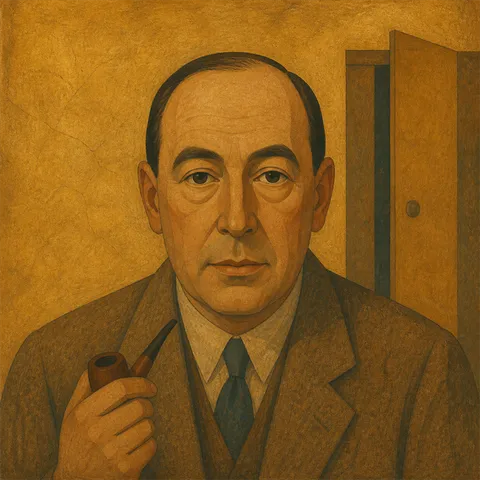
Lewis divided readers into those who use a book and those who receive it. The user brings his own mood along and looks for material to keep it going; the receiver lets the work impose its own shape and surrenders the hour. He worked the test out in An Experiment in Criticism, where a reader is measured by whether he can stay silent in front of a thing and go on looking until he has seen what is actually there. A photograph taken during a concert belongs to the first habit: it keeps a record of your attendance and spends the minute you were attending. Lewis admitted he had read greedily for years before he learned the difference. You put the phone away for the whole performance. Lewis would say you bought the only thing the ticket was selling.
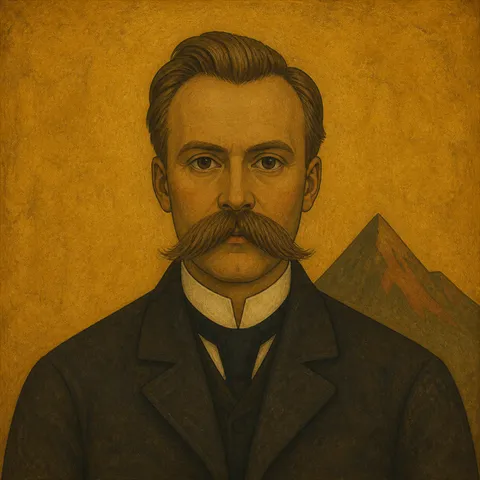
Nietzsche wanted art to do work, and the work he had in mind was survival under a truth nobody can look at straight. Tragedy was his model: the Greeks stared at what a life actually costs and made something out of the staring, which is how he read the chorus and the god who gets torn apart. A book that leaves you pleased has kept you where you were; a book that leaves you worse off has moved you and billed you for the move. He held his own books to the same measure, and in the preface to the Genealogy he asked for a reader who would chew a sentence over like cattle in a field. You voted for the damaging book. Nietzsche would agree and then check whether the damage produced anything, since he had no patience for decorative suffering.
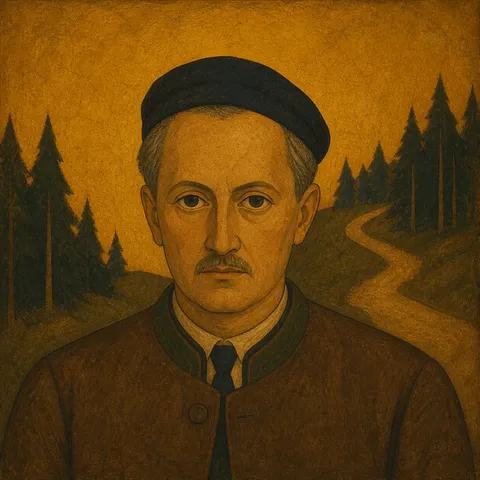
Heidegger read a work of art as an event and gave the maker an uncomfortable position inside it. Beside the finished thing the artist is close to a passage that destroys itself so the work can come forward; what the author meant is one document among the evidence. The work sets up a world and holds it open, and it needs people who stand inside that world and keep it from falling, which he called preserving. A temple organises a whole people's sense of earth and sky with no artist's statement anywhere near it. The thesis has a cost he accepted: a work can be preserved badly, and a world can close. You voted that the maker gets no last word. Heidegger supplies a reason harsher than any democracy of interpretation: the last word stays open while anyone is still standing inside.
The deck drew two axes. One runs from art as training, a thing that forms whoever meets it, to art as an encounter answerable to nobody. The other runs from the work as property, with an owner and a signature on it, to the work as something held open by whoever keeps looking. Your swipes have already placed you on both lines. If you kept siding with the trainers, the record on the objectivity of beauty is the one to open. If you kept siding with the free encounter, begin with Kant.
SOURCES
Plato, Republic (tr. Benjamin Jowett) (tr.: ред.) · classics.mit.edu
Aristotle, Poetics (tr. S. H. Butcher) (tr.: ред.) · classics.mit.edu
Plotinus, Enneads (tr. Stephen MacKenna) (tr.: ред.) · en.wikisource.org
Augustine of Hippo, Confessions (tr. E. B. Pusey) (tr.: ред.) · www.gutenberg.org
David Hume, Of the Standard of Taste (tr.: ред.) · en.wikisource.org
Immanuel Kant, Critique of Judgement (tr. J. H. Bernard) (tr.: ред.) · www.gutenberg.org
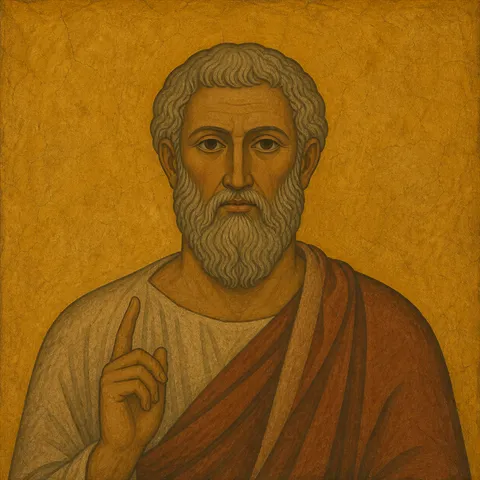 Plato
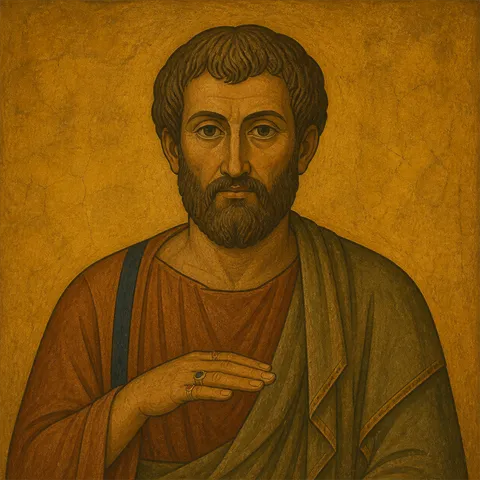 Aristotle
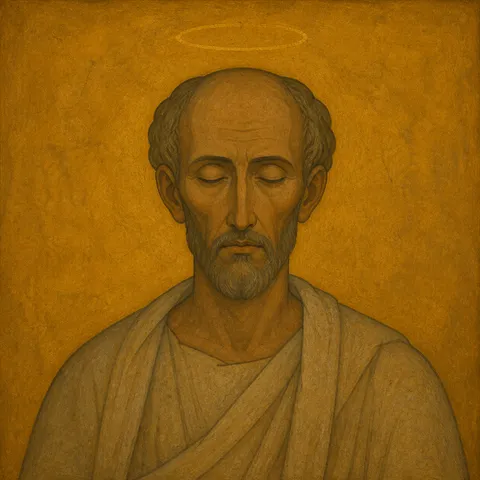 Plotinus
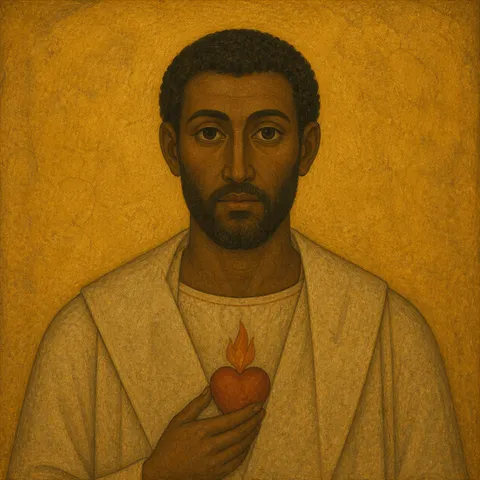 Augustine of Hippo
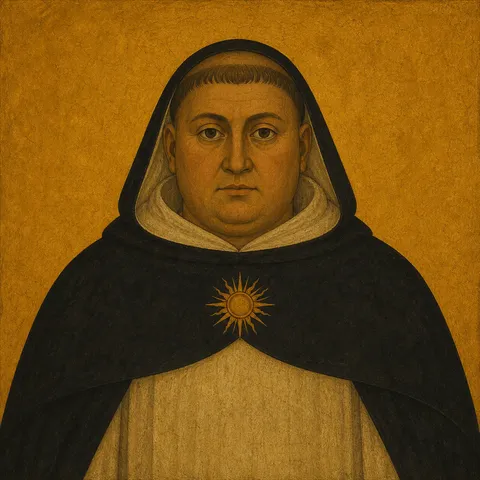 Thomas Aquinas
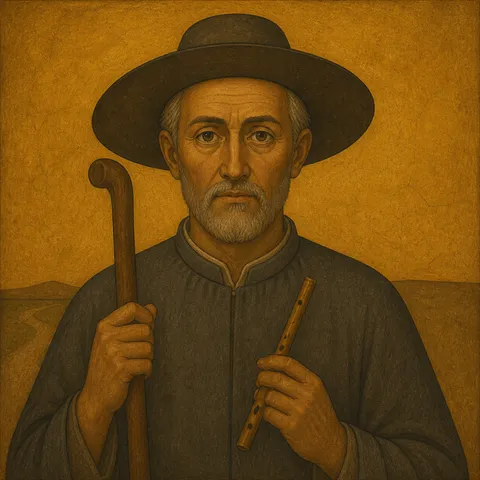 Hryhorii Skovoroda
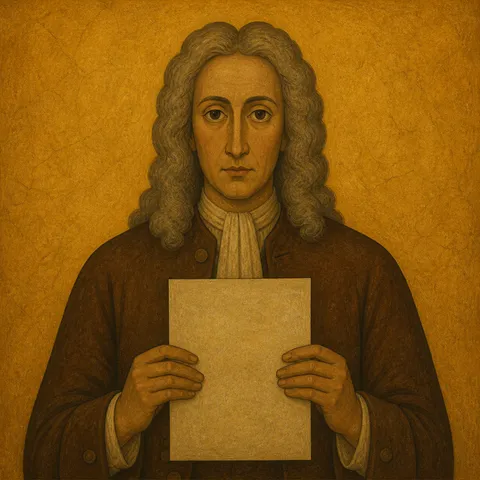 John Locke
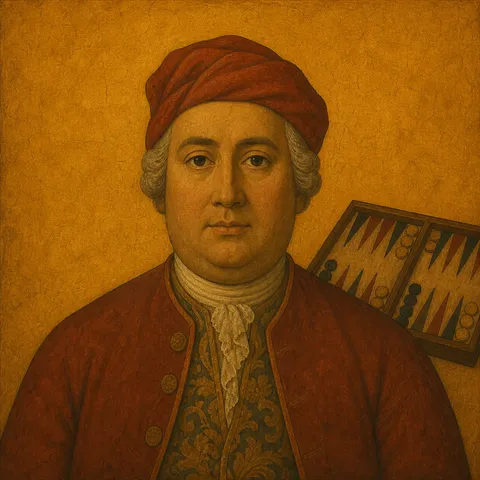 David Hume
 Immanuel Kant
 C. S. Lewis
 Friedrich Nietzsche
 Martin Heidegger