The neighbour you have never greeted. The meeting you skipped because they would decide without you anyway. The forty minutes you would drive every morning to live where nobody knows your face. A city is thousands of small settlements like these, and every one of them answers a question about what you owe the people nearest you.
YOUR COMPASS ON THIS ROUTE
STATION 1 / 12
A city with nowhere to sit down for free has turned into a dormitory.
Aristotle's Politics begins with a household and works upward. Families join into villages for what the day requires; villages join into a city, and at that point something changes. The city comes into being for the sake of life and holds together for the sake of living well, which is why he calls it the completion of a human nature. Speech is his evidence: humans alone can argue about the just and the unjust, and an argument of that kind needs somewhere to happen. A square with free benches is that somewhere, demoted to furniture. Take away every corner where a citizen sits without paying and the arguing moves indoors, into flats, among people who already agree with one another. About the man who needs no city he was harsh, and no compliment was intended.
the state comes into existence, originating in the bare needs of life, and continuing in existence for the sake of a good life
Cicero gave a whole book to what is fitting and filed the subject under justice, where questions of manners rarely go. His reasoning: we live in a society held together by small forbearances nobody can enforce, and a man who takes everything the law fails to forbid is drawing on a common fund he never paid into. His examples come from the voice and the walk, and he tells his son to avoid hurry and drag alike, meaning the whole public surface of a life. A loud phone conversation in a packed trolleybus falls squarely into his category. Nothing has been stolen that a court could name, and forty strangers have lost the quiet they were all supplying to each other. Cicero would add that the offender seldom means harm and has simply never practised imagining the room.
Machiavelli reread Roman history and reached a conclusion that offended everyone. The tumults between the plebs and the senate were what made Rome free: every round of disorder ended in a law or an office the plebs had extracted and the nobles then had to live with. A city with no friction has usually quieted its quarrels by letting one party win. He was writing in Florence for a republic he had served and lost, with fourteen years of diplomacy behind the argument, so he knew how little a single demonstration settles. His claim is scaled longer than a Sunday. A rally that decides nothing is a bill presented, and a city that receives such bills for twenty years is governed differently from one that never receives them. The charge for it is known in advance: a street where people shout is never a restful street.
Rousseau located the origin of inequality at a fence. Before it the earth belonged to nobody and its fruits to everyone; the first man to enclose a plot and say the words that made it his needed only neighbours credulous enough to nod. Everything that follows, the law protecting the enclosure and the courts that read it, he treats as the ratification of a lucky grab. He was no communist about this and accepted that property exists and cannot be wished away. What he refused was the story in which it had been earned. A courtyard defended against an outsider's car is that fence at small scale, moral confidence included, and Rousseau's question is who drew the line and which of the neighbours was in the room while it was being drawn.
The first man who, having enclosed a piece of ground, bethought himself of saying This is mine, and found people simple enough to believe him, was the real founder of civil society.
Locke built government out of a single worry: how anything of mine can be taken without my agreement. Property for him starts in labour – the acorn you picked up, the field you cleared – and a state exists to protect what labour has produced. A tax is lawful because the taxed consented through their representatives, and a levy imposed without that consent is theft with a seal on it. So a park nobody voted for is, on his account, a good thing badly paid for. He is easy to caricature here. Locke also wrote that a man in want has a right to another's surplus, so his objection concerns the procedure and leaves the generosity intact: five hundred a month is a reasonable sum for a district to settle together, and the settling is the part he declines to skip.
Burke's name for a person's first attachment is the little platoon he belongs to in society, and he called love of it the first link in the chain that ends in love of one's country. The order matters to him: affection is learned on what is small and near and extended from there, while whoever begins with humanity in general tends to finish with nobody in particular. The neighbours on your landing are that platoon, the smallest one going. Nobody chose them; they came with the lease. Burke would legislate nobody into learning their names. He held that manners work on us more evenly than laws do, and greeting the woman from the flat below is manners doing its slow job. His question for a silent stairwell is where you propose to learn the habit that public life will ask for later.
Hegel described freedom as something that has to be built before anyone can enjoy it. A person alone with a garden has intentions and no medium for them; place him inside property law and a court, and his will takes on a shape the world recognises. Those institutions he called objective spirit, and a city is where they stand thick enough to touch. About the rural idyll he was rude, treating the longing for it as a longing to skip the labour of becoming somebody in public. Forty minutes out of town is, in his terms, forty minutes away from the apparatus that makes you a person with standing. That the apparatus grinds people he granted: civil society in his account also produces a rabble it cannot absorb, and he never solved that.
Smith's famous line about the baker is a line about strangers. In a village you are fed by people who know you and who can be shamed; in a city you are fed by thousands who will never learn your name, and what makes them reliable is their interest in your custom. Cheapness is the signal that resources went unwasted, and the chain undercutting the man across the street is passing a real saving to you. Smith was no cheerleader for size. The Wealth of Nations is full of suspicion about merchants who conspire and masters who combine against workmen, and the impartial spectator from his other book would notice that the neighbour has a face. What he defends is the mechanism, and the mechanism holds no opinion about who is standing across the street.
Chesterton wanted property to be plentiful and held in many hands, which set him against both systems on offer. Socialism concentrates ownership in the state, monopoly concentrates it in a few firms, and he argued that under either one most people work on somebody else's thing. His own programme, distributism, is a shop with an owner behind the counter and a holding that belongs to the family working it. He defended the small shop against the large one on the ground that a man who owns his tools behaves like a citizen; charm had nothing to do with it. Paying a quarter more so the money reaches the seller is his economics done retail. He knew the objection and answered in advance, granting that the programme costs money and holding that a civilisation gets the ownership it pays for.
Mill drew a boundary and defended it for a lifetime. Power over an adult is legitimate where the adult is harming somebody else; inside the space where only he is affected, the decision is his. A city deliberately made awkward for cars is a design for improving the citizens who live in it, and improvement of that kind he distrusted most, because the argument that a thing is for your own good has no natural stopping point. In practice he allowed a great deal. Noise and blocked streets are harms with victims, so traffic rules pass his test easily. What he would strike out is the view that walking is better for you, together with a street arranged to make you do it, since that reasoning would license whatever a majority believes about how you should live.
Over himself, over his own body and mind, the individual is sovereign.
Nietzsche wrote a chapter telling his reader to flee into solitude, where the air is clean of the marketplace flies. The flies are the small stings: greetings and small talk, the being seen and assessed a hundred times before noon. His complaint is that they make a person average by abrasion. Solitude for him means workshop conditions, and sulking is another thing entirely. He wrote his books in Alpine villages on a tiny pension, ill and largely unread, and his days went by on foot. An hour on a train each morning buys exactly what he was buying, at a price he would recognise. He named the failure mode as well: solitude taken as revenge on people rots, and whoever left because he was wounded carries the marketplace with him into the mountains.
Skovoroda was offered, one after another, the posts an empire had for a man of his gifts, and he declined every one of them, the pay included. His last decades went on the roads of the Left Bank with a flute and a Bible in his bag, teaching whoever fed him. His doctrine supplies the reason. Every person has a kindred labour, the work that suits their own nature, and a life spent outside it stays wretched however well it pays. Trees under the window, on this reading, are a small instance of the same accounting: you are buying back the conditions in which you are the creature you actually are. He put the summary on his own grave, saying the world had hunted him and never caught him. Two thousand a month is a cheap version of that refusal.
Two readings of a city pulled against each other here: the city as the place a person becomes a citizen, with debts attached, and the city as an arrangement of strangers you may use and leave. Your position was settled on the cards that cost money or a Saturday – the meeting, the extra rent for trees under the window. Read those again. Two doors stand open: the record of the man who called us political animals, and the record of the Irishman who watched a Paris crowd and saw what grows out of one.
SOURCES
Aristotle, Politics, I.2 (tr.: Benjamin Jowett; укр. ред.) · classics.mit.edu
Jean-Jacques Rousseau, A Discourse on the Origin of Inequality, Part II (tr.: укр. ред.) · www.marxists.org
John Stuart Mill, On Liberty, Chapter I (tr.: укр. ред.) · en.wikisource.org
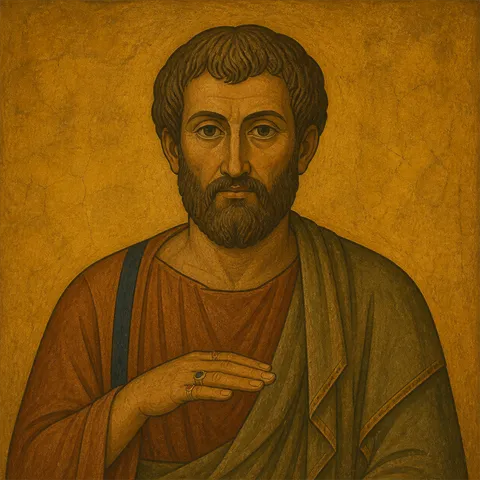 Aristotle
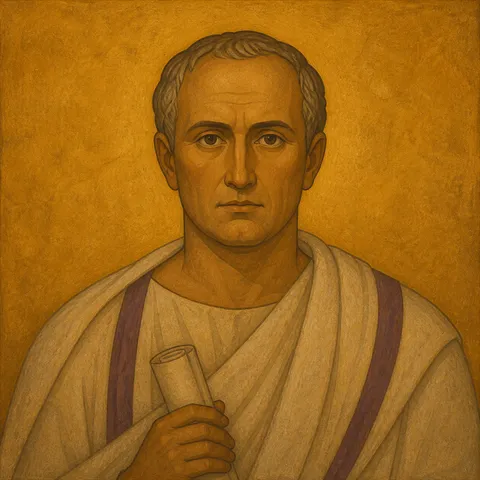 Marcus Tullius Cicero
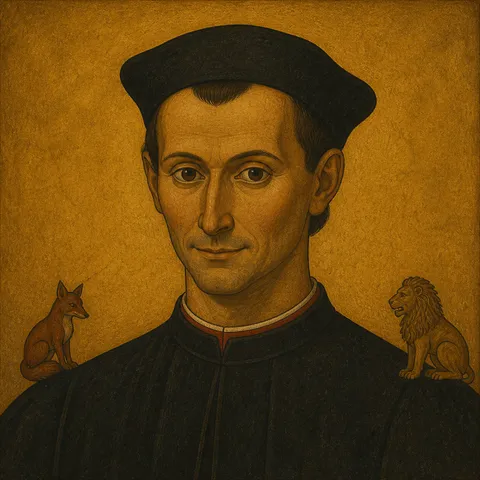 Niccolò Machiavelli
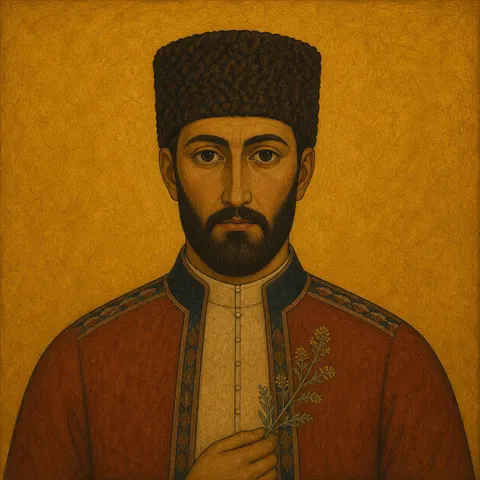 Jean-Jacques Rousseau
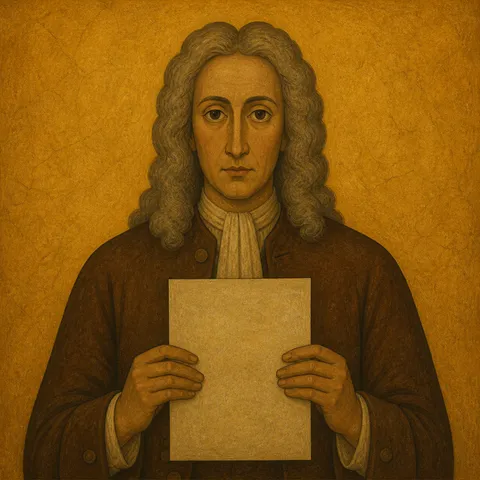 John Locke
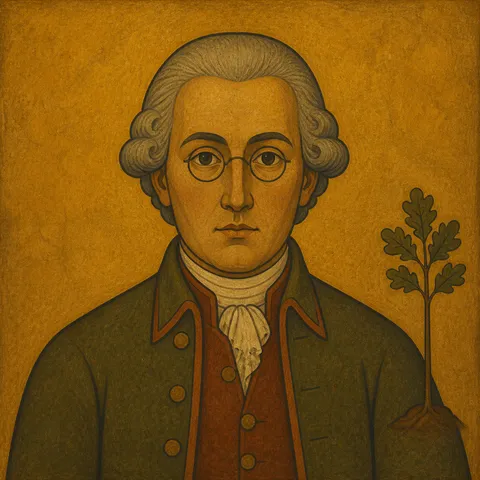 Edmund Burke
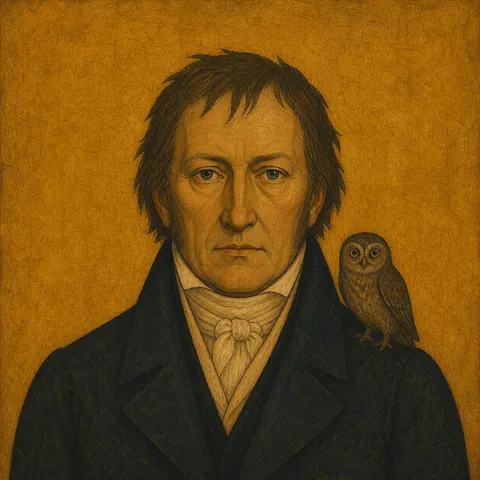 G.W.F. Hegel
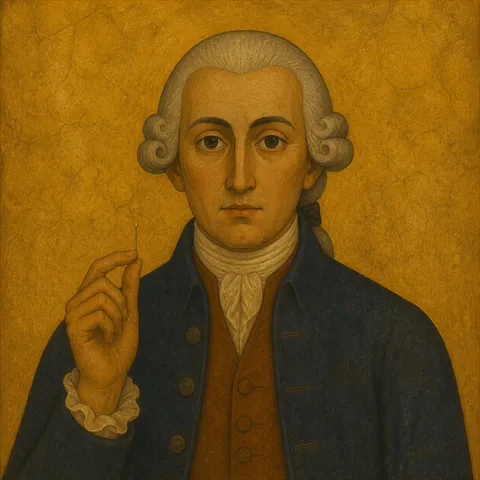 Adam Smith
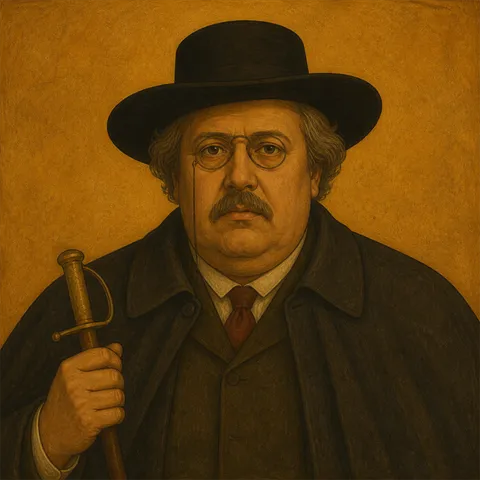 G. K. Chesterton
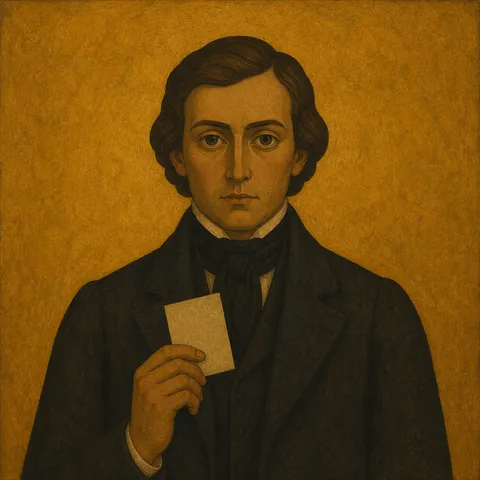 John Stuart Mill
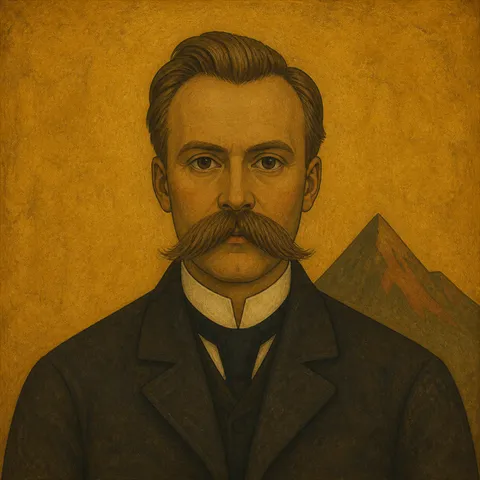 Friedrich Nietzsche
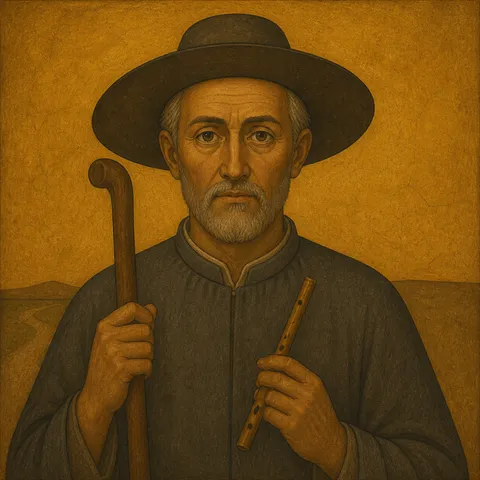 Hryhorii Skovoroda