You already know how it starts: an app, the second night, a taxi across town. What comes after arrives without instructions. Whether this is a decision or weather in the body. Whether it passes on its own. Whether two people can be loved at once. And why the warmth runs strongest on exactly those evenings when you most dread being left alone.
YOUR COMPASS ON THIS ROUTE
STATION 1 / 12
What people call love at eighteen is mostly chemistry.
Plato learned his doctrine of love from a woman. In the Symposium, Socrates repeats what Diotima told him: eros was born of Poverty and Cunning, which is why it is always hungry for something. The hunger starts with one body, and Diotima puts no shame on that. The body is her first rung, and from it the second becomes visible: from one body to all beautiful ones, from those to beauty of soul, and upward until the lover sees beauty itself, unmixed with anything. The part usually skipped he says plainly: the man who stopped on the first rung did not come to the wrong door, he is simply standing still. The ladder has an awkward top, where the particular person no longer appears, and Plato does not hide that price. Say that what teenagers call love is mostly chemistry, and he will not argue about the chemistry. He asks why an eighteen-year-old writes about eternity out of it.
To begin from the beauties of earth and mount upwards for the sake of that other beauty, using these as steps only.
Aristotle asked of every friendship what is loved in it. Friendship for advantage lasts as long as the advantage lasts; friendship for the person's own sake he placed higher, because it rests on what the person is. The second kind grows slowly. In the eighth book of the Nicomachean Ethics he notes that the wish for friendship comes quickly while the friendship itself does not, and that people cannot know one another until they have eaten salt together – a proverb about a table shared long enough to see each other tired. He adds that a person has few such friendships, since each demands time, and time in a life is short. A drive across the city at two in the morning, to someone you have been talking to for three days, has said nothing yet in this frame. Aristotle grants the force of that wish and even thinks it necessary; he asks only that the seal belonging to the end stay off the beginning.
Further, such friendship requires time and familiarity; as the proverb says, men cannot know each other till they have eaten salt together.
Cicero wrote On Friendship after losing his closest friend and his republic in the same decade. Friendship for him rests on character: a person is loved for being good, so scoundrels never have friendships, though they do have joint ventures. From this comes a rule he repeats: you do not ask a friend for what cannot be given, and you do not do for a friend what you would be ashamed to name out loud. Cicero knew the weight of that rule from the inside. For thirty years he wrote to Atticus about everything, including what he would not admit to himself, and he mentions favours done for friends that he now defends with a visible strain. A friend's former partner is exactly the place where affection finds out what it is worth. Write to her first and see nothing wrong in it, and Cicero asks whether you would tell your friend about it in the same tone.
Paul wrote the thirteenth chapter to the Corinthians in the middle of a quarrel about spiritual gifts: the congregation was measuring who spoke in tongues better and prophesied more. He cuts the argument off with a list of what love refuses to do, and every item in that list is a rebuke aimed at somebody in that city. Then comes the comparison that settles the chapter: prophecies end, tongues fall silent, knowledge goes, love stays. His Greek word is agape, and it names a way of treating the person you have chosen, whatever the weather inside you. Paul wrote this owning neither wife nor house, and he spoke of his own solitude as an assignment given to him, without complaint and without display. Say that love passes and no tragedy attends it, and he agrees readily about the feeling. About agape he answers from the other side: it becomes visible on the day the feeling has gone.
Augustine told the story of the pears to explain to himself something that frightened him. The orchard belonged to someone else, the pears were sour, better ones hung at home, and he did not even eat them – he threw them to the pigs. He looked for the sin outside the fruit. Alone, he writes, he would never have gone to that orchard; the whole pleasure hung on the fact that it was done together. From here runs his account of desire: people rarely want a thing directly, they want what others want, and another pair of eyes lends an object a value it does not hold. In Latin he called this societas, the company in which an act becomes possible. He left the wound open, admitting he could not say why company has such power. When a person grows more interesting to you because someone else is interested, he does not call that low. He says he found the mechanism in himself and found no cure.
Yet alone I had not done it: such was I then, I remember, alone I had never done it.
Aquinas opened his treatment of love with a definition borrowed from Aristotle: to love is to will good to someone. It looks cold and cuts sharply, because it unhooks love from pleasure. He then distinguishes the love of desire, in which you want the person for yourself, from the love of friendship, in which you want good for the person's own sake. Marriage rests on the second, which makes marital fidelity a matter of deeds, with mood playing a secondary part. Severity was not his register: he allowed separation from bed and board where living together was dangerous, and he asked nobody to pretend that nothing had happened. Forgiveness in his vocabulary is an act of will, available before the feeling returns, and that is precisely what makes it possible at all. Say you would forgive one betrayal for the sake of the family, and you have taken up his definition – and undertaken to will good to someone who has just done you harm.
Pascal founded the theory of probability while solving a problem about dividing the stake in an interrupted game, and the same man wrote that the heart has its reasons which reason does not know. The two sit together without friction. The heart for Pascal is the organ of immediate grasp by which we hold first principles: that space exists, that we are awake. Reason proves none of this and leans on all of it at every step. So where calculation runs short of data, decisions get made anyway, and the person waiting for a proof has already staked everything on 'no'. Pascal knew the dark half as well: the same heart loves diversion, anything to avoid sitting alone in a room, and the two jobs are easy to confuse. Moving to another city for someone you have known half a year asks, in his frame, for one test – whether this is a grasp or a flight.
The heart has its reasons, which reason does not know.
Kierkegaard built Works of Love on one sentence of commandment: you shall love your neighbour. A command is possible, he argues, only where there is duty, and duty is what makes love durable. Falling in love selects: one person out of the crowd, for a face, for a mind, for answering when you speak. Such love rests on what was found in the other, and it ends when the find is used up. Love under duty rests on you. Kierkegaard lived in uneasy company with his own theory: he broke his engagement to Regine Olsen, whom he loved, and wrote about the wound to the end of a short life. He never settled whether that act was fidelity to a higher duty or ordinary fear. Say that love holds by a decision made every morning, and you are repeating his central move – and taking the same weight, since 'every morning' means yesterday's decision has stopped being enough.
Hegel put recognition at the centre of human life. In the Phenomenology of Spirit two consciousnesses meet, and each demands that the other confirm it is something; out of this grows his dialectic of master and slave, where even the winner stays hungry, since recognition from a defeated man is worth nothing. Human desire, for Hegel, always takes the form of desire for another's desire. Love is the rare place where that hunger has a chance of being fed, because here each grants recognition freely. He therefore called marriage an ethical institution, where feeling receives the shape of an obligation. Hegel saw the danger as clearly as his critics did: a consciousness living only on recognition from outside loses itself. Say that you need to be needed, that otherwise you cannot love, and you have described his mechanism exactly – and you are standing where he raised the question of dependence.
Nietzsche opened the second essay of the Genealogy of Morals with praise for forgetting. Forgetting in his account is an active force, a kind of doorkeeper at the entrance of consciousness who holds the door shut so that room stays free for what is new. A person in whom that force has broken carries every injury around, and such a memory he called the root of resentment: an undigested past starts looking for someone to blame. A healthy animal forgets, he wrote, and a healthy person forgets in the same way, which is what makes action possible. In The Gay Science he added the other half: the things he loved he regarded as worth repeating for ever, and that is the opposite of forgetting. Deleting every shared photograph the same night is a gesture from his vocabulary. He would ask only what the hand is doing – clearing the ground or hiding a trace.
Chesterton defended the vow as the wildest of human adventures. He built the case on a paradox he loved: freedom comes from the thing that limits it. A man who keeps every door open enters nowhere; a man who has promised gets a house and neighbours, which is to say a whole world with edges, where something can finally happen. Divorce in his eyes returned a person to the empty corridor, where once again nothing occurs. Chesterton wrote this from inside a marriage he called happy, and he knew the cost of his own position: he and Frances had no children, and about that he kept public silence all his life. Say that ten honest years beat forty years of polite silence, and he offers no defence of the silence. He asks how you know that silence is what the eleventh year held.
Sartre made his pact with Beauvoir in 1929 and kept to it for half a century: between them a necessary love, alongside it contingent ones. Transparency was the binding clause, which meant telling each other everything. The theory underneath is entirely his own: a person has no ready-made essence and makes himself by his acts, so a promise to love for life would mean that tomorrow's self had already been settled in advance. In Being and Nothingness he described his own trap as well: the lover wants to possess the freedom of the other, and a freedom possessed stops being freedom, which makes love a project doomed to fail. Beauvoir later described the cost of the arrangement more precisely than he did, and her letters show which of them paid more. Say that two people can honestly be loved at once, and Sartre agrees – and adds that both of them then have to know everything.
The deck pulls you between two lines. One sees love as a deed that can be performed, and measures it by fidelity; the other sees an event that happens to a person, and measures it by force. Each pays its own price: the first risks polite silence at the table, the second an empty corridor with every door open. Your swipes have already placed you somewhere along that line, nearer Paul or nearer Nietzsche. Two records stand open. 'Paul, the Inventor of Morals' shows where agape came from; 'Kierkegaard and the Single Individual' shows what duty does to love.
SOURCES
Plato, Symposium, 211 (tr.: B. Jowett; укр. ред.) · classics.mit.edu
Aristotle, Nicomachean Ethics, VIII, 3 (tr.: W. D. Ross; укр. ред.) · classics.mit.edu
Paul of Tarsus, 1 Corinthians 13:8 (King James Version) (tr.: укр. ред.) · en.wikisource.org
Augustine, Confessions, Book II (tr. E. B. Pusey) (tr.: E. B. Pusey; укр. ред.) · www.gutenberg.org
Pascal, Pensées, 277 (tr.: W. F. Trotter; укр. ред.) · www.ccel.org
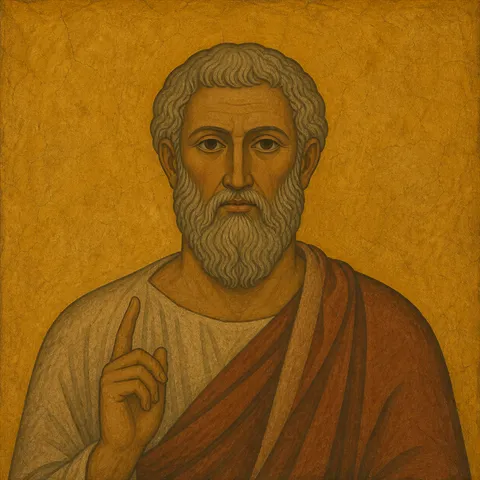 Plato
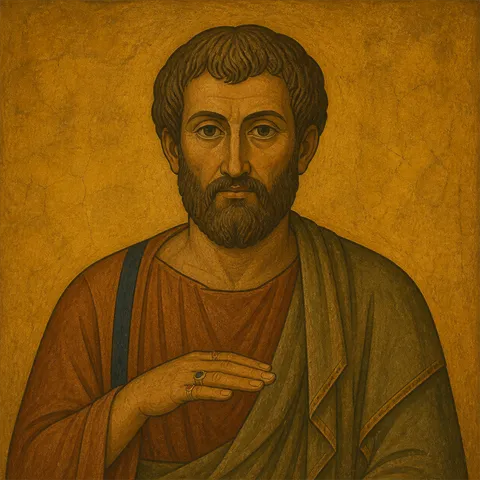 Aristotle
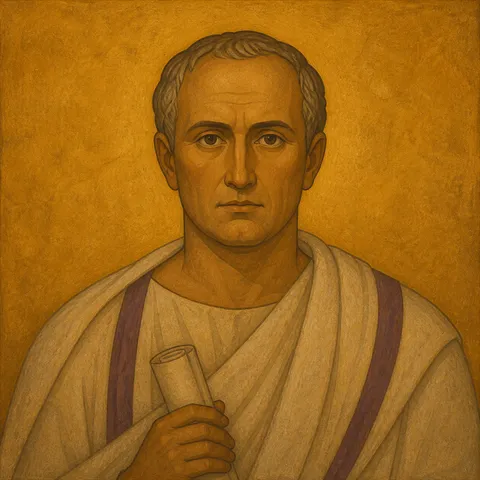 Marcus Tullius Cicero
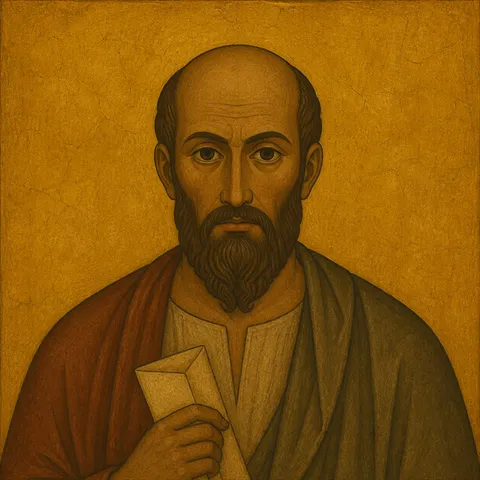 Paul of Tarsus
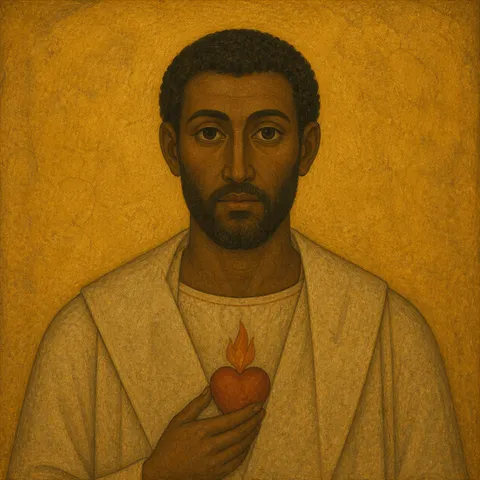 Augustine of Hippo
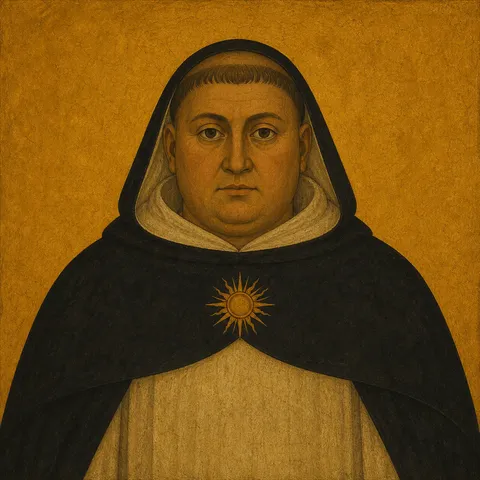 Thomas Aquinas
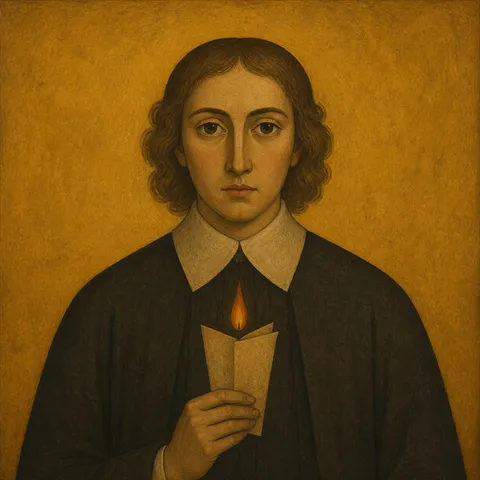 Blaise Pascal
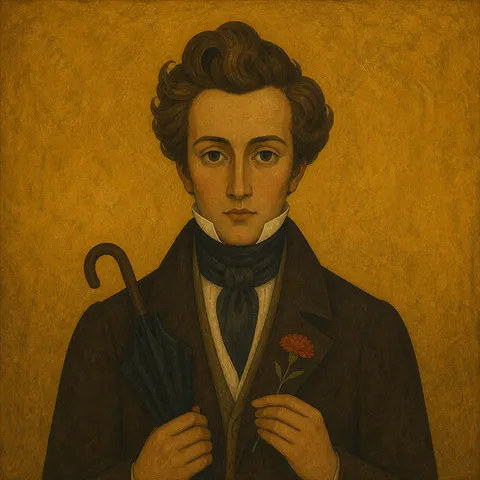 Søren Kierkegaard
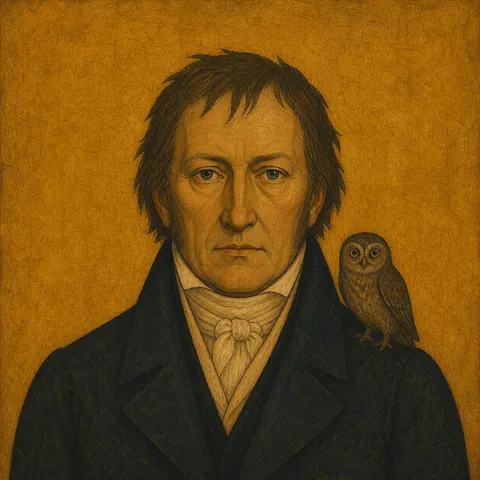 G.W.F. Hegel
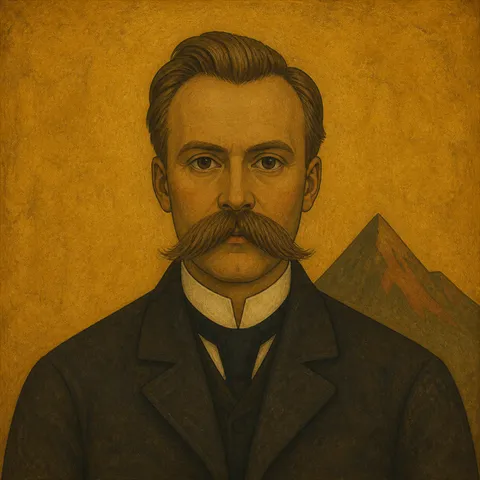 Friedrich Nietzsche
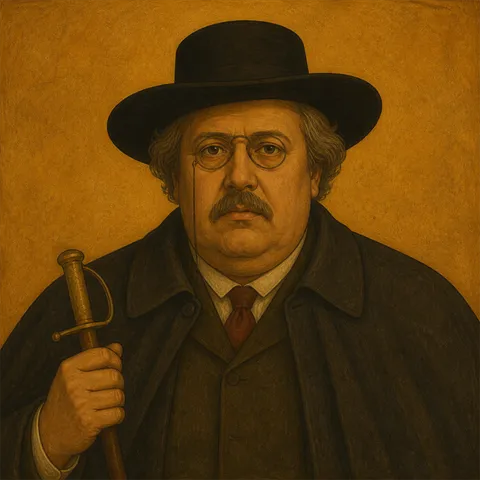 G. K. Chesterton
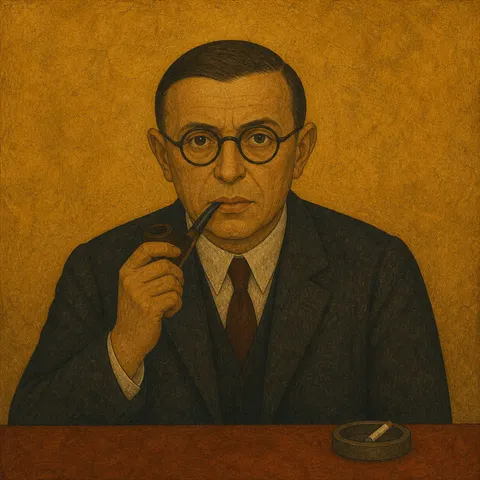 Jean-Paul Sartre