The exam you passed without deserving the mark. The thick book you took as a ten-minute summary. The moment somebody corrected you in front of other people and you had to decide what your face would do. All of it rests on one question: what has to happen before you are entitled to say that you know something.
YOUR COMPASS ON THIS ROUTE
STATION 1 / 12
In the seminar you say that you do not know, though you could put together something plausible.
Socrates spent his days asking craftsmen and generals for a definition and watching the definition come apart. The oracle had called him the wisest man in Greece, and he took the verdict for a riddle, then set about solving it by interviewing people with reputations. Each of them knew a trade and believed the knowledge ran further. Having examined a politician, he reported the difference: the man knew nothing and thought that he knew, while Socrates had at least stopped at the first half. That is the whole of his advantage. Saying you do not know in a seminar costs you the look of competence for about four seconds and buys the only ground a question can be asked from. Thirty years of doing this in public is part of why he was tried, and he did it in court as well.
he knows nothing, and thinks that he knows. I neither know nor think that I know.
Plato staged the counter-example. In the Meno, Socrates takes a slave boy who has never been taught geometry, draws a square in the sand and by questions alone brings him to see that the square on the diagonal is double the first. Nobody told him the theorem. He was walked to a place where he could recognise it, which Plato explains as recollection: the soul saw the Forms before birth and school merely jogs the memory. Strip off the myth and a hard claim survives. Some things cannot be poured into a person, since seeing that a proof holds is an act the learner performs himself. Upbringing supplies occasions and vocabulary. The yard and the school will give your sister manners and slang; the moment she catches why an argument is valid belongs to her alone, and no yard can hand it over.
Aquinas had a live crisis on his hands: Aristotle had come back into Latin Europe through Arabic translators, and a party of theologians wanted him banned. His answer ran the other way. Grace perfects nature, so the truth reason reaches and the truth revelation delivers cannot contradict, since both have one author. Then he did the patient work the slogan conceals, sorting what reason can demonstrate from what reason can only receive. Five ways to God's existence, yes; the Trinity, never. A physics lecturer who crosses himself is, on this account, using two instruments on one world, and Aquinas would want to know what happens when the two disagree. Keeping them in separate rooms is the settlement he declines to sign. Where the roads never meet, one of them is leading somewhere the other says is empty.
Descartes sat by a stove and asked what would survive if a powerful deceiver were working on him. The evidence of the senses goes. Mathematics wobbles. What holds is that doubting is thinking and thinking requires a thinker, and from that single stone he set about rebuilding the sciences. Notice what he never proposed: checking every rumour as it arrives. His method is surgical, performed once, on foundations. Pull the doubtful beliefs out early, lay down a criterion of clear and distinct ideas, and afterwards you can live at ordinary speed, because the structure has been inspected. Whoever checks nothing has skipped the inspection and inherited the building, which Descartes took to be the normal condition of educated men and the reason so many of them argue brilliantly from inherited rubble.
Bacon ran the English state and had no time for a myth of reading everything slowly. In Of Studies he sorts books by the labour they deserve: some tasted, others swallowed; a few chewed and digested. Summary has its place, and he says where the place ends, at the lesser arguments and the meaner sort of books. Past that boundary an extract is like distilled water, thin stuff. The same essay insists that reading makes a full man, which is why the weight falls on choosing the book. A ten-minute digest of a thick volume does fine while you know which class the volume belonged to, and it turns dangerous the moment you cite it as though the chewing had been yours. A Lord Chancellor is recommending economy here, with a boundary drawn around it.
Some books also may be read by deputy, and extracts made of them by others; but that would be only in the less important arguments, and the meaner sort of books
Pascal assembled a calculating machine at nineteen and laid the ground of probability in a correspondence about an interrupted game, so his defence of the heart comes from a man who could do the arithmetic. His move is technical. First principles – space, time, number – are known by a faculty reason cannot justify, and reason then computes from them. Demanding a proof of the ground you stand on yields nothing at all. The heart in his vocabulary is that faculty, an immediate grasp running ahead of demonstration. His severity lands in the same place: the heart that sees is the heart that hides from itself in diversion, so it wants watching. Trusting your gut over a statistic is a Pascalian move up to the point where the gut refuses to be audited, and there he would take the statistic's side.
Hume turned testimony into a problem about scales. Our confidence in a witness grows out of experience of witnesses; our confidence in the order of nature grows out of experience too, so a report of a broken order sets one body of experience against another. His conclusion: testimony weighs enough only when its own falsehood would be more miraculous than the event reported. He then lists the ways testimony spoils, through eagerness, through distance, through the pleasure of telling a wonder, through the habit such stories have of collecting where nobody checks. Notice what he declines to argue, that healings never occur. His subject is what a reasonable person may believe on report. A line in a blood test is a witness as well, with a known error rate, and that is why he would place it on the heavier pan.
Kant defined enlightenment as emergence from a minority the person has brought on himself, and then drew a line most readers forget. A scholar writing to the public may argue against anything, the doctrine of the church he serves included. The same man in office has to carry out what the office requires. Truthfulness stays unconditional for him, which is why the distinction matters: keeping quiet at a lecture breaks no duty, since nobody owes a public correction of his teacher while an exam is still ahead of him. Publishing the correction afterwards is precisely the freedom he defends. Whoever swiped yes here has used Kant's own escape, and a condition comes attached to it – silence in the room obliges you to say the thing somewhere it can be judged.
Argue as much as you will and about whatever you will, but obey!
Mill was raised as an experiment and broke down at twenty, which taught him something about opinions held with no air in the room. In On Liberty he argues that even a true belief, held as a prejudice and never set against the strongest form of the objection, is held badly and understood poorly. He who knows only his own side of the case knows little of that. Mill wanted the objection spoken by somebody who actually holds it, since a version rehearsed by its opponent is a straw copy. He went on to ask for devil's advocates wherever dissent had gone quiet. Ten years in which a view never failed you is evidence about those years, and it says nothing about the parts of it you have never once had to defend.
Kierkegaard wrote under invented names because he held that what he was after cannot be handed over in bulk. His objection to proofs of God concerns what a successful proof would accomplish. Faith for him is a relation in which the whole person is staked, carrying the possibility of being wrong the entire way. Remove the risk and the staking is gone; what remains is assent to a theorem, which costs nobody anything. He read the proofs of his own century as an attempt to make Christianity comfortable for a Copenhagen professional. His measure is Abraham on the mountain, a man with no argument to show the neighbours. Anyone who wants God demonstrated the way a theorem is demonstrated is asking for a different thing under the same name, and Kierkegaard would ask whether the demonstration, once granted, would change a single Tuesday.
Nietzsche set down a line about memory and pride that reads like an inspection report on the inner life: a man has done something and his pride refuses to take it; the memory argues its case and then gives way. The self edits itself in order to bear itself. Applied to a public correction, his forecast is blunt. Relief is what you will feel, and underneath it a rearrangement takes place in which the fact of being corrected becomes evidence of your openness, while the correction itself quietly loses its sting. The vanity gets no recommendation from him; he is describing machinery he located first in himself. His own remedy is harder than gratitude, a willingness to look at what you forgot and why. Whoever feels the relief for real has something he prized and reckoned rare.
Russell spent a decade with Whitehead deriving arithmetic from logic and produced three volumes in which two plus two takes hundreds of pages, so a demand for the two-minute version would have amused him. His programme stands behind the demand all the same. Analysis breaks a claim into its logical parts until the parts are clear enough to be checked, and a thought that resists the treatment is usually a phrase standing where an idea should be. He wrote popular books quickly, in the belief that anything genuinely understood can be said plainly to an adult. The limit he granted runs like this: two minutes can show a friend what a claim asserts, and they cannot walk him through the derivation. Understanding, on Russell's account, begins with being able to say what would make you wrong.
Two demands pulled against each other here: that knowledge is a procedure, transferable, checkable by anyone who repeats the steps, and that some of it has to be undergone by a person who stakes something. Your own position was settled on the cards where knowing cost you – the answer you refused to fake, the view you have never had to defend. Read those again. Two doors stand open: the trial of a man who would not stop asking, and the night one mathematician found out where his instruments could not reach.
SOURCES
Plato, Apology, 21d (tr.: Benjamin Jowett; укр. ред.) · classics.mit.edu
Francis Bacon, Essays, Of Studies (tr.: укр. ред.) · en.wikisource.org
Immanuel Kant, An Answer to the Question: What is Enlightenment? (tr.: укр. ред.) · www.marxists.org
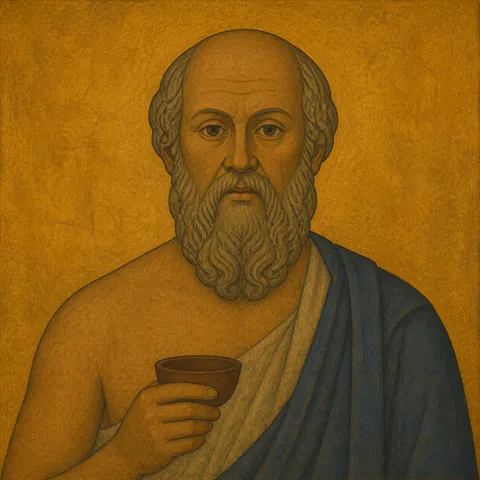 Socrates
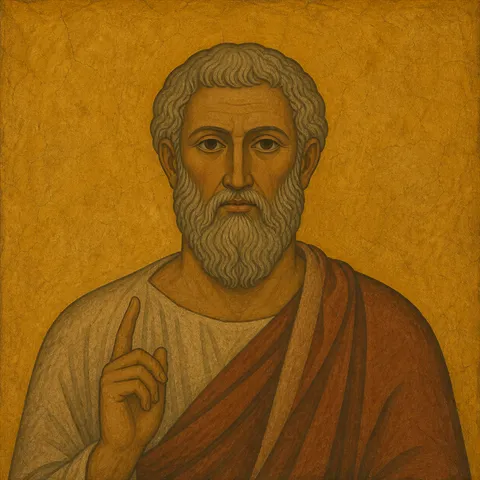 Plato
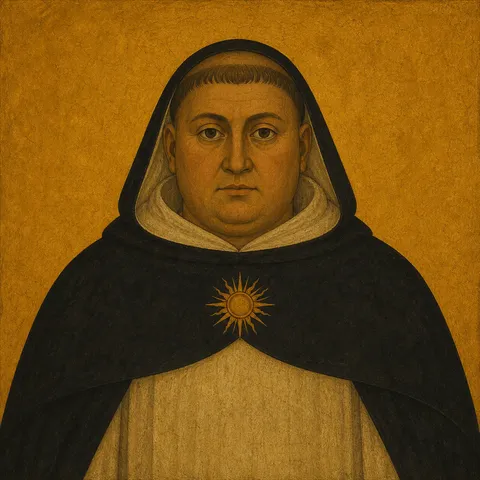 Thomas Aquinas
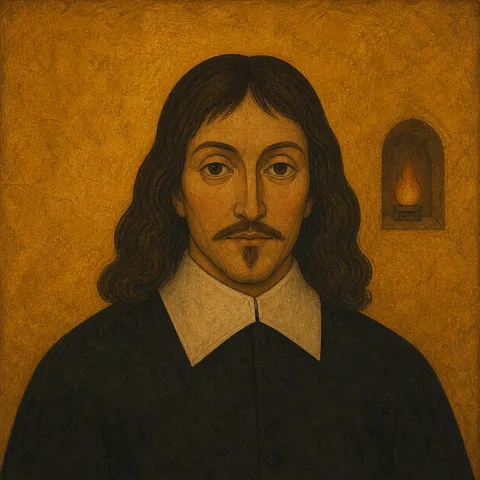 René Descartes
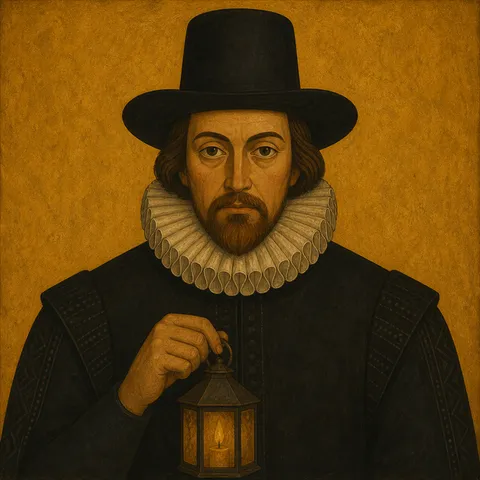 Francis Bacon
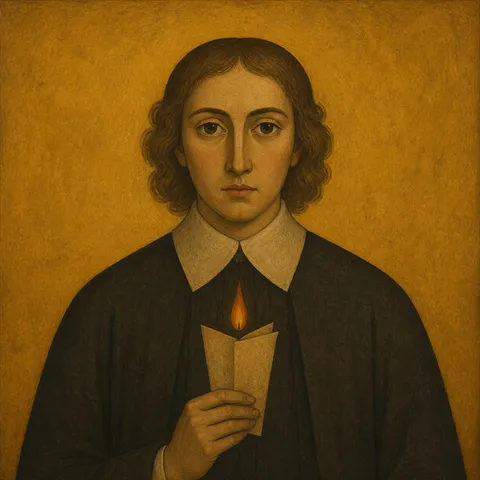 Blaise Pascal
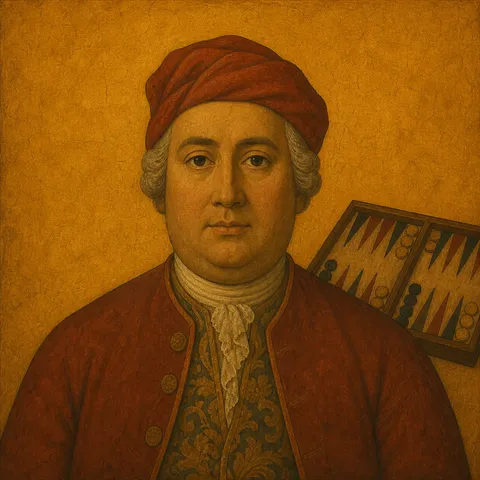 David Hume
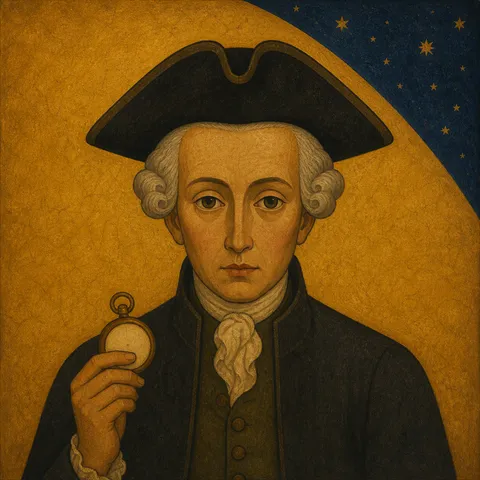 Immanuel Kant
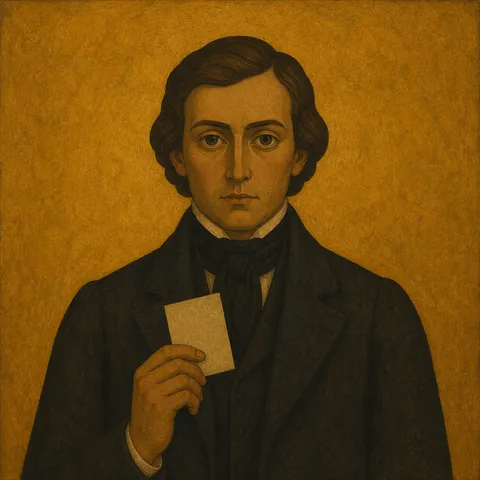 John Stuart Mill
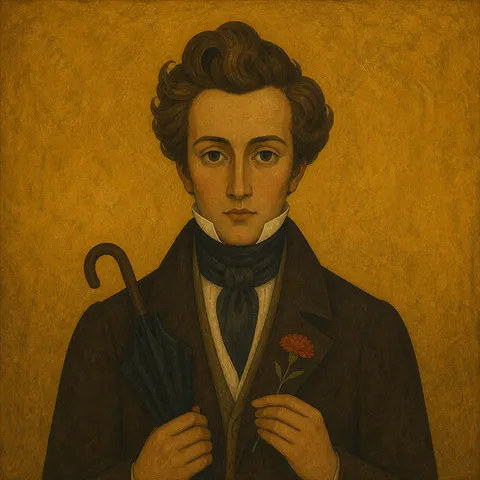 Søren Kierkegaard
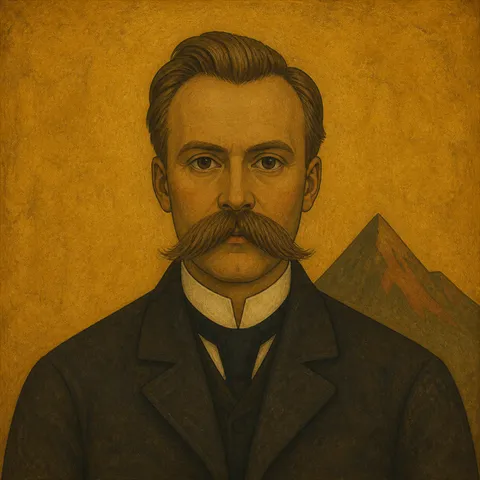 Friedrich Nietzsche
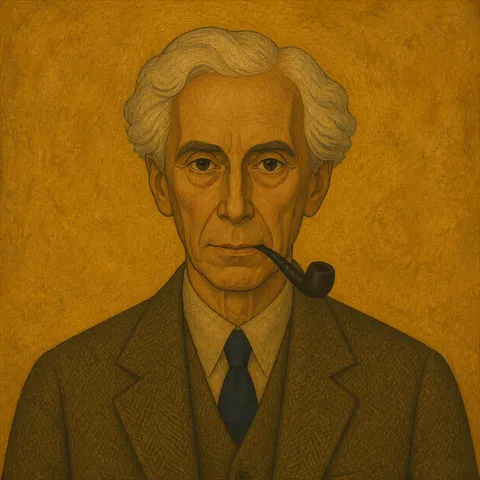 Bertrand Russell