Rules meet you a dozen times a day and you obey most of them without noticing: the red light on an empty street, the tax that leaves your account, the queue you do not jump. Then a rule asks for something expensive, and you find out what you take a law to be. Thirty cards are behind you. Twelve people follow who argued the question before judges of their own.
YOUR COMPASS ON THIS ROUTE
STATION 1 / 12
At three in the morning at an empty crossing I wait for the green, and no camera is why.
Kant's test asks nothing about consequences. Take the rule you are actually acting on, state it as though everybody followed it, and see whether it survives the statement. "Cross when nobody is watching" fails immediately: a road where that rule holds universally has no signals worth reading, and the exception you grant yourself is drawn on the credit of everyone keeping the rule you are breaking. He walked Königsberg on a round so regular that neighbours set their clocks by it, and he held that a duty kept only under observation belongs to the police. A camera changes the price of an act and leaves its worth untouched. Whoever waits at three in the morning with nobody watching has produced the one kind of evidence Kant accepted, since a will acting from the law alone is visible nowhere else. Your swipe made a claim about what you are, at an empty crossing.
Act only on that maxim whereby thou canst at the same time will that it should become a universal law.
Hume would take the second half of this card more seriously than the first. Custom, for him, is the great guide of human life; it turns yesterday's experience into tomorrow's expectation, and reason on its own never performs that step. Justice arrives the same way. No contract was signed in a forest; rules of property and promise grew up because they worked, generation after generation, until keeping them came to feel like eyesight. A person who stops at a red light while deliberating about it holds the signal more weakly than one who stops the way he breathes. Hume sat down to backgammon when his own scepticism got too loud, and he meant that as a philosophical claim about where beliefs live. Your yes said that thoughtlessness here is a good sign. He would call it the only sign a society ever gets that its laws have taken.
Crito arrives before dawn with the escape arranged and the guards paid, and Socrates talks him out of it. The argument leaves death aside. It concerns what a man does with an agreement whose benefits he has drawn for seventy years: he was born under these laws and never left at a time when leaving was perfectly legal. Breaking them at the first personal cost would say that they held him only while convenient. He grants that the verdict is unjust; the jurors wronged him, and his own account is unaffected by that. Handing five hundred hryvnias to a patrol officer is the small form of the same transaction: the fine is escaped and the rule has quietly acquired a price, which both parties now know. Your yes paid in a day of your own life, and Socrates thought that the cheaper rate.
Cicero held that one law was never enacted and therefore cannot be repealed. Right reason in agreement with nature, binding in Rome exactly as in Athens, the same today and tomorrow, needing no interpreter beyond a mind that has not been corrupted. Out of that came the vocabulary Europe later used for rights it had no written statute to defend. He argued it as a working advocate who had watched senatorial majorities legalise plunder, which gave the doctrine a practical edge: a statute contradicting that law holds no authority, however the votes were counted. If every law were repealed tomorrow and your week continued much as before, Cicero would read that as the ordinary condition of a decent person. He would add that the test is easy to pass in comfort, and that On Duties was written while a fresh set of statutes was being drafted to kill him.
Aquinas defines law as an ordinance of reason for the common good, made by whoever has care of the community, and promulgated. Two things follow for this card. Human law exists partly to train citizens toward virtue, beginning with the young, who obey out of fear and arrive at habit, so a statute forbidding a self-destroying practice is doing recognisable pedagogical work. And human law reaches only so far: Aquinas holds that it should tolerate vices it cannot suppress without producing worse evils, which is why he permits prostitution in a city the way an engineer permits a sewer. He insists as well that human law judges outward acts and leaves interior sin to a court nobody here can convene. Your yes bought the pedagogy. The same article sets the limit that makes the pedagogy bearable.
Locke needed an answer to the obvious objection: nobody signed anything. His answer is tacit consent. A man who travels the highways, holds a lodging, inherits a field or takes the protection of a government's courts has submitted to its laws for as long as he enjoys them, and the door out stays open in principle, since he may sell up and leave. That is thin, and Locke knew it; he distinguished such consent from the express kind that makes someone a full member, and the thinness is why the argument has been fought over for three centuries. It also cuts the other way: a government that breaks the trust dissolves its own claim, and resistance becomes lawful. A law you voted against still binds you on Locke's account. The same account tells you when the binding stops.
Mill drew one line and defended it for a hundred pages. Power over an adult is legitimate where the act harms other people, and nowhere else; the rest of a life belongs to the person living it. The principle is usually quoted to protect somebody's private habit, and here it does the opposite work. A neighbour tipping something into the river at night produces harm with named victims downstream, which places the case squarely inside the zone where a society may act, and Mill counted informal pressure from neighbours as part of a society acting. He understood the cost of reporting it too: you will live beside this man for years and greet him every morning. Your no on this card chose the cost of silence, and by Mill's own bookkeeping somebody downstream pays that bill.
That the only purpose for which power can be rightfully exercised over any member of a civilized community, against his will, is to prevent harm to others.
Burke's objection to fast legislation is an argument about knowledge. A long-standing rule carries information nobody now alive can restate: it survived circumstances its drafters never met, and that survival is evidence of a kind no committee generates from first principles. Repeal it in an afternoon and you throw out the reasons you never learned along with it. He was no defender of everything old; he spent years prosecuting the plunder of Bengal and backed the American colonists against his own government. His quarrel was with the method of starting over. A law visibly out of date is still doing something, and the practical question is which slow instrument replaces it. Your swipe set a speed. Burke's answer names the price of the faster setting, and Paris paid that price inside the decade.
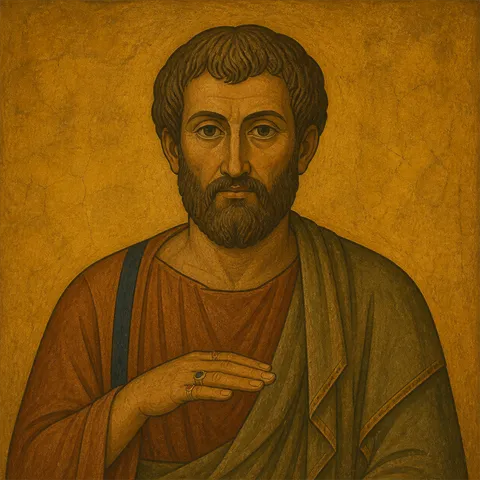
Aristotle noticed that a good law produces a wrong result in certain cases, for a structural reason: statutes speak universally and cases arrive one at a time, so the general formula gets written for the usual instance and will miss the unusual one. Equity is the repair. It asks what the lawgiver would have laid down had this case stood in front of him, and it treats the answer as law, with mercy left out of the account. Age belongs here. A nineteen-year-old and a fifty-year-old performing the same act differ in how much habit has already been built into them, and the whole of Aristotle's ethics runs on habituation. Sentencing the younger one more lightly on that ground applies the statute correctly. Your swipe decided whether a judge is a clerk of the text or a reader entitled to finish what the text left unsaid.
And this is the nature of the equitable, a correction of law where it is defective owing to its universality.
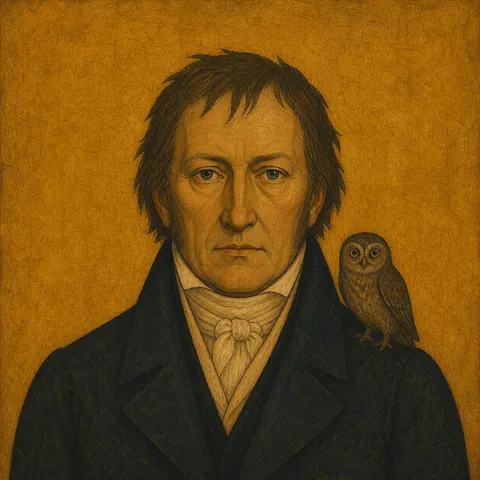
Hegel reversed the usual sympathies. A crime is an act with a claim inside it, a proposition the criminal has put into the world by his own will, and punishment is the answer that annuls the proposition. On that accounting the penalty honours him: it takes his deed as the deed of a rational being who meant something, and it repays him in his own currency. Deterrence and rehabilitation see in a man a dog to be trained or a patient to be cured, and Hegel found both views insulting. Anger at a sentence that runs too light has a structure he would recognise: the community reads the leniency as a claim that the act did not fully count. Your yes demanded that it count. Hegel's version puts the demand in the mouth of the man in the dock.
Punishment is regarded as containing the criminal's right and hence by being punished he is honoured as a rational being.
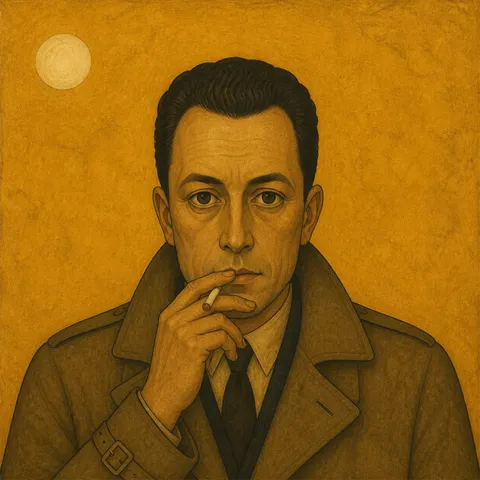
Camus's father came home at dawn from a public execution and vomited, and the son built an argument out of that morning. His case against the death penalty begins with the machinery. A state that kills a bound man months after the act does something no crime of passion resembles: a killing scheduled in advance and administered by clerks, with a certainty the victim never had. He refused the comfortable version of the argument too. Executioners are ordinary men, juries are ordinary, and the work is done by the abstraction. Camus signed appeals for men he considered guilty, and he wrote that a society keeping the guillotine might at least stop calling it justice. Your no on this card refused the calendar. The essay behind it appeared in 1957 and reads like a legal brief.
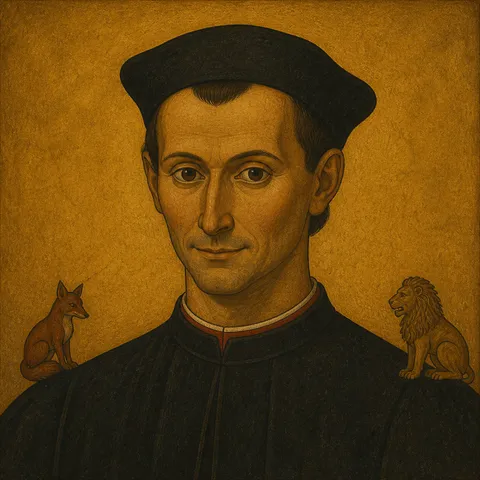
Machiavelli wrote for men who already held power and lied to themselves about what kept them in it. His rule for extremity comes without decoration: where the safety of the fatherland is at stake, no consideration is owed to what is just or unjust. He makes no general licence out of it. The Discourses give more pages to law and to republican habit than the Prince gives to force, and a republic where such measures become routine he counts as already dead. Taking documents you have no right to has the same shape: an institution is rotting, the lawful channel is captive, and you decide the outcome outranks the rule. Machiavelli would want the ledger honest about that. He would ask what happens to the next man who reads your precedent.
Two questions kept dividing these twelve. Whether a law binds through a consent once given or through the right reason standing behind it, and whether obedience is worth more when it has been thought through or when it has sunk into habit. Your swipes answered both without consulting you. Two records stand open beside this route: the trial that killed Socrates, and the quarrel between a gardener and a man arriving with blueprints.
SOURCES
Immanuel Kant, Fundamental Principles of the Metaphysic of Morals, Second Section (tr.: T. K. Abbott; укр. ред.) · www.gutenberg.org
David Hume, An Enquiry Concerning Human Understanding, V (tr.: укр. ред.) · www.gutenberg.org
John Stuart Mill, On Liberty, Chapter 1 (tr.: укр. ред.) · en.wikisource.org
Aristotle, Nicomachean Ethics, V, 10 (tr.: W. D. Ross; укр. ред.) · classics.mit.edu
G.W.F. Hegel, Philosophy of Right, § 100 (tr.: укр. ред.) · www.marxists.org
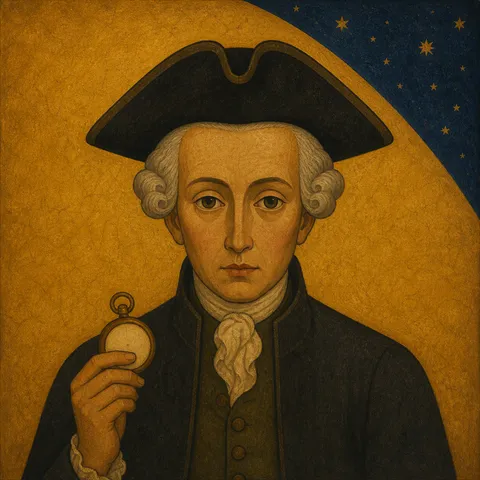 Immanuel Kant
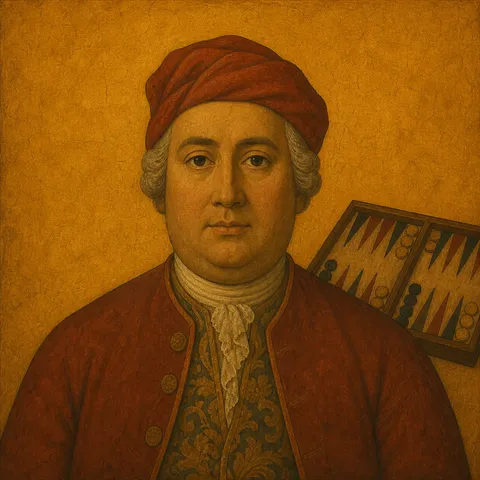 David Hume
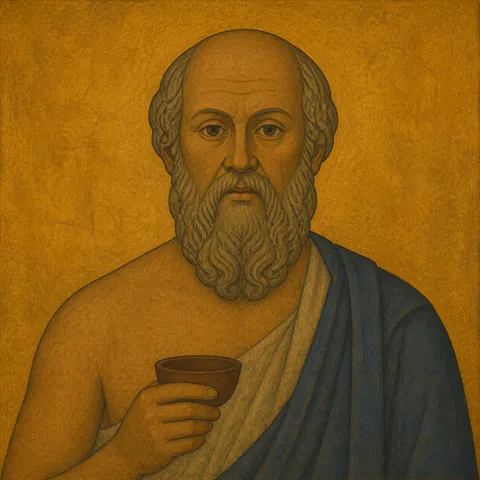 Socrates
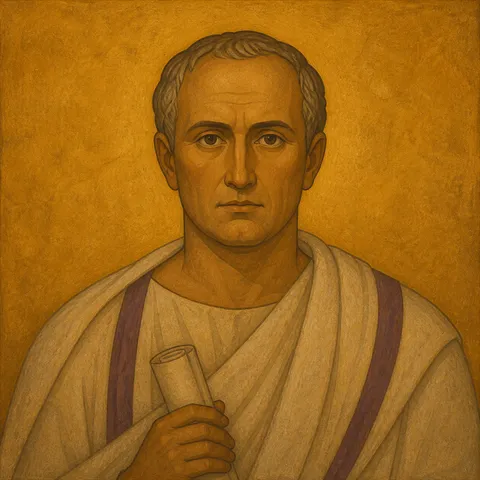 Marcus Tullius Cicero
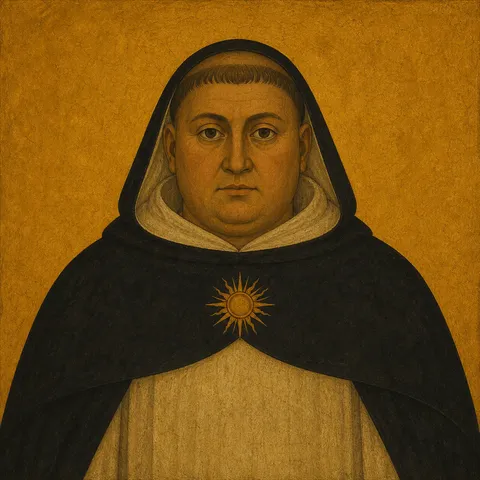 Thomas Aquinas
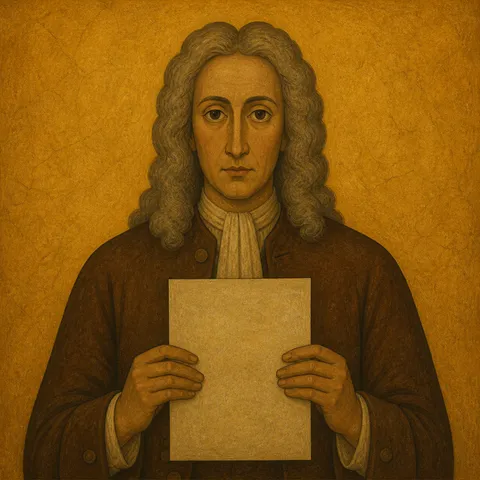 John Locke
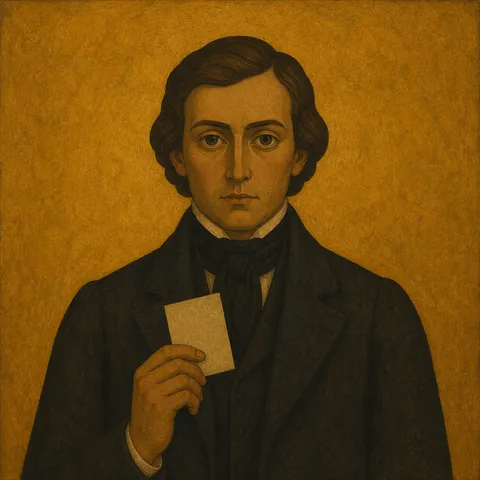 John Stuart Mill
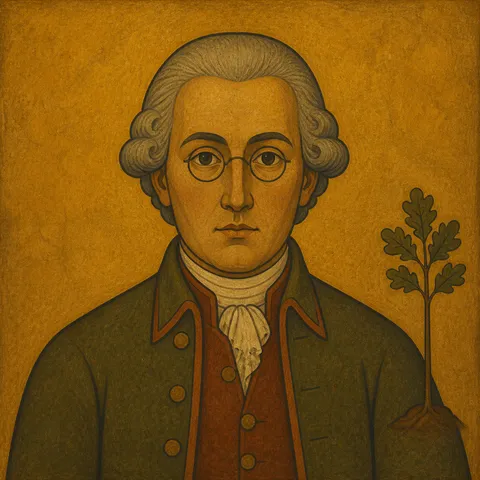 Edmund Burke
 Aristotle
 G.W.F. Hegel
 Albert Camus
 Niccolò Machiavelli