Someone always stands above you – on the shift, and in the office where the shift is decided. Sometimes that is a relief, sometimes a humiliation, and the moment one turns into the other is hard to catch. Behind the order you carried out this morning sits a question as old as cities: why do I obey at all, and what would have to happen for me to stop?
YOUR COMPASS ON THIS ROUTE
STATION 1 / 12
Whoever answers for the result has the right to give orders without explaining them.
Plato looked at power through the eyes of a man who had watched a vote kill his teacher. In the sixth book of the Republic he puts the reader on a ship: the owner is strong and short-sighted. The sailors have been drinking, and each of them is certain the helm belongs to him. The one who can actually read the stars gets called a stargazer and a waster of time. Plato's whole politics grows out of that scene. A course belongs to whoever knows it, and the consent of the men hauling the rope adds nothing to that knowledge. A vote turns no sailor into a physician. One detail is easy to miss: the true pilot never asks the crew for permission to steer, since a skill needs no licence. Plato handed the city to philosophers filtered through decades of geometry and service, and he never pretended the rest had more to offer than trust. Accept an order without explanation and you accept this picture, along with the question of whether your pilot ever studied the sky.
The sailors are quarrelling with one another about the steering – every one is of opinion that he has a right to steer, though he has never learned the art of navigation.
Aristotle asked of power what he asked of everything else: what it looks like in health, and what it turns into when it sickens. The dividing line runs through friendship. Father and son, king and citizens – wherever there is a shared undertaking, friendship and justice hold together, because they grow from one root. Tyranny stands apart in his account: nothing is held in common, so neither friendship nor justice can arise. A manager who is feared gets hands without heads, and a hand, in Aristotle's phrase, is a tool that has been given a voice. The work still gets done, and from outside the workshop looks sound. What goes missing is the thing in which a subordinate recognised his own interest. Then comes a move people do not expect from him: he grants that between the deeply unequal friendship is simply unavailable, and he reproaches neither side for it. Admit that fear of your boss outweighs respect, and Aristotle asks something else – what the two of you actually hold in common.
For where there is nothing common to ruler and ruled, there is not friendship either, since there is not justice.
Cicero was a consul before he was a philosopher, and law for him never shrank to the text passed in the chamber. In On the Republic he wrote that true law is right reason in agreement with nature: the same in Rome and in Athens, the same today and for ever, and beyond the power of any senate or assembly to repeal. One consequence of that sentence cost many of his readers their lives. A written order at war with such a law is no law. Cicero lived to see his own name hunted the length of Italy, and he withdrew nothing. He also added a caution that gets skipped: the person fit to judge right reason has been raised in a republic, used to courts and to open speech, because a conscience on its own goes wrong easily. Say that a law against conscience may be ignored and you stand with him – and you inherit the hardest part of his doctrine, since you must tell right reason apart from your own convenience.
Socrates had somewhere to go. His friends had bribed the guard, a ship was waiting at Piraeus, and every Greek took flight from a city that had condemned you to be the natural move. He stayed, and in the Crito he says why: the laws of Athens raised him, married him, gave him everything he is, and a man who has used a city for seventy years cannot kick the ground out from under it the first morning it treats him unjustly. Obedience is the wrong word for this. A few years earlier the Thirty Tyrants had ordered him to fetch Leon of Salamis for execution, and he walked home while the other four carried out the order. Both times he stayed where he stood, refusing flight and refusing the order alike. The Athens that killed him he called his own down to the last cup. Say you would leave for good if a regime you despise won here, and Socrates will not argue about the contempt. He asks what you owe the streets that raised you.
When we came out of the rotunda the other four went to Salamis and fetched Leon, but I went quietly home.
Paul wrote into a world where rank showed in every detail: who sat where, who bowed to whom, whose son spoke first, whose name came with a title. In the letter to the Galatians he took that ladder down in a single clause – there is neither Jew nor Greek, neither slave nor free. He abolished no offices and freed no slaves; what he removed was rank's last claim to be real. The same Paul tells the Romans to submit to the authorities and grants them the sword, and the two sit together without strain: power has a job to do, and the person under it weighs exactly what the person above it weighs. A city that measures your voice by your contribution was familiar ground to him. Corinth divided the common supper by purse, the rich starting before the poor arrived, and Paul sent that church the sharpest letter he ever wrote. Say a bigger tax bill should buy a bigger say, and you are putting the ladder back.
Augustine built the City of God on one distinction: a city that loves God to the point of forgetting itself, and a city that loves itself to the point of forgetting God. The engine of the second he called libido dominandi, the lust to rule, and in his description it runs just as well in people who sincerely want the good. Rome for him was no accident of history. Rome was an ordinary city grown to the size where that lust could afford an army. He knew the mechanism from inside: as a young professor he chased chairs, and the Confessions record his pleasure at a rival's defeat outrunning his pleasure in truth. Hence his distrust of the sentence 'I would be better than they are.' The better man, in his ledger, has already caught the lust at work in himself, and the catching has to be done every morning. Imagine yourself with a hundred people under you, and Augustine does not dispute your intentions. He asks what you will do with the pleasure of giving the order.
Aquinas defined law as an ordinance of reason, promulgated by whoever has care of the community, for the common good. One consequence sounds odd to a modern ear: law carries a duty to educate. People arrive at virtue by teaching and by habit, he writes, and punishment exists for those whom words do not reach, so that fear may train them into doing well of their own accord. Law therefore reaches legitimately into habits that injure nobody outside the person himself, and drunkenness and usury sit in his lists alongside theft. He saw the boundary and drew it with care: a law too severe for imperfect people breeds more evil than it restrains, and a wise legislator asks nothing the community cannot bear. Say the state has no business forbidding what harms only you, and Aquinas answers from the other end: a law that trains nothing in you turns the city into a boarding house.
Machiavelli wrote The Prince in a village outside Florence, where they sent him after the rope, and he wrote for a man who had already chosen power. His central move is plain: a ruler is judged by what came out, and things come out for those who can step away from the good when the moment demands it. Keep the appearance of virtue, he advises, and keep the virtue itself in reserve, because people rarely watch your hands and always watch the result. His example comes from memory: Cesare Borgia, who in one night at Senigallia removed his own confederates and thereby pacified the Romagna. There is less cynicism here than the reputation suggests. Machiavelli is convinced that a ruler who holds to virtue among the unscrupulous loses the state and its people with it, and Florence had shown him as much. Admit you would undercut a colleague who would do the same to you, and you are measuring the act by his rule – and you take on his ledger, since this logic offers no place to stop.
Hegel held that the freedom you imagine you are trading for order does not exist without order. In the Philosophy of Right the state is the actuality of concrete freedom: a man becomes free by recognising his own will in the law, the way a musician recognises himself in the rules of harmony. The arbitrary freedom of doing whatever occurs to you is not yet freedom at all for Hegel; it is an empty possibility waiting for a shape. He read history as the slow unfolding of that shape, from the Greek polis to the modern state with its courts and its clerks. Hence his contempt for those who protest from abstract first principles, and hence too his blindness: the state he described turned out, in the following century, to be capable of swallowing the person whole. Say you would hand over part of your freedom for a state where everything works, and Hegel disputes the transaction itself. On his books you give up nothing; you receive, for the first time, something usable.
Burke came to Bristol in 1774 and told the voters what they did not want to hear: he owes them his judgment, and if he sacrifices it to their opinion he betrays them by the same act he calls service. They remembered, and six years later they did not return him. He was no theorist of independence from ordinary people; he sat in Parliament for twenty-eight years, fought for the American colonies and for the impeachment of Hastings, and each of those causes cost him votes. His view of representation grows from the same ground as his conservatism: decisions are born in the conversation of people who have seen the papers, and an instruction posted in from outside cuts that conversation off halfway. Sitting on a committee, voting with your own crowd against your own judgment, you meet his one question – what were you put there to do?
Tocqueville sailed for America in 1831 to study its prisons and came back with a book about something not yet visible in Europe. Equality arrives like a tide, he wrote, and only one question remains: whether equals will live free. The danger he described needs no tyrant. An immense and mild power provides its citizens with amusements and security, foresees their needs, manages their principal concerns, takes each worry off their hands, until the only work left to them is being pleased. Such a power does not break the will, on his formula; it softens it and points it. The people under it stay free on paper and children in practice. He admitted he had not seen this in America; he saw the slope and named the direction. Agree to double the tax for a state that heals and teaches, and you are buying the thing he described, paying in a currency his book does not count.
In The Abolition of Man, Lewis described the people he called the Conditioners: those who have acquired the means of shaping others and no longer hold any moral measure above themselves, having declared it a superstition. Their rule, he wrote, will be the mildest in history and the most complete, because they intend the good of the people they remake. Cruelty done out of love is the hardest to stop: the tyrant who knows he is doing wrong eventually tires, while the guardian certain of his own kindness never does. Lewis was no romantic about liberty, and he defended punishment by desert in the years when fashionable opinion was already talking about curing the criminal. A camera with face recognition frightens him because whoever is watching believes he is your benefactor. Agree to one on every corner and you hand over precisely what he asked you to keep.
The deck pulls you between two lines. One asks who is competent and gives the helm to knowledge; the other asks who consented and gives it to agreement. Each keeps its own accounts: the first pays in the folly of crowds, the second in the folly of an expert nobody stopped. Your swipes have already placed you somewhere on that line, nearer Plato's ship or nearer Burke's Bristol hall. Two records stand open. 'The Republic as Revenge' shows the wound the philosopher-king grew from; 'Why the Past Votes' shows what Burke and Tocqueville answered to every fresh design for order.
SOURCES
Plato, Republic, VI, 488 (tr.: B. Jowett; укр. ред.) · classics.mit.edu
Aristotle, Nicomachean Ethics, VIII, 11 (tr.: W. D. Ross; укр. ред.) · classics.mit.edu
Plato, Apology, 32c–d (tr.: B. Jowett; укр. ред.) · classics.mit.edu
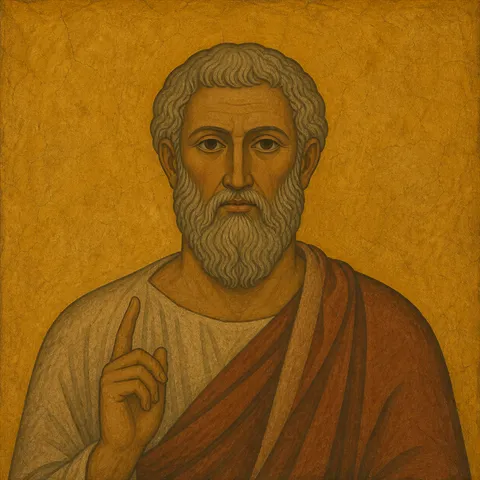 Plato
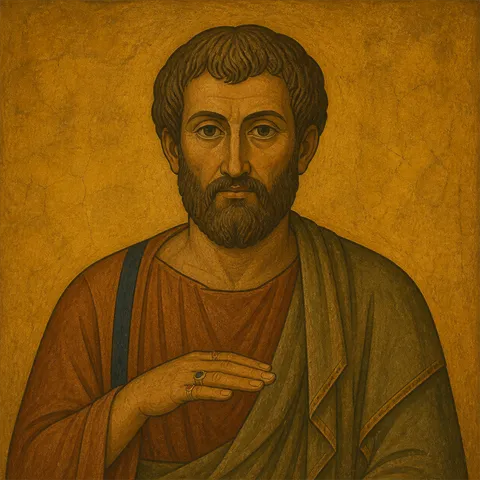 Aristotle
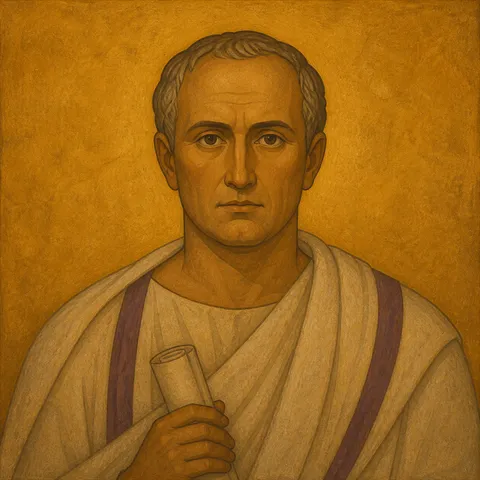 Marcus Tullius Cicero
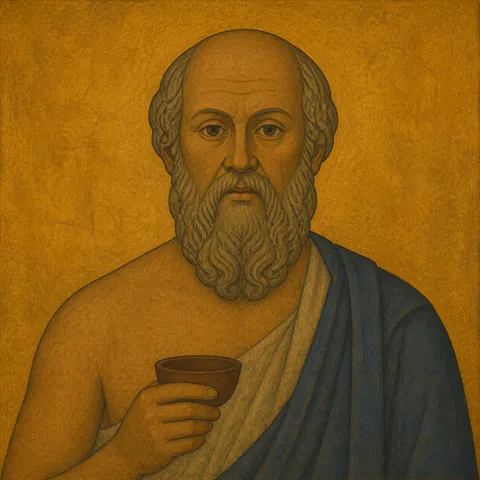 Socrates
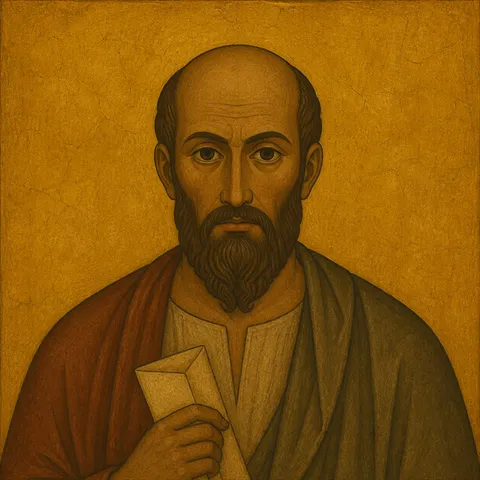 Paul of Tarsus
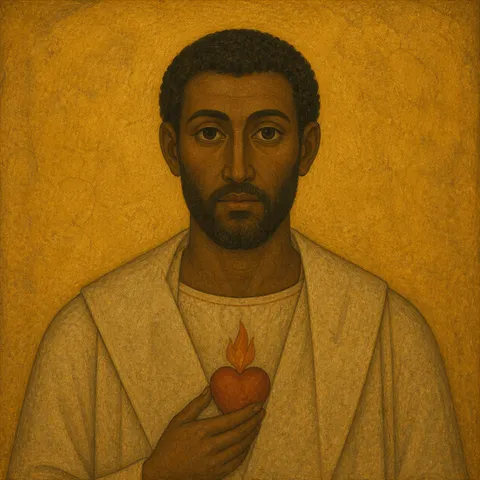 Augustine of Hippo
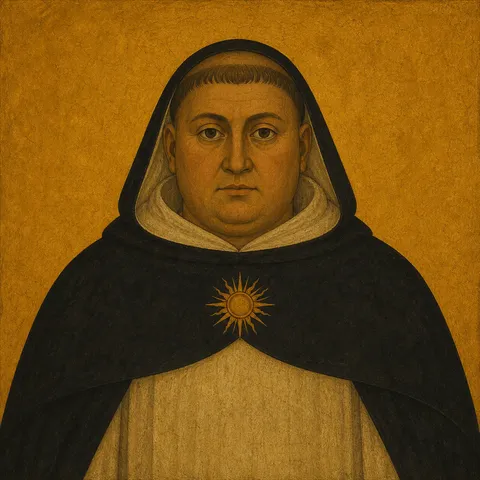 Thomas Aquinas
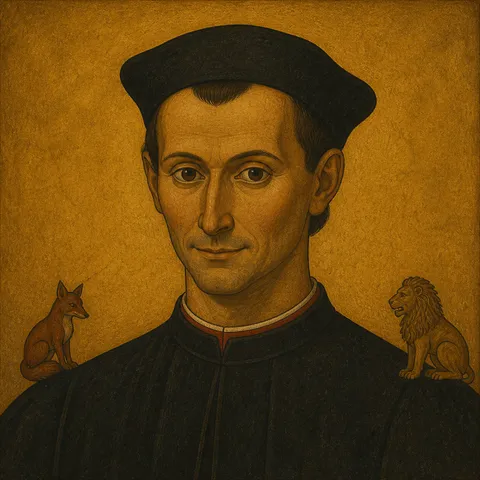 Niccolò Machiavelli
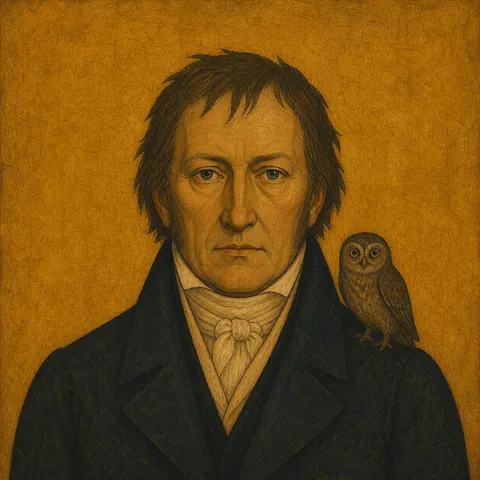 G.W.F. Hegel
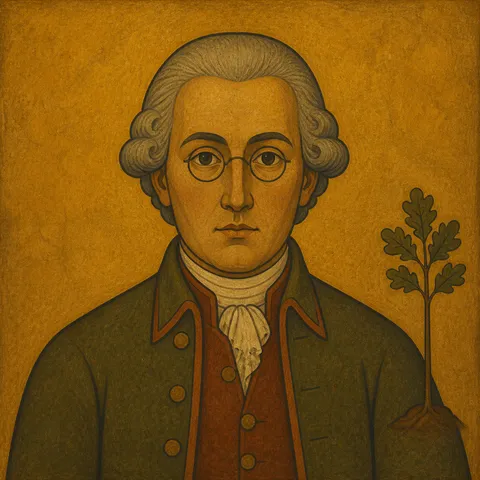 Edmund Burke
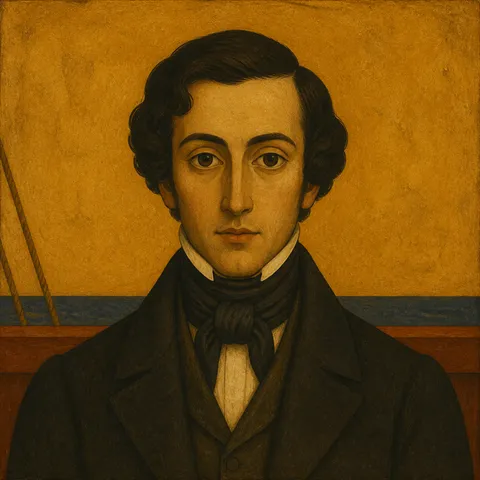 Alexis de Tocqueville
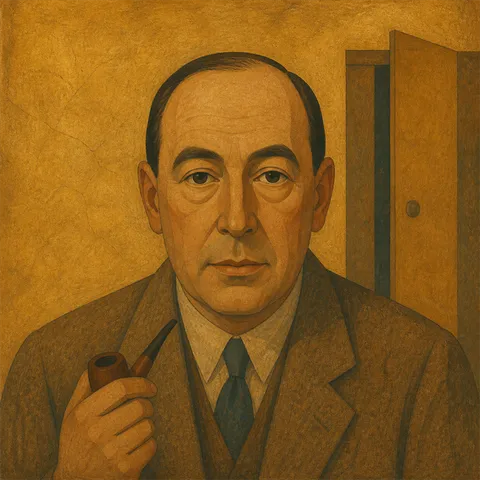 C. S. Lewis