You did not choose the year you are living in. The smaller things you do choose: whether to give quietly, whether to speak, whether to greet the man who left, whether to sit your exams while the news runs. Thirty cards are behind you. Ahead stand twelve people who wrote inside sieges and prison cells, and who paid for their own answers.
YOUR COMPASS ON THIS ROUTE
STATION 1 / 12
Hating the enemy is normal, and there is nothing here to be ashamed of.
Aristotle measured anger the way he measured courage: it comes in a right size. The fourth book of the Ethics gives it a virtue of its own and a vice on either flank, and the vice he names first belongs to whoever stays calm where calm is already an insult. Such a man looks like a fool, he writes, unable to defend himself, and he endures the humiliation of his own people slavishly. Inside anger sits a proposition. A wrong was done, and somebody did it. While the proposition holds, the passion holds with it, and shame over a true judgement would have struck him as incoherent. The measure sits in the addressee and in the clock: a passion that outlives its object hardens into temper, and temper cannot tell the guilty man from the first stranger with the wrong accent. Your swipe asserted the proposition. Aristotle would keep asking whether it still has an address.
Those who are not angry at the things they should be angry at are thought to be fools.
Edith Stein gave her doctorate to a narrow question: how the inside of another person reaches me at all. Empathy, in her account, hands me your pain as yours while I live through it with you, and you are never dissolved into me. That analysis turns the shame on this card into evidence. If the danger of people two hundred kilometres to the east registers in your body while you sit in a warm room, the boundary of your self already runs wider than your skin. Stein read that as health. In August 1942 the Gestapo came for her in a Dutch convent, and she walked out saying she was going for her people, having declined the papers that would have carried her alone to safety. Whichever way you swiped, she would hold that the feeling reports on your attachments and measures your worth badly.
Marcus Aurelius wrote his notebook in a camp on the Danube while a war he had never wanted ran into its second decade. His method was rehearsal. Look at what may come and name it plainly. Measure it against what a human being is built to carry, and the thing loses its power to arrive as a surprise. He states the rule without softening it. Deciding once and closing the question performs the same movement: a fear that circles back every evening has left the field of action for the field of imagination, where it eats the strength tomorrow will need. A Stoic would still test the decision against new facts, since a plan held through changed circumstances becomes vanity. The answer you sealed is his kind of housekeeping, and he would have it unsealed when the ground moves.
Nothing happens to any man which he is not formed by nature to bear.
Cicero built On Duties around a distinction that still does work in a tram carriage. Injustice, he says, comes in two forms: the wrong you commit, and the wrong you allow while able to stop it. The second has no drama and no witness who will name you, which is exactly why he insists on stating its price. He wrote the book in the autumn of 44, addressed to his son, while Antony's men were already counting the heads they meant to take, and his head was on that list. Standing between a stranger and a crowd costs something specific: the crowd turns, and the ride gets long. Cicero accepted that arithmetic. Whether the intervention works he left open. Silence, for him, is also a deed, and it has an author.
He who does not prevent or oppose wrong, if he can, is just as guilty of wrong as if he deserted his parents or his friends or his country.
Skovoroda walked the roads of the Left Bank with a flute and a Bible in his bag, having refused in turn every post the empire offered a man of his gifts. His central term is srodna pratsia, the work a person is born fitted for. Outside it no salary and no rank yields anything beyond a well-dressed unhappiness, he held, and a community staffed by people placed away from their own work spends more than it gains. The card offers you retraining for whatever the country needs now. Skovoroda would take the question seriously and refuse the arithmetic that sees a unit of capacity in a person. He would ask what you in particular were made for, and then how that thing serves here, since a teacher who becomes a poor logistician has removed a good teacher from a country that will need teaching afterwards.
Aquinas put war inside a list of conditions, a strange move for a theologian and a decisive one for law. Two of them are easy to state: lawful authority, and a cause that actually exists. The third gets forgotten. Intention, since a just cause carried by a mind that wants harm for its own sake spoils the act from inside. Out of that frame grew the limits later written into treaties, among them the difference between the man with a rifle and the man asleep in a cellar. Aquinas understood that his argument would be laid over whatever a prince had already decided. He set the conditions down anyway, as questions with answers that can be checked. Your no on this card refused a blank cheque. The article standing behind that refusal runs a few hundred words and has carried weight for seven centuries.
Mill's case for keeping a hated opinion in circulation rests on a claim about us: we have no way of establishing that we are right except by leaving the contrary argument standing and showing where it fails. He wrote that in 1859, with his wife's death fresh, in a book he called almost her work. The test he sets is uncomfortable for everyone. A culture produced by the country now shelling your city stands accused, and the card asks whether the shelf should close for a generation. Mill would separate two things that run together here: the state reaching for the shelf, and you deciding that this decade you have no stomach for those novels. The second he would call taste and defend. The first he would call the despotism of custom holding a warrant.
If all mankind minus one, were of one opinion, and only one person were of the contrary opinion, mankind would be no more justified in silencing that one person, than he, if he had the power, would be justified in silencing mankind.
Burke's case for restoring a ruined street begins with the question of who the parties to a society are. The living hold their inheritance in trust for people not yet born, and the dead remain creditors whose terms no single generation can renegotiate by a vote. A street is one of the instruments through which those terms pass on: the corner where your grandmother waited, the brickwork a guild signed. Burke watched Paris in 1790 decide that inherited arrangements were rubbish to be cleared, and he wrote the most untimely book of the decade against it. He knew the cost of his own position, since a restored facade can become a lie about what happened there. Your yes bought the terms. He would ask what the rebuilt street is meant to say.
People will not look forward to posterity, who never look backward to their ancestors.
Nietzsche's second untimely essay opens with cattle in a field, content because they cannot hold on to yesterday. The cattle are no recommendation. His claim is that every living thing needs a horizon, and that a culture which stores everything loses the power to act, because action requires the temporary injustice of forgetting. History serves life in several ways in that essay, and each of them turns poisonous past a certain dose. A year spent recording the memories of your city is precisely the case he worried over. The archive may be the condition of that city's future, and it may equally be the reason nobody inside it builds anything for thirty years. Nietzsche supplied no formula for the dose. Your swipe set one, and his question is whether the tape recorder serves the living.
Augustine spent thirty years as a bishop settling quarrels in a provincial town, and the habit shows in how he handles a case like this one. A person is a history with a will inside it, and the will is bent in everybody, which makes the worst hour of a man's life a poor summary of him. He refused to let that soften into sentiment: he asked the imperial courts to spare the men who had murdered his clergy, and in the same letters he asked that they be convicted. Greeting your acquaintance as before is a judgement about what a greeting is. It settles no debt. Augustine's own city was full of people who had run, and he preached to them without pretending they had stayed. Your swipe decided how much of a man one February can hold.
Paul writes about vengeance the way a lawyer writes about jurisdiction. The injured party's claim is real, the debt is real, and the case belongs to a court outside your reach. Romans 12 puts it as a quotation from Deuteronomy, addressed to a small community inside an empire where everyone had the means of retaliation except them. He never asks anyone to call the wrong small. He asks them to stop being its second author. Refusing to forgive, in his frame, keeps you in a relation with the man who did it, and the relation outlasts the war. Paul had run that experiment from the other side: he held the coats at a stoning. Your yes on this card states who you will be in ten years, and he read it exactly that way.
Kierkegaard's whole quarrel with his century turned on a single grammatical person. Crowds hold opinions, epochs accumulate merits, and neither will stand in the dock for you. Before eternity you appear as one, and your generation's common achievement closes nothing on your own ledger. He said this to a Copenhagen that had learned to feel Christian by way of being Danish, and he said it in a tone that cost him the street. The fear on this card is his subject precisely: you dread a future conversation in which the sentence "we all did what we could" will fail. Kierkegaard would agree that it fails, and he would refuse to hand over a task list that makes the fear go quiet. Anxiety, for him, reports on a freedom that has not been spent yet.
Two measures ran through these stations. One counts what the common burden requires of you and reads a person by what they carry. The other counts what actually lies inside your power and charges you for nothing else. Your swipes placed you somewhere along that line, and the place moves with the month. Two records stand open beside this route: the one on the cross and the end of sacred violence, and the one on how a civilisation outlived its own death.
SOURCES
Aristotle, Nicomachean Ethics, IV, 5 (tr.: W. D. Ross; укр. ред.) · classics.mit.edu
Marcus Aurelius, Meditations, V, 18 (tr.: George Long; укр. ред.) · classics.mit.edu
Cicero, De Officiis, I, 23 (tr.: Walter Miller; укр. ред.) · www.gutenberg.org
John Stuart Mill, On Liberty, Chapter 2 (tr.: укр. ред.) · en.wikisource.org
Edmund Burke, Reflections on the Revolution in France (tr.: укр. ред.) · en.wikisource.org
Paul of Tarsus, Romans 12:19 (King James Version) (tr.: укр. ред.) · en.wikisource.org
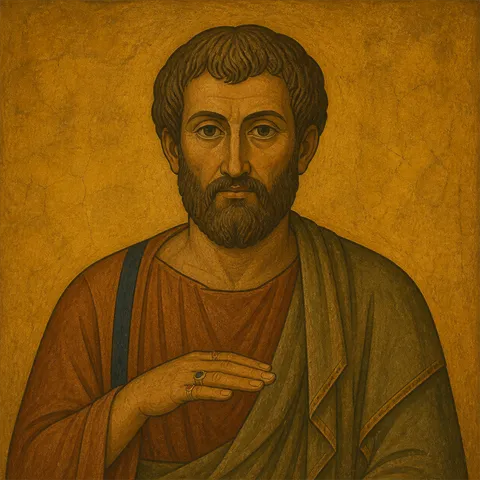 Aristotle
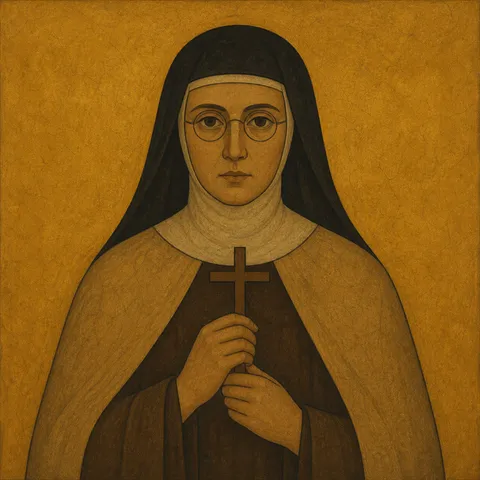 Edith Stein
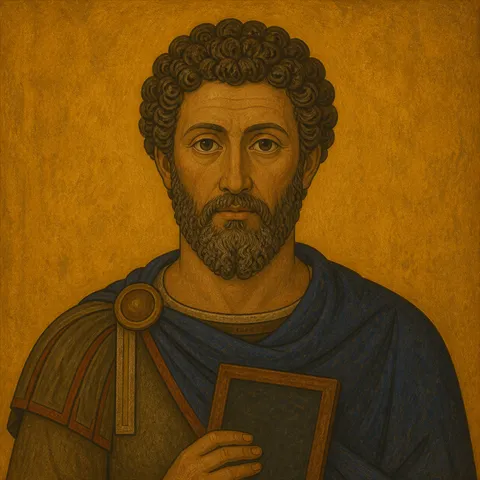 Marcus Aurelius
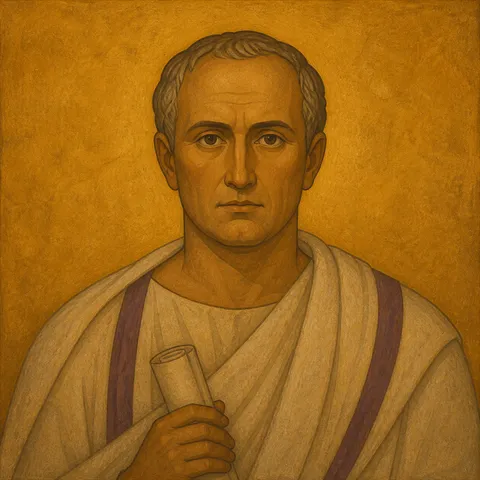 Marcus Tullius Cicero
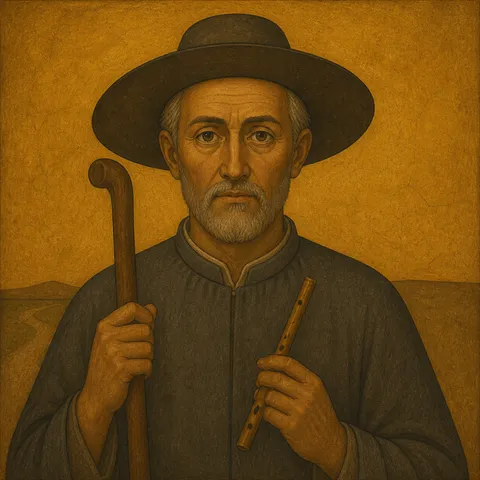 Hryhorii Skovoroda
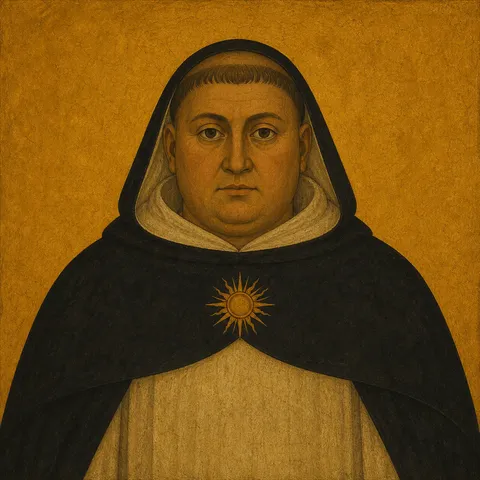 Thomas Aquinas
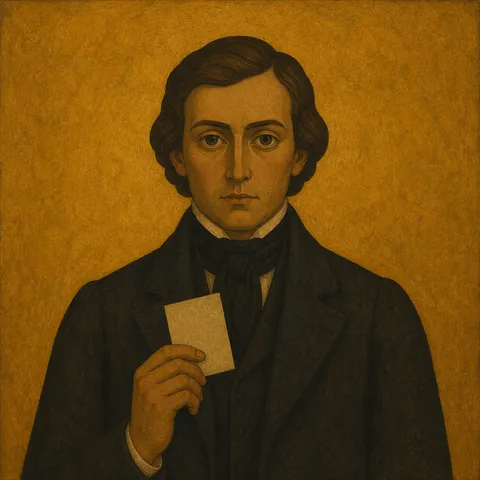 John Stuart Mill
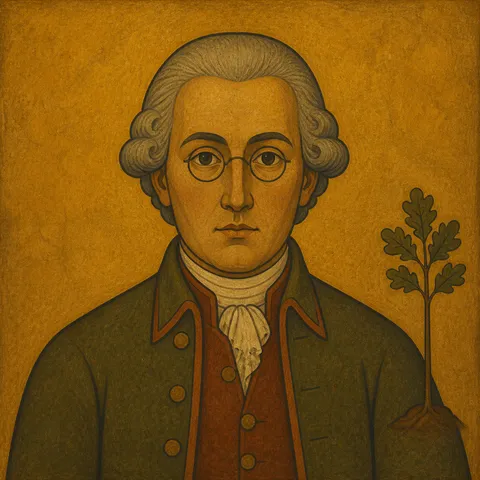 Edmund Burke
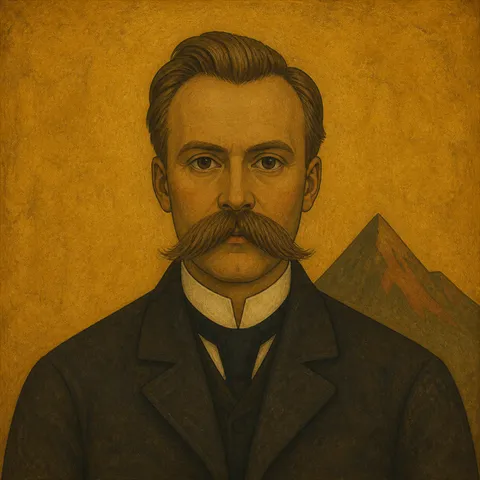 Friedrich Nietzsche
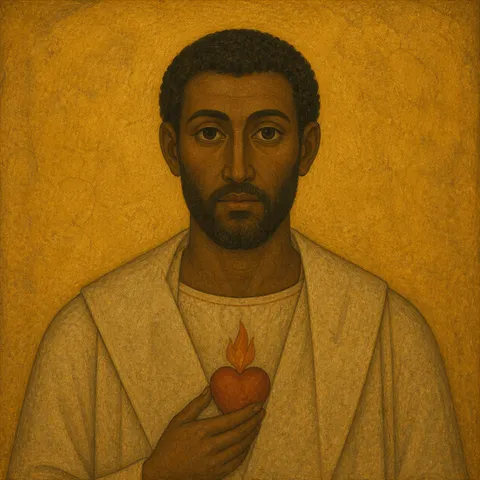 Augustine of Hippo
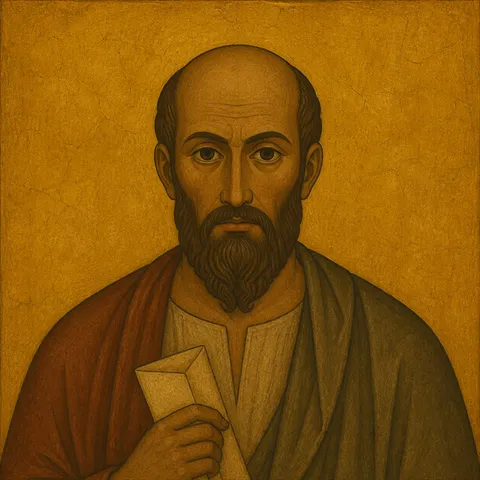 Paul of Tarsus
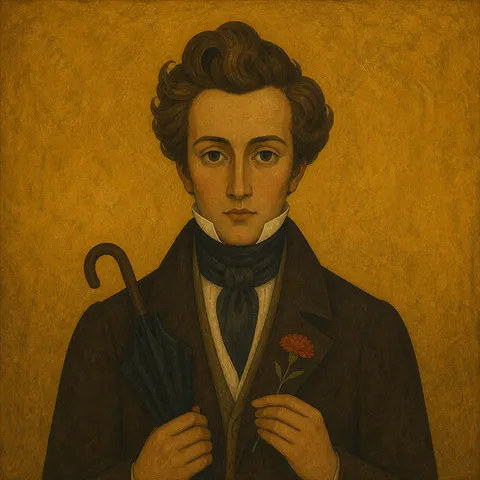 Søren Kierkegaard