The feast you cross half a country for, though it wears you out. A name given to a boy because it had been given before. Something tugs at your sleeve from the side of people who are no longer here, and every week you decide whether that pull counts for anything at all.
YOUR COMPASS ON THIS ROUTE
STATION 1 / 12
At a new job you cancel an odd rule that nobody there can explain.
Chesterton wrote about tradition as a matter of counting votes. The living, who merely happen to be walking about at the moment, make up a small and arrogant oligarchy, and it offended him that this oligarchy decides everything by itself. Hence his fence across a field. Two travellers come upon it; the first wants it cleared away because he can see no use in it, and the second answers that he will allow nothing until he is told what the thing was put there against. The reason may have gone into the ground with the builder, and pulling up the posts is easier work than finding it. Chesterton granted that some fences are genuinely absurd and let the reformer clear those once the finding was done. An odd rule in an office stands in the same field. Cancel it if you like. He will only add that a count which excluded everyone who worked there before you is no full count.
All democrats object to men being disqualified by the accident of birth; tradition objects to their being disqualified by the accident of death.
Burke read English liberty as property. From Magna Carta to the Declaration of Right, he argued, Englishmen claimed their liberties as an estate inherited from their forefathers and owed to their descendants, needing no general principle for the purpose. The legal language does real work here: under an entail the holder uses the land, takes its fruit, keeps it in repair, and has no power to sell. Paris in 1789 was selling. Burke saw a breach in the terms of tenure and predicted confiscations, then paper money, then the guillotine, then a general on a horse. The claim that a people is held together by a shared past meant something concrete in his hands: men willing to carry a weight they never ordered. Plans gather whoever has agreed to them. An inheritance gathers the quarrelling as well, since they quarrel over the same table.
to claim and assert our liberties as an entailed inheritance derived to us from our forefathers, and to be transmitted to our posterity
Cicero wrote On Duties for a son studying far from home, and put into it the rule from which the whole Western vocabulary of obligation grew: a man belongs to more than himself, and his country and his kin hold shares in him. Loyalty to one's own he called pietas, and he set it among the debts that neither time nor payment discharges. When he reached the consulship his family had never yet given Rome a consul, which is why a name worked on him as an obligation taken up in advance. The grandfather whose name you give your son stands, on Cicero's books, among the creditors. You could object that it is the boy who has to carry the name, and the answer is ready: he will carry duties he never chose in any case, and a name only makes them visible.
Aquinas put the question flatly: may human law be changed? His answer comes in two parts. Law serves the common good, so when circumstances call for a different rule, changing it is right. The change also costs something: law holds through habit, and habit holds through age, so every amendment loosens the obedience that gave the law its force. Hence his measure. Change it when the gain from the new rule plainly outweighs the damage done by unsettling the custom. The reckoning is a cold one, with no piety toward the old as such inside it. A hundred years behind a rule means, for him, a hundred years of testing on people nobody asked to be subjects. Today's meeting has one advantage: it can see circumstances that did not exist a century ago. Aquinas asks only for evidence that it is really seeing them.
Plato in the Laws turns the conversation to Egypt, and the astonishment in it is genuine: their chants and their figures have stood unchanged time out of mind, because no artist there is permitted to invent. He calls this statesmanship. Behind it lies the conviction he had already set out in the Republic, that a child takes in order from the rhythm it hears daily, long before any argument reaches it. Here he springs the trap on his contemporaries. The games and songs of children shift, then tastes shift, then the laws have nobody left to hold them, since the people who were to revere them grew up on another tune. A song no longer sung at your child's school counts, for Plato, as an instrument withdrawn from an education – the thing by which order entered a child before she could argue with it.
their works of art are painted or moulded in the same forms which they had ten thousand years ago
Hegel had no faith in a freedom that starts from a blank page. Spirit comes to itself in history, and it comes through what already stands: the family, the customs of the people a person was born into. What he called Sittlichkeit is that fabric of settled practice which anyone finds already there, and inside which a will first becomes something more than appetite. Hence his verdict on oaths. The words of a rite come from an institution speaking through your mouth, which is why they bind harder than private sincerity does. You swear an oath half of whose words you reject, and Hegel sees an entrance into something older than your opinion of it. He would add that the fabric is understood only from inside, once you are standing in it, which is his own account of why the owl of Minerva flies so late.
Hume pressed a question his contemporaries waved away: what proves that the sun will rise tomorrow? Strictly speaking, nothing does. Experience hands us a sequence, and what carries the sequence into the future is custom, a habit of expectation drilled in by repetition. He did not mourn this. Custom makes experience usable, and without it a person would face every morning helpless. Justice and property stand the same way in his account: conventions nobody designed, whose usefulness was noticed afterwards and in pieces. A rule some clever person invented has an author you can question. A custom that grew on its own has passed a test the author would have failed, since it has been fitted into millions of small circumstances, and no designer saw a single one of them in advance.
Bacon turned the word antiquity around. We call the Greeks ancient, he said, though the count should start from the beginning of the world: the old age of the world falls in our own times, and the men we honour as elders lived in its youth. From this he drew a demand. We expect riper judgment from an old man than from a boy, because he has seen and heard more; all the more should we expect it of an age handed reports from both Indies and a mountain of recorded experiments. He was just as hard on his own side. He catalogued the idols that squat in the mind, and among them the doctrines we receive from other hands and stage before ourselves like plays. Saying that people a century ago understood less is permitted on his books. He will only ask what you paid for the right, beyond your date of birth.
the old age and increasing years of the world should in reality be considered as antiquity
Mill feared custom more than statute, because a statute is visible and custom works from inside. In On Liberty he argued that a person develops the faculty of choosing exactly so far as she chooses; a faculty left unused weakens like an unworked muscle. He advised nobody to despise what was handed down. He demanded that the handed-down thing pass through its heir's own judgment. A habit lodged in a borrowed head has passed no such judgment of its own. Dropping every custom at your own wedding and seating twelve people at a table is a choice of exactly that kind, made with your own hand. Mill would add one discomfort: most people who do it are copying a newer pattern, and his argument asks for honesty on the point. His question rests on whether you drew the plan yourself.
He who lets the world, or his own portion of it, choose his plan of life for him, has no need of any other faculty than the ape-like one of imitation.
Rousseau located legitimacy somewhere else entirely. No length of possession, he holds, converts power into right: what binds is a compact the living entered themselves, and a will they formed together. From this comes his permission to rewrite. An assembled people may cancel what its predecessors bequeathed, since those predecessors had nothing with which to bind the unborn. In Emile he does the same to education: the tutor puts nothing into the child from another's hand until the child asks for it. Rousseau was more cautious than his readers, though. He wrote that a people used to the yoke cannot bear a new freedom, and that a lawgiver needs customs already prepared to receive the law. Rewriting a country from a blank sheet is permitted to a people already capable of being a people, and that is where his own argument starts to chafe.
Sartre begins by denying that a person has any ready-made essence from which his acts would follow. You exist first and then make yourself by choice after choice, and nobody performs that labour on your behalf. Hence his notion of bad faith: the waiter who plays at being a waiter moves a little too obligingly, so as to believe that the role is producing his movements for him. Ancestry works with the same convenience. Everyone in our family was a doctor lifts from the speaker precisely the weight Sartre held to be inescapable, and it does so gently, almost proudly. Reading yourself from the inside and setting your origins aside is his demand exactly. He only warned that what waits inside is the need to keep choosing, with no finished text there, and no inheritance excuses anyone from that.
Skovoroda studied at the Kyiv-Mohyla Academy and could have taken any post the age offered him. He refused each of them in turn and walked the roads of the Left Bank with a flute and a Bible in his bag, living in other people's houses. Behind the refusals stood his teaching about kindred labour: every person has work proper to him, and he finds it by reading himself, since the microcosm of a man holds the same order as the great universe. Anyone driven into a trade foreign to him will be wretched however well it pays, and the trade takes damage along with him. A family business that gives you no joy at all falls under that measure easily. Skovoroda would ask one thing: whether you tried reading yourself before putting your kin where the answer belongs.
The route drew one axis: age as evidence against consent as ground. At one end a rule weighs because it survived generations of use; at the other it weighs because you assented to it. Your swipes have already placed you somewhere along that line, and the cards where your yes cost you a day or an awkward conversation say most about where. Read those again. Two doors stand open: the record on why the past votes, and the record on a house of faith built by distinguishing.
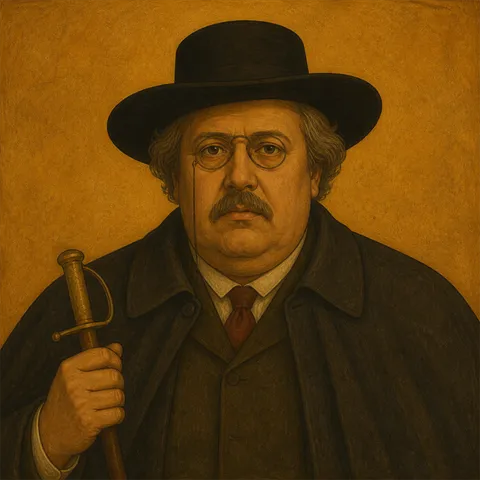 G. K. Chesterton
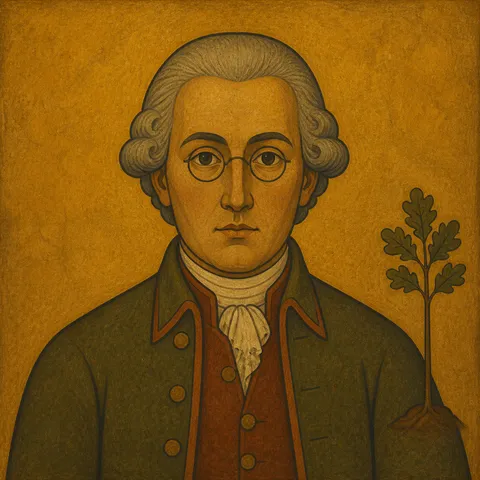 Edmund Burke
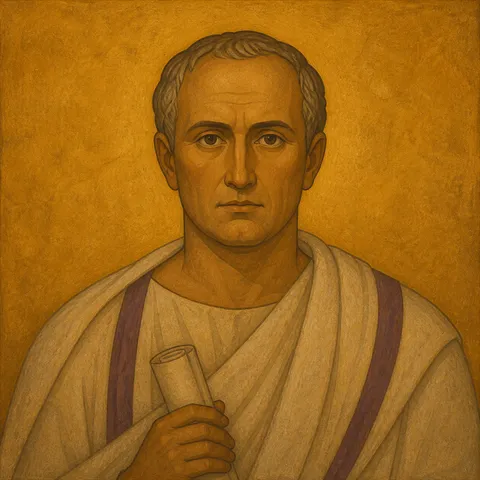 Marcus Tullius Cicero
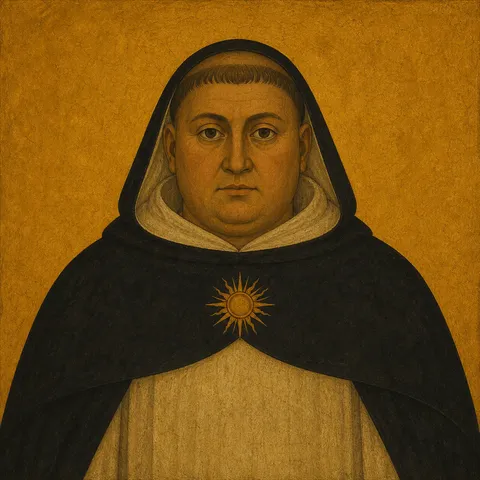 Thomas Aquinas
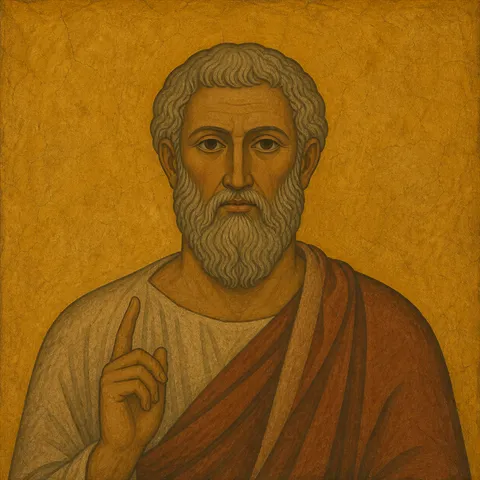 Plato
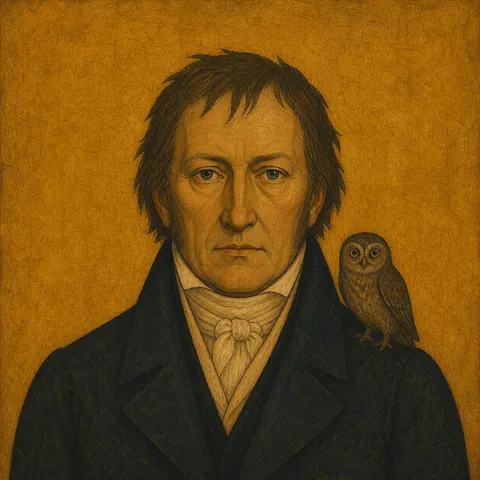 G.W.F. Hegel
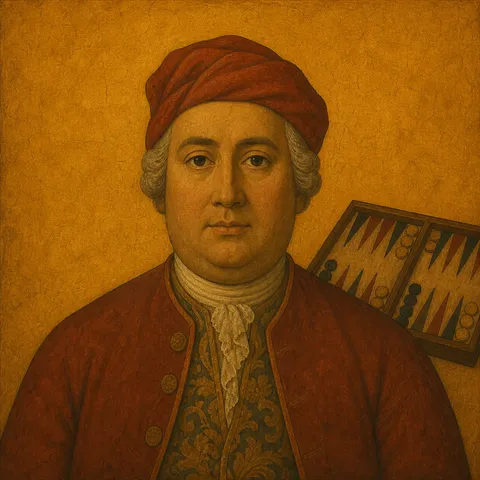 David Hume
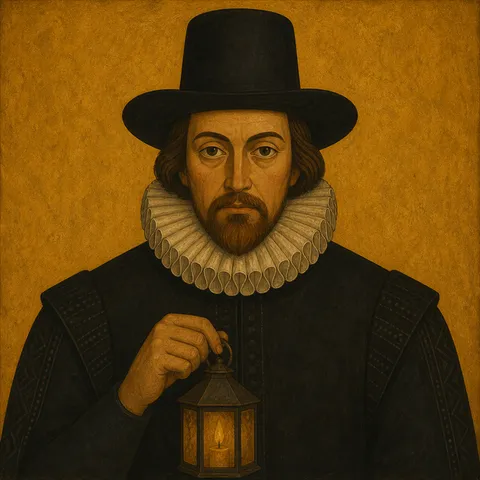 Francis Bacon
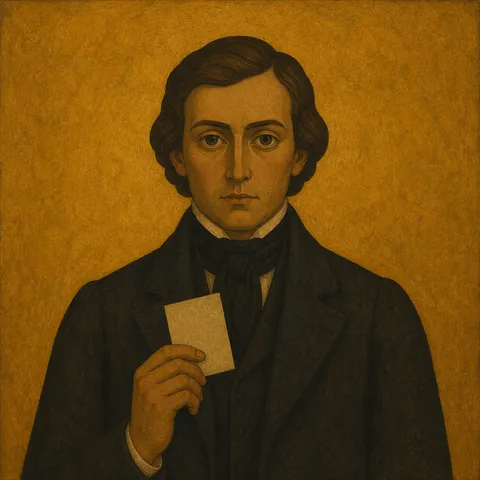 John Stuart Mill
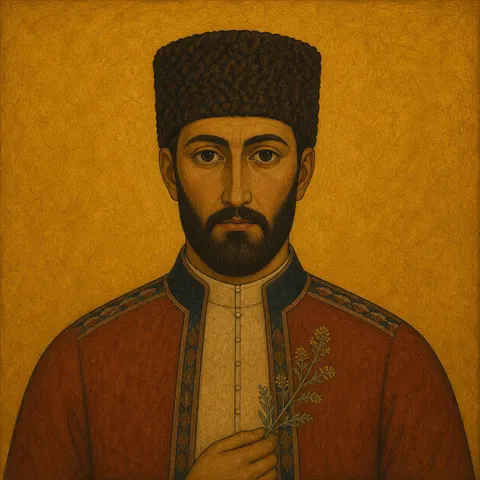 Jean-Jacques Rousseau
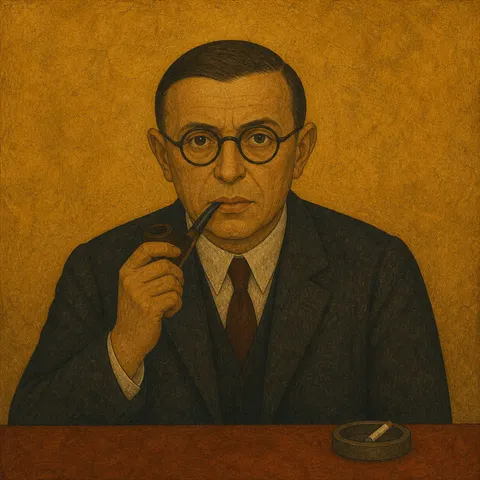 Jean-Paul Sartre
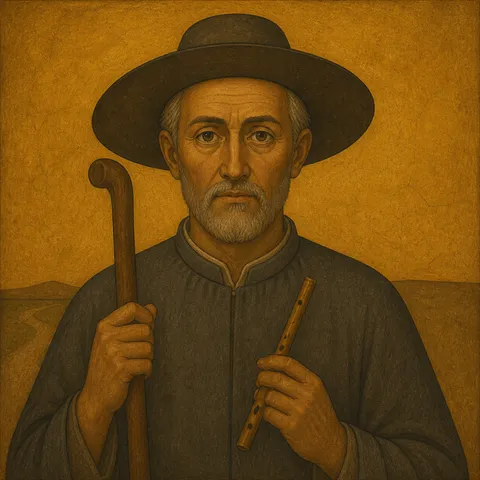 Hryhorii Skovoroda