Freedom is the word people reach for first and define last. Sometimes it means that nobody stands in your way; sometimes it means that you hold yourself to something, and get up at six without being reminded. This route walks the same forks you have just judged with your thumb, and shows where both of those feelings came from.
YOUR COMPASS ON THIS ROUTE
STATION 1 / 12
After a stroke your mother, clear-headed, refuses hospital. You call the ambulance over her no.
Mill put into words what most people feel before they can name it. On Liberty leaves harm to others as the single ground for compulsion. Everything else, sincere care or a family's certainty that this will turn out better, fails to qualify. He knew how strange that sounds at a sickbed, and he held his line: a grown person able to grasp what she is risking disposes of herself, even when she chooses worse. Mill added a second half that often gets dropped. He feared the weight of opinion more than the weight of law, since a law can be seen and argued with, while the neighbours work without a written procedure. Your card puts him beside a clear-headed mother, where the answer costs everything. Mill would ask one thing: whether she grasps what she is refusing, or whether you are relaying her no in the version easier for you.
"Over himself, over his own body and mind, the individual is sovereign."
Aquinas looks at the same scene from the other side and finds a duty where Mill finds a limit. On his reasoning, law and love attend to a person's real good, and a person's wishes sometimes cut against that good, at which point leaving him alone with the wish amounts to abandoning him. So the Summa sets out fraternal correction as a procedure, almost a judicial order: speak to him yourself, in private, so that his face is saved; if he will not hear you, bring two witnesses; only after that does it go wider. The sequence carries as much weight as the intention, since it protects the dignity of the one being corrected. Your card about the betting and the mother lands squarely on step three. Aquinas would take your good will for granted and ask whether you have done the first two steps.
Locke derived the whole of politics from one source: no power over a person holds unless the person agreed to it. Kings and parliaments stand on the consent of the governed, with antiquity and descent counting for nothing, and in 1689 that sentence was explosive. The same consent runs the other way too, which comes up less often. If only what I agreed to binds me, then what I agreed to binds me in earnest, since otherwise consent stops being an instrument and becomes a mood. So Locke would take your three-year contract apart the way a lawyer takes a clause apart. He would separate a signature given under pressure, which obliges nothing at all, from a signature given in full freedom and now inconvenient. The second kind, on his account, is a promise already lodged with somebody who arranged their year around it.
Rousseau opened The Social Contract with a line everyone knows and followed it with a claim few finish calmly. A man is born free and finds himself everywhere in chains, and the way out runs through making that power his own. A citizen who makes the law along with everybody obeys himself, so the compulsion of the general will returns him to a decision he has already taken. From here comes his sharpest sentence about whoever declines to follow the general will. The seatbelt is exactly the case Rousseau would have picked for himself, since the compulsion takes nothing from you and asks only that you live by a rule you would have signed in a sober hour. The dark part sits in the same paragraph, and Burke saw it: somebody always interprets the general will, and the interpreter is rarely you.
"Whoever refuses to obey the general will shall be compelled to do so by the whole body. This means nothing less than that he will be forced to be free."
Burke never argued that liberty was a poor thing. He argued against the notion that it can be invented overnight out of first principles. The English, he wrote, hold their liberties as an inheritance, property that came down from grandfathers together with the courts and the habit of juries sitting until morning, and no theory of man ever produced that property. An inheritance of that kind survives because nobody rewrote it whole, which is why it still contains safety catches no designer would have thought to install. Hence his forecast for Paris: confiscations, then the guillotine, then a general on a horse, and a decade sufficed. Your card about a hundred years without freedom puts his question directly. Burke would answer that an election hands out offices, while liberties grow on a slower clock, needing people who already know how to handle a court and their own given word.
Tocqueville sailed to America to study its prisons and came back with the sharpest description of a danger that wears no cruel face. The despotism he feared for nations of equals takes no heads. It undertakes to provide: it allocates and foresees every small thing on your behalf, until no decisions of your own are left. A government of that kind does not break men's wills; it softens them and guides them, and they remain content. His remedy was association. Americans banded together over a road or a fire barrel, and in that small work they learned to keep a matter in their own hands. Your card about bread and a roof until pension age is his plot with nothing added to it. Tocqueville would decline to call the bargain shameful. He would ask what you could do before it, and what you will be able to do in ten years.
Aristotle refused to treat a choice as a separate event. Character, on his account, is assembled out of acts the way a craft is assembled out of repetitions: a potter becomes a potter at the wheel, and a temperate man in the minutes when he has already held back. Hence the word itself, ethics growing out of habit. The consequence for your card is direct. A person without a routine decides every morning something that could long ago have cost nothing, and spends on that small skirmish the very strength later missing for a serious choice. A routine in its fifth year is released capacity. Aristotle would add two cautions. Habit holds the bad in place just as firmly, and the state has a claim on its formation as well, since a legislator makes citizens good precisely by habituating them.
"Moral virtue comes about as a result of habit, whence also its name (ethike) is one that is formed by a slight variation from the word ethos (habit)."
Plato built a city in speech and at a certain point marched the poets out of the gate. His reason had little to do with taste. He held that a listener's soul is shaped by whatever enters it, that images enter deeper than arguments do, and therefore that a work praising adulterous gods damages the young more reliably than a crime does. The whole takes precedence over the single voice here, since a voice can be replaced and a spoiled generation cannot. Then comes his account of democracy, in which liberty becomes the highest value and slowly dissolves the capacity to obey anything, at which point somebody eager to restore order arrives. Your card about expelling a classmate over a post stands you where the Athenians stood with Socrates. Plato would remind you that the city which killed his teacher reached that decision by a vote.
Kant turned the familiar picture inside out so thoroughly that it is hard to climb back. Doing as you please struck him as the least free condition available, since desires arrive from the body, from habit, from a thirst for approval, and a person who obeys them runs like a mechanism, however agreeable to itself. Freedom for him begins where a rule operates that you have recognised as binding on everyone, and it operates against your own advantage too. So the freest minute is the one in which you acted because you had to, and had to because you ordered it yourself. A Kantian exception is impossible by construction: a rule you exempt yourself from stops being a rule and turns into a privilege. Your card about having to and doing it describes his condition from inside. Kant would check one thing, whose the having-to was.
Hegel took empty freedom for the poorest kind there is. A person who may do anything and belongs to nobody has, in his reckoning, nothing yet: choice without content stays bare possibility, and possibility is realised only inside something already standing, a family, or a state with its courts and its offices. So freedom acquires actuality where you enter an order older than yourself and recognise your own reason in its demands. The promise to your parents about law school is an order of exactly that kind, and Hegel would decline to call it a chain. He would see a contradiction here to be resolved at a higher level, while flight merely carries it somewhere else, since a vocation acknowledged by your family is worth more than one achieved against it. He left the weak point open. The order you are to recognise yourself in is always a little wiser in Hegel than it turns out to be.
Sartre started from the claim that a person exists first and becomes somebody afterwards. There is no ready-made nature in him from which your acts could follow, so every next step lands on you entire, with nobody to hand it to. He called this being condemned to freedom, and the word was chosen exactly: in a condition where you decide everything, the relief comes from the news that you will not have to decide. The waiter who plays the waiter too carefully makes a thing out of the role, so that the role can decide in his place. Your card catches you in that relief, and Sartre would count the honesty itself as an act. He would add the uncomfortable part. Saying there is no choice is still a choice, and the scene has to be played on, since refusing the part is also a part.
Skovoroda gave this fork a Ukrainian name. Kindred labour is the work a person was born to, recognisable by how lightly and gladly it goes, while unkindred work draws the strength out and returns emptiness. The thought concerns the person first and the wages second. Unkindred work ruins whoever lives by it, and it harms everyone nearby, because it gets done badly. He lived by the rule as well, refusing the posts offered to him one after another, and spent his last decades walking the roads of the Left Bank with a flute and a Bible in his bag. His gravestone kept the line: the world hunted me and never caught me. Your card with the papers for the music academy is his question word for word. Skovoroda would ask one thing only, whether this is kinship or exhaustion with somebody else's choice.
Two axes crossed here. One runs from non-interference to guardianship, and the card about the ambulance placed you on it without asking. The other runs from freedom as an empty morning to freedom as work you owe yourself. Your swipes sit somewhere at the crossing, and the side you voted for more often settles nothing yet. Record 13 keeps the quarrel between an inherited liberty and an invented one; record 04 shows the city outside of which a person is a beast or a god.
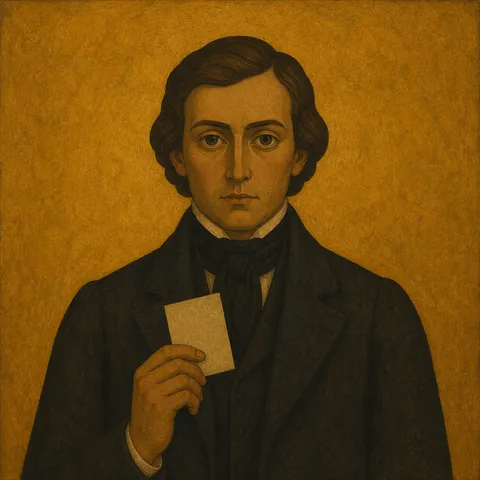 John Stuart Mill
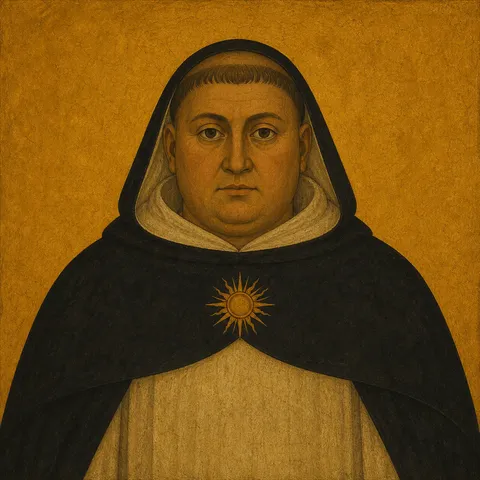 Thomas Aquinas
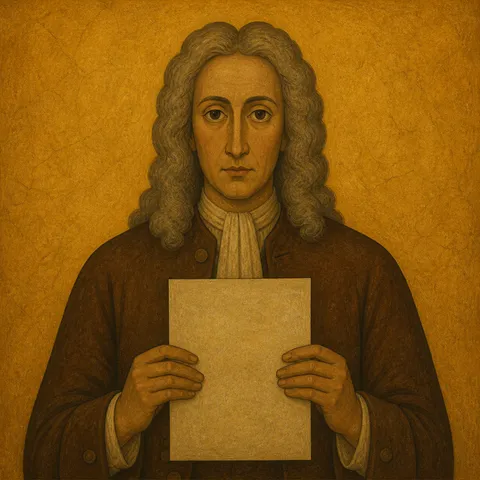 John Locke
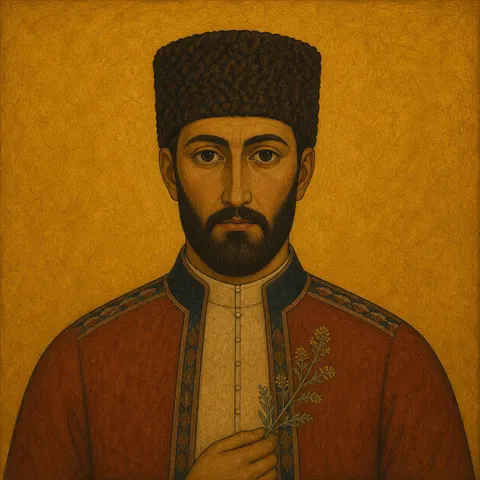 Jean-Jacques Rousseau
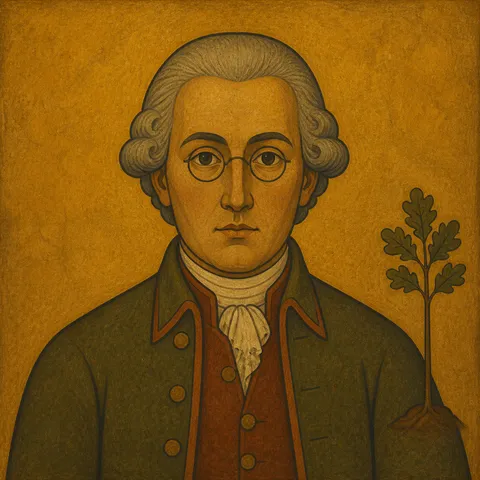 Edmund Burke
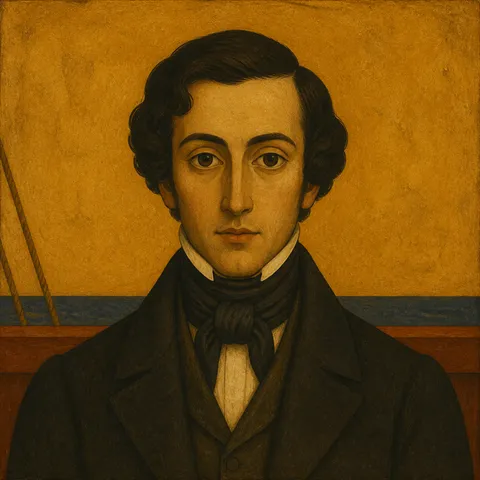 Alexis de Tocqueville
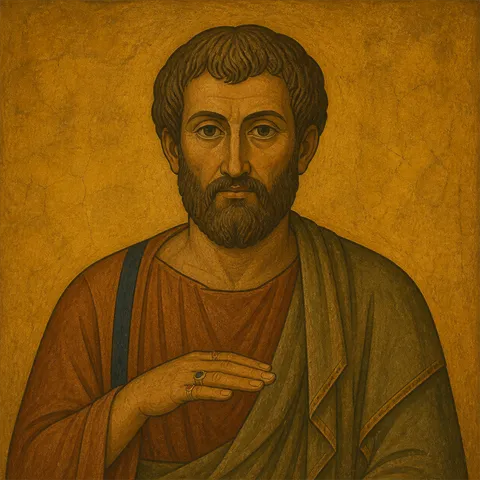 Aristotle
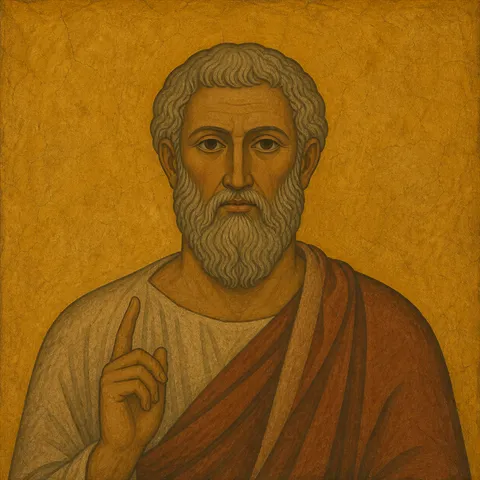 Plato
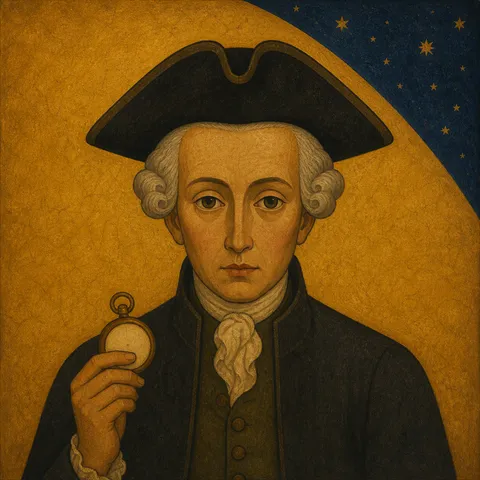 Immanuel Kant
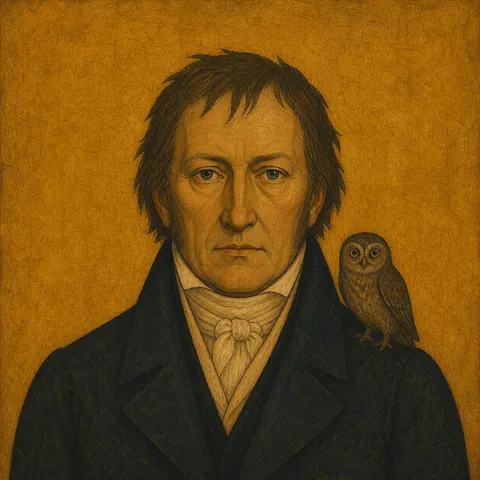 G.W.F. Hegel
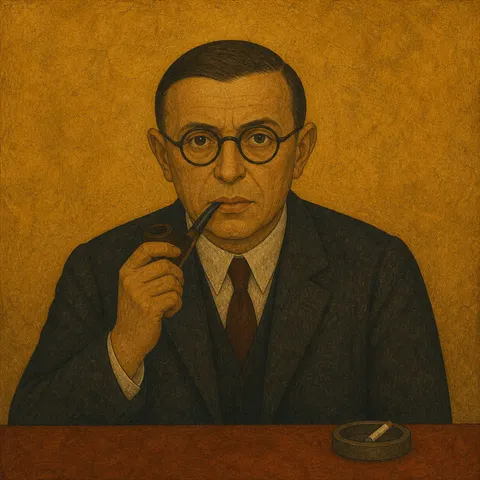 Jean-Paul Sartre
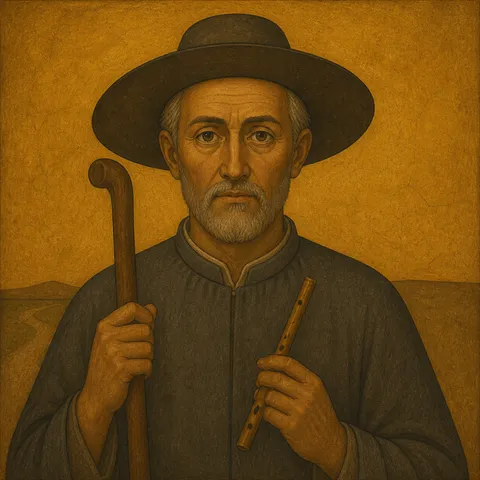 Hryhorii Skovoroda