Justice is the first word a child complains in and the last one adults agree on. For one person it means that everybody got what they earned; for another, that the guilty man paid in the same coin of pain. This route walks the same thirty cards you have already judged, and shows whose measures you were using.
YOUR COMPASS ON THIS ROUTE
STATION 1 / 12
Whoever works twice as much should also receive twice as much.
Aristotle worked justice as two separate businesses, and every quarrel about wages still turns on the division. Distributive justice hands out honours and money by merit, equal shares to equals and unequal shares to unequals, and it works by proportion. Corrective justice asks nothing about merit; it looks only at the harm and levels the account arithmetically, which is why a court takes the same sum from a decent man and a scoundrel. Most indignation comes out of the confusion between the two, when somebody demands in a matter of contract what belongs to distribution alone. Your card about double work and double pay is a textbook distributive case. Aristotle would grant the proportion and then ask the question that complicates everything: whether hours are in fact the merit worth measuring here.
"All men agree that what is just in distribution must be according to merit in some sense."
Plato framed the question of justice in a form nobody has climbed out of since. In Republic II Glaucon tells the story of Gyges the shepherd and the ring: turn the collet inward and you cannot be seen. Then comes the experiment. Give that ring to a just man and an unjust one, says Glaucon, and within a week you will not tell their conduct apart, since people keep justice out of a fear of exposure, with no love for it anywhere in the arrangement. The rest of the book is Socrates trying to answer, and his answer runs through the soul: injustice damages the one who commits it even when it succeeds completely. Your card about what is badly guarded is the ring of Gyges in modern dress. Plato would note that an honest answer to it measures exactly what your decency has been resting on.
"No man would keep his hands off what was not his own when he could safely take what he liked out of the market."
Cicero handed the West the sentence it still thinks about law with: true law is right reason in agreement with nature, universal and unchangeable, and no senate or assembly can repeal it. An awkward consequence follows. If a law stands above the statute, then a statute contradicting it was never law at all, and the date of its passing stops mattering. Your card about the collaborator holds both edges of that knife. The lawyer in Cicero knew the worth of a written rule published in advance; the philosopher in him wrote that the killing of a fatherland and the betrayal of one's own remain crimes whether or not anybody got around to writing it down. He was killed in the end by men acting well within the new rules, freshly written by the winners.
Aquinas held private property to be a reasonable arrangement: divided things are better tended and cause fewer quarrels. The arrangement is secondary, though, since it serves a purpose older than itself, that earthly goods should feed people. So the Summa reaches a conclusion that still makes his own readers flinch: a superabundance in one man's hands belongs by natural law to the poor, and a person in manifest, extreme need who takes what is another's commits no theft. Nothing is licensed here at large. The measure is extreme need exactly, and a judge tests it. Your card about giving away a third puts the question voluntarily instead, and Aquinas would set his own qualification beside it. Almsgiving out of surplus is a duty for him, which is why it fails to make the giver better than his neighbours.
"Whatever certain people have in superabundance is due, by natural law, to the purpose of succoring the poor."
Paul was writing to people with no protection of any kind, small congregations in foreign cities, without money and without office. Advice against revenge in that position sounded like a proposal to surrender, which is why he framed it differently. Vengeance, he tells the Romans, belongs to God, and your part is to leave room for it and to keep your own hands off. The logic here has little to do with mildness. Paul strikes private revenge out of everybody's hands and immediately passes the sword to the authority that bears it for a reason, so punishment stays in force and only changes hands. Your card with the attacker's address stands exactly on that handover. Paul would answer that a court already has the address, and that whoever goes there himself stops being the injured party.
"Vengeance is mine; I will repay, saith the Lord."
Locke measured the justice of a power by the order of its proceedings. Power without consent has no force; power acting outside a rule known in advance is arbitrary even when it happens to guess right. So the Two Treatises hold to two things: no decisions about a man's property without the man, and no judgment under a rule adopted after the act. The group leader who split the prize evenly may have produced the best possible division. Locke would call the procedure spoiled all the same, because the people concerned learned of the decision after it was taken. There is a soft place in Locke here, and he did not hide it: he stretches the consent of a majority over the silent and over their heirs, so the question of when exactly you agreed never gets a clean answer.
Machiavelli comes at your card from a direction few people name out loud. What interests him is what happens to a city while its court builds the perfect procedure. The Prince praises Cesare Borgia because severity applied quickly and once gave the Romagna a quiet that benevolence had failed to give it for years, and Machiavelli adds that a merciful ruler who lets disorder spread injures the whole population, while a punishment falls on a handful. Ten released collaborators, on that ledger, are first of all a signal to everyone else that the state cannot reach, and the ten mistakes come second. Here sits the part Machiavelli leaves uncovered. An order built on fear of the authorities lasts exactly as long as the authorities are strong, and the instrument that won power stays in its hands for good.
Kant forbade punishing a person for anybody's benefit. To punish so that others will take fright is to treat a person as an instrument, and a person for him is an end, never to be used merely as a means, even when a whole city collects the advantage. Hence his measure: a penalty answers the deed and nothing else, so the weight of a sentence is set by what was done, with the results we hope for from the sentence left out of the sum. There is an unobvious respect in this. A criminal in Kant receives his punishment as a rational being who set a rule himself and then broke it, so the verdict speaks his own maxim back to him. Your card demands equal pain, and Kant stands nearer to you here than most. He would refuse to add one gram for the instruction of others.
Mill put a demand under the utilitarian arithmetic that is easy to miss: in the reckoning of happiness everybody counts for one and nobody for more than one. That is his justice, an equal weight in the calculation, and it is what makes utilitarianism so unprofitable for the people you love. Your child, your classmate, your own department at work enter the sum on the same terms as a stranger from another city, so a softer treatment for your own would simply be an error in the addition. He understood the cost. Mill granted that human feeling is arranged otherwise, and that no morality holds up until a trained habit is holding it. Your card about your own puts this directly. Mill would ask whether you would extend the same leniency to somebody you had never met.
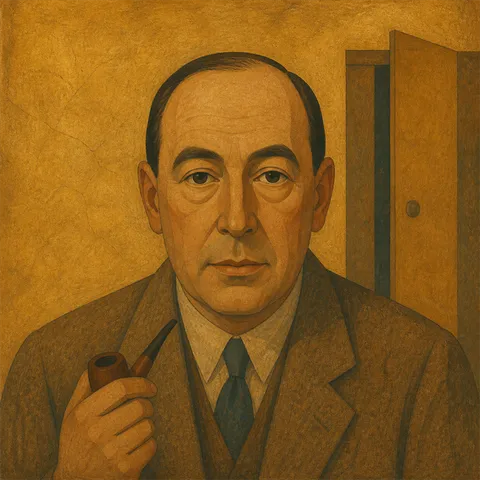
Lewis opened The Abolition of Man with a school textbook in which children were taught that a remark about the beauty of a waterfall describes the feelings of whoever is looking. He showed where the lesson leads. If no judgment of value describes anything in the world, then this is unjust becomes a report on my mood, and there is nothing left to argue about. He called the shared inheritance of moral judgments the Tao and noticed one plain thing: everyone who sets out to replace it stands on a fragment taken from inside it. Your card, in which the just arrangement turns out to be your own comfortable one, is that conclusion carried through. Lewis would add that a person able to say this about himself is already standing on something firmer than his mood.
Nietzsche declined to ask what justifies punishment and asked instead where it came from. He looked for the answer in language and in early law: the German word for guilt grows out of the word for debt, and the oldest codes let a creditor take from the debtor's body whatever amount seemed proportionate to the unpaid sum. What compensated the creditor was a pleasure, the chance to exercise power over the powerless without trouble, and the lower he stood himself the sweeter it tasted. Hence his conclusion about our sense of justice: it remembers that pleasure even while it talks about a restored order. Your card prefers the suffering of the guilty to a repaired harm, and Nietzsche would call that the most honest answer available. He left his own question open, since punishment stripped of the pleasure loses the grip that kept people to their word.
"The creditor is granted by way of repayment and compensation a certain sensation of satisfaction – the satisfaction of being able to vent, without any trouble, his power on one who is powerless."
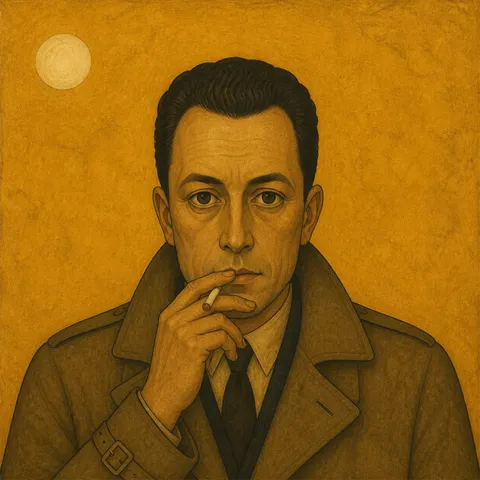
Camus wrote about the death penalty from a place where it was family memory. His father was once sent to watch a public execution, came home and never spoke of it again. Reflections on the Guillotine takes the procedure apart. A murderer acts in fury, sometimes drunk, and the whole thing is over in a minute; a state sets a date, hires men, pays them, and carries the decision out coldly, months after the deed. The symmetry breaks there for him, since what is called a crime in the first case becomes a service with a timetable in the second. Your card forbids execution without exception, and Camus would stand beside you on it. The universe that would settle every account in the end is one he never found anywhere in his books, which is why the accounts here get written out by people.
Two measures ran under these stations. One asks what a person has earned and closes the account by desert, in the distribution and in the sentence alike. The other asks what the injured party needs in order to be made whole, and it will trade desert away to get there. Your swipes lean one way, and the interesting cards are the ones where you hesitated. Record 20 follows the man who holds the lever and never comes away clean; record 09 follows what happened once the innocent victim began to speak.
SOURCES
Aristotle, Nicomachean Ethics, Book V (tr.: W. D. Ross; укр. ред.) · classics.mit.edu
Plato, Republic, Book II (tr.: Benjamin Jowett; укр. ред.) · classics.mit.edu
Thomas Aquinas, Summa Theologica, II-II, q. 66 (tr.: Fathers of the English Dominican Province; укр. ред.) · www.ccel.org
Paul, Epistle to the Romans (tr.: King James Version; укр. ред.) · en.wikisource.org
Friedrich Nietzsche, On the Genealogy of Morals, Second Essay (tr.: Horace B. Samuel; укр. ред.) · en.wikisource.org
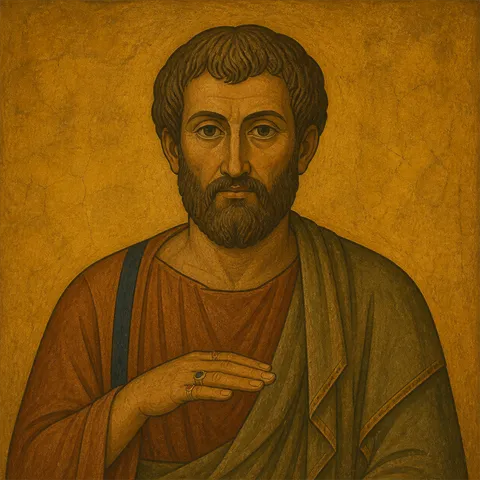 Aristotle
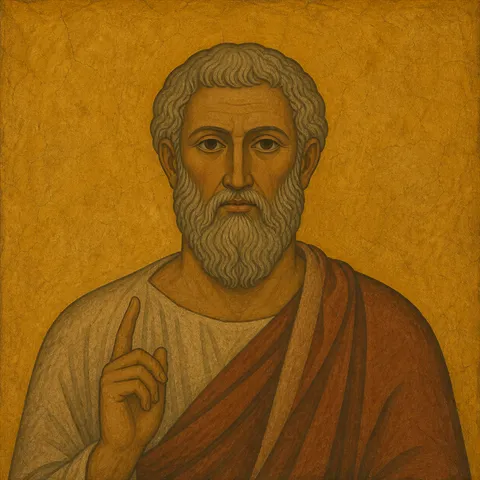 Plato
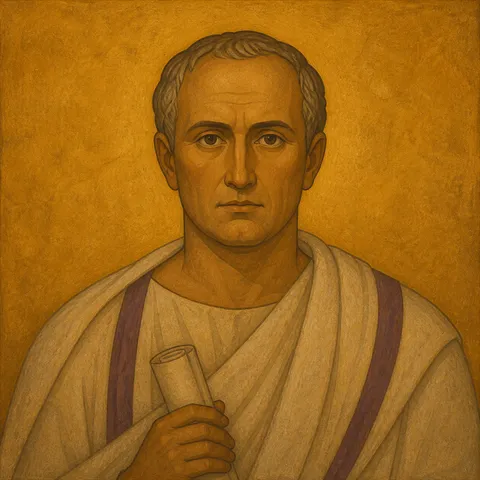 Marcus Tullius Cicero
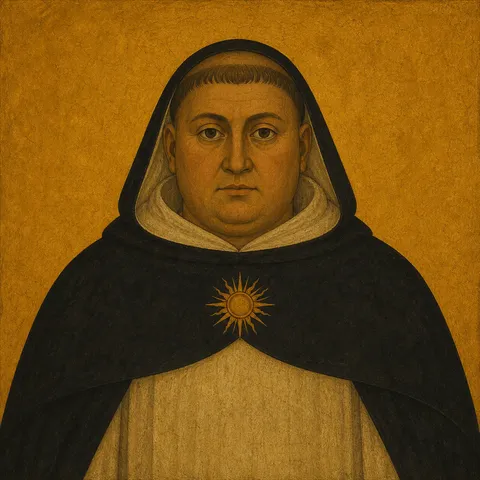 Thomas Aquinas
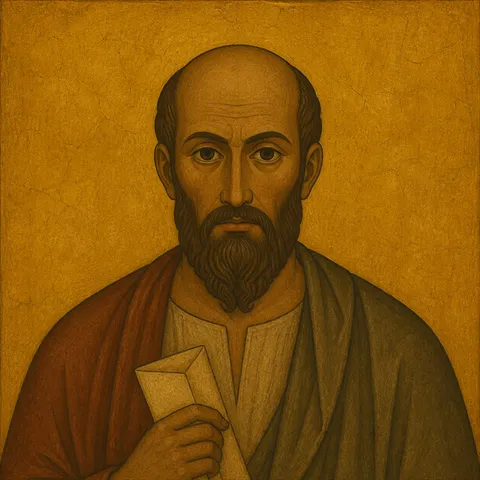 Paul of Tarsus
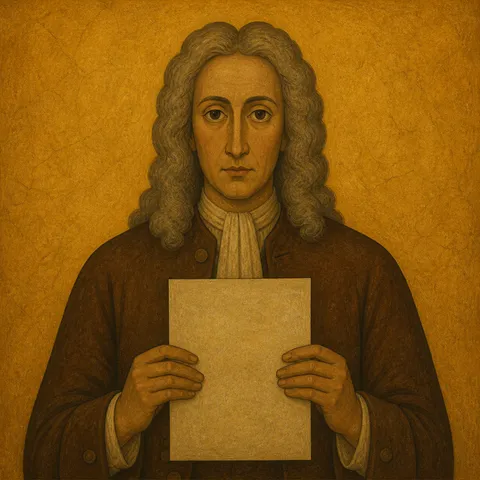 John Locke
 Niccolò Machiavelli
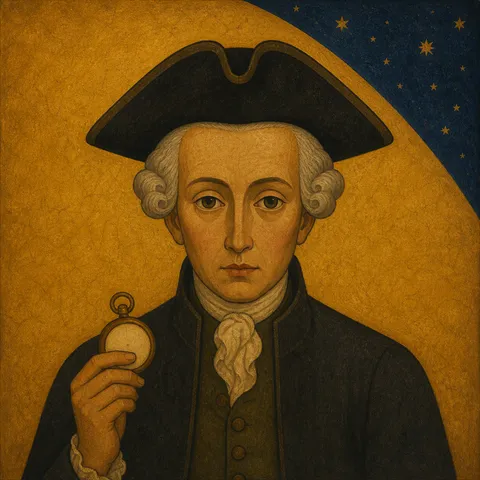 Immanuel Kant
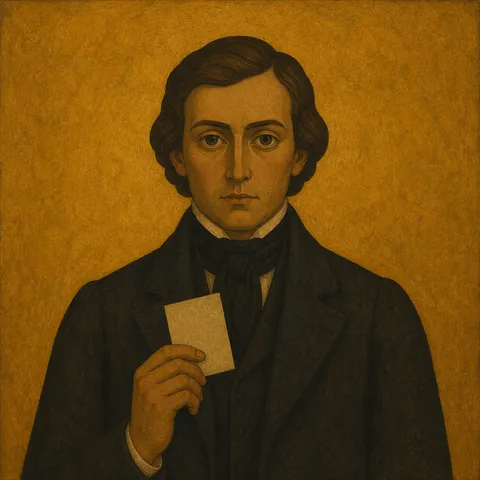 John Stuart Mill
 C. S. Lewis
 Friedrich Nietzsche
 Albert Camus