Somebody drives two hundred kilometres to bury a man he hardly knew. Somebody keeps a number in a phone that leads nowhere now. Somebody avoids hospitals. Somebody cannot open the photographs from that summer. You have swiped all of it already. One old question sits under those cards: whether death is an event in your life, or a boundary past which the business belongs to other people.
YOUR COMPASS ON THIS ROUTE
STATION 1 / 11
Being afraid of death is normal, and there is no shame in it.
Socrates spent his last day in a cell talking with friends about whether the soul outlives the body, and drank the hemlock when the sun went down. That scene sits at the base of the whole Western conversation about dying, and it holds together by one move. Philosophy, for Socrates, is itself a practice of dying: separating yourself daily from what the body wants and what it dreads, so that at the necessary hour the separation comes as no surprise. Then he takes the fear apart. A man can fear only what he knows to be evil, and about death no human being knows that; the fear is passing itself off as knowledge. His friends in the Phaedo weep, and he stops them with a mild joke at their expense. Here is the hardest thing in the position too: he believed the soul goes on, and that belief is what kept his calm level down to the last cup.
The true philosophers, Simmias, are always occupied in the practice of dying.
Epicurus treats the fear of death as an error in the accounting and shows exactly where it sits. The soul, for him, is assembled out of atoms like everything else; when the body comes apart they disperse too, and nobody is left for whom things could go badly. Evil requires someone to feel it, and here there is nobody to feel. He adds the symmetry for clarity: no one grieves over the centuries that ran before his birth, so the centuries after ought to weigh the same. The entire operation is done for the sake of the living: dread of the end, on his account, spoils every hour still available, which is why it has to be lifted now. His own last day was spent in attacks of the stone, and on that day he wrote to a friend that the memory of their conversations outweighed the pain. The calculation holds while a person is still able to make it.
Death, therefore, the most awful of evils, is nothing to us, seeing that, when we are, death is not come, and, when death is come, we are not.
Marcus Aurelius kept death in front of him as a working instrument. In the notebooks he returns to it dozens of times, never once for the sake of self-pity: the thought of his own end is what he uses to sift the trivial out of an emperor's day. The move is Stoic and cold. You may die at any moment, so every task is worth doing as though it were the last; complaints, intrigues, flattery and posthumous fame lose their weight at once under that measure. Anyone who walks around hospitals and funerals is, on this reckoning, turning away from the most useful mirror he owns. The man writing this had buried several of his own children and was fighting on the frontier. The bitter note is the repetition: he reread the line because he forgot it, and having forgotten, wrote it again.
Do not act as if thou wert going to live ten thousand years. Death hangs over thee. While thou livest, while it is in thy power, be good.
Cicero chased glory all his life and admitted it, which makes what he says about it worth more than most. In the Dream of Scipio he lifts the reader above the earth and shows how little its inhabited strip weighs: fame lasts a few generations in one corner of one continent, and the next flood washes it out. Then comes his turn. In place of contempt for memory he gives it another office: live so that the republic has something to remember, because a word said aloud is what holds a community together once the people are gone. So the wish that somebody read your name in a hundred years is, for him, both legitimate and small. His own name was indeed read. The head and the hands that had earned it were put on display in the Roman forum.
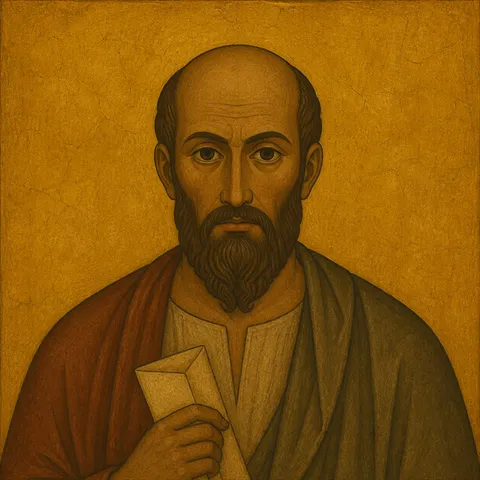
Paul writes about burial in the language of a farmer. A body lowered into the ground he calls sown: it goes down perishable and rises imperishable, the way a grain bears no resemblance to the ear. Because of that, the rite for him has an addressee outside the circle of the living. The Greeks he addressed in Athens knew the immortality of the soul and recoiled from a resurrected body: the thought that matter was worth returning to struck them as barbarism. Paul holds on to it precisely because it is bodily. A person in his letters is no soul carrying a body around, so the hope concerns the whole of a person, face and hands included. One shadow on the position is his own: he expected the end within his lifetime and wrote to the congregations as though only a few years were left.
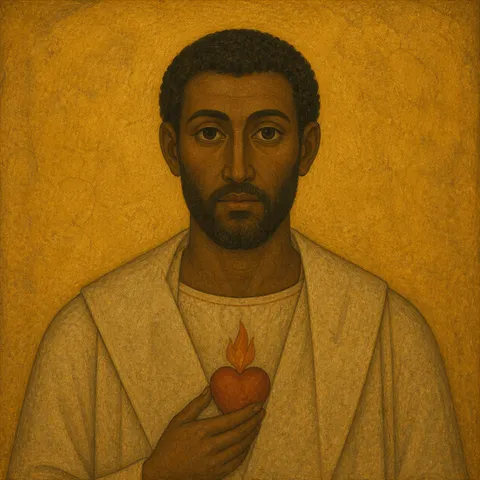
In the fourth book of the Confessions Augustine described the death of a friend of his youth and what it did to him. His home town became unbearable, because in every place the question 'where is he' stood waiting, and no comfort held. Out of this he draws an observation in place of advice: grief shows a person that he is unintelligible to himself. Then comes the turn, a strange one in a man who loved so hard: hold the dead where nobody is lost, which is in God, since a love resting on presence alone is doomed from the first day. The number nobody deletes he would understand without explanation. Years later he wrote that a funeral is done for the living, and he wept for his mother all the same, ashamed of his own sentence about the living.
I became a hard riddle to myself, and I asked my soul why she was so downcast and why this disquieted me so sorely.
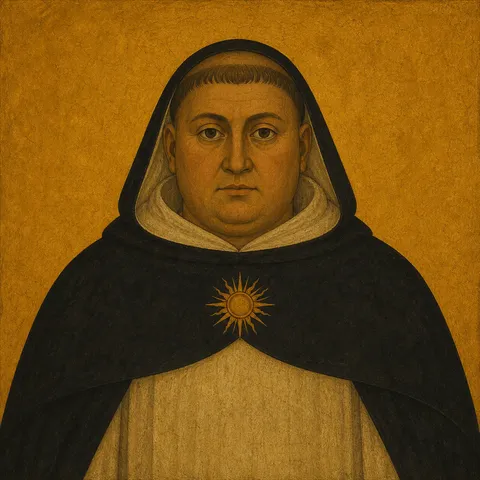
Aquinas enters this question from the side of ownership. A life was received, so a person cannot dispose of its end the way he disposes of his property: the one who gave it remains party to the case. From here comes his prohibition on cutting your own life short, and from here too his calm about pain. The body, for Aquinas, is no husk the soul sheds at the first opportunity; grace perfects nature, nature holds on to being, and three months of life remain three months of life. So treatment that adds both suffering and time he would accept, and accept without the pathos of martyrdom. He draws a boundary as well: laying down a life for something higher is permitted, which keeps a refusal of futile treatment clear of sin. The fine distinction between killing yourself and letting yourself die begins right here.
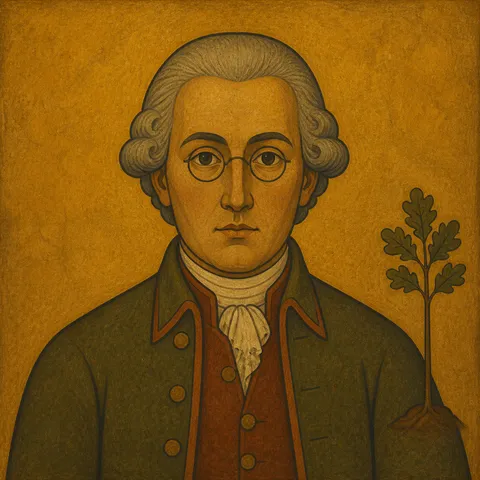
Burke reads a grave as an institution. Society, for him, is a contract carrying more signatures than there are living hands: the dead put in the language, the law and the house, the unborn will put in what we shall never see, and no single generation may rewrite the terms on its own. A walk to a cemetery in such a world performs an obligation: you go to the place where the contract is visible. Hence his famous phrase about the little platoon. Love of the world begins with attachment to your own corner, and whoever has stopped visiting his own dead usually lets go of the rest easily. Burke himself was a man of strong feeling, and his contemporaries amused each other over his pity for the French queen. The same susceptibility that produced this thought occasionally carried him too far.
Heidegger listened to the way death is spoken of in everyday talk and heard a mechanism in it. 'One dies' is a sentence without a subject: it admits the fact and in the same breath steers it away from anyone in particular, since the one who dies is always somebody else, somewhere, sometime. Death becomes an item in statistics. His move is to take that little word away. My death has no substitute: nobody can die in my place the way a job can be done in my place, and that is what makes my life mine. A person who began deciding faster after burying someone close has, on this account, heard his own voice for the first time in place of the general one. The dark part here is large: the philosopher who wrote about owning your choices gave his voice to a party in 1933, and no page washes that off his name.
Lewis married late, had four years with his wife, and when he was widowed he picked up the school notebooks lying around the house and wrote in them daily. The observation the book opens with is plain and inconvenient: grief resembles a state very little, and resembles fear, except there is nothing to be afraid of. From here his refusal of any stages. He describes grief as walking in circles, where the same thought returns slightly altered each time, and no map works twice. A year as the term after which a person must get on with living is, in this light, a measure for the convenience of onlookers. The second half of the book is harder. Lewis tests his own faith at the place where it hurts and admits that at first he was praying to a wall. He published it under an invented name.
Skovoroda composed the line for his own grave while he was alive, and that is the news in him. Several careers were held out to him and he declined each of them: the court choir and the chair he traded for a bag on a shoulder. His last decades were spent walking the roads of left-bank Ukraine with a flute and a Bible in his bag, sleeping in hamlets among people who could not read him. Kindred labour, his central phrase, is the key to the epitaph as well: happiness is possible only in the work you were born for, and a man standing inside it knows the sum of his life before any witness does. So thinking about the words to be said over him is neither vanity nor fear in his case. It is a test: a sentence that comes out foreign means the work was foreign too. The line came out short: the world tried to catch him and never did.
Eleven stations spread along a single axis: death as the boundary that orders a life against death as somebody else's business, with nothing of the living to be fitted to it. Marcus Aurelius and Heidegger pull one way, Epicurus the other. Paul and Aquinas change the question into a different one, about who owns a life. Your swipes already sit somewhere between those pulls. Two doors from here: record 02 on a last day in a cell, and record 11 on the house where grace perfects nature.
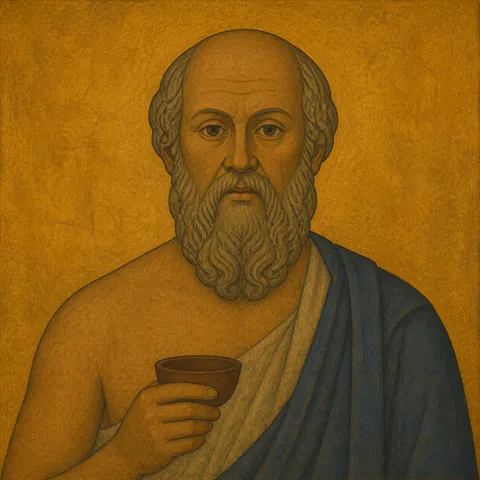 Socrates
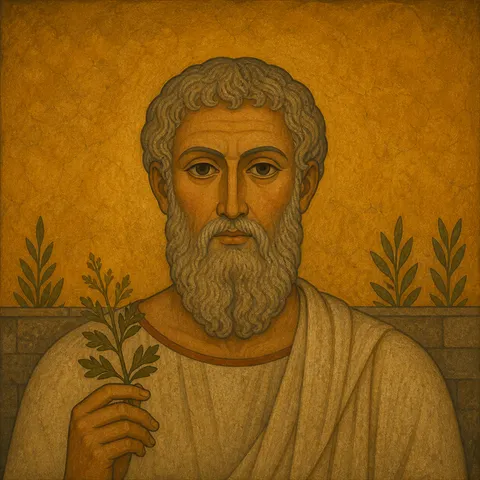 Epicurus
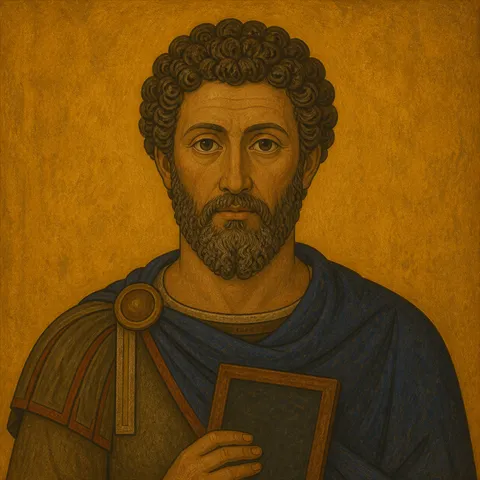 Marcus Aurelius
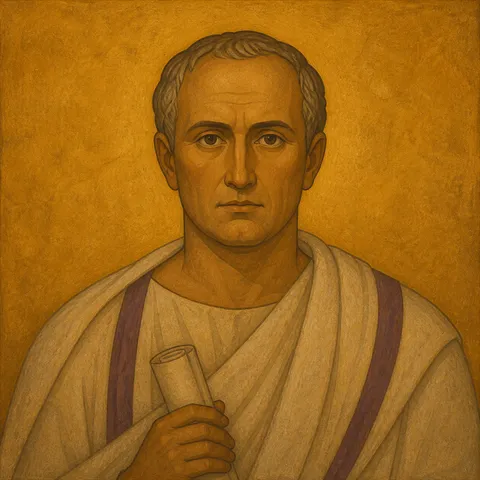 Marcus Tullius Cicero
 Paul of Tarsus
 Augustine of Hippo
 Thomas Aquinas
 Edmund Burke
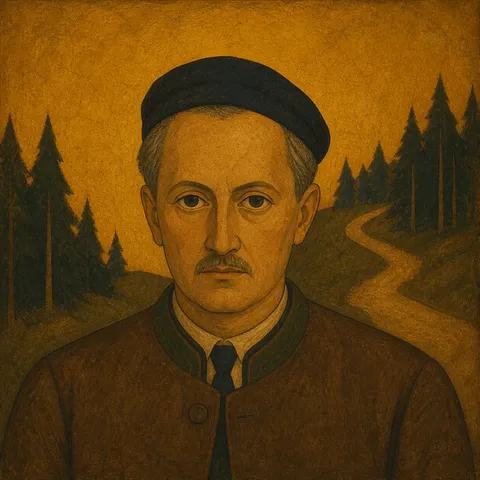 Martin Heidegger
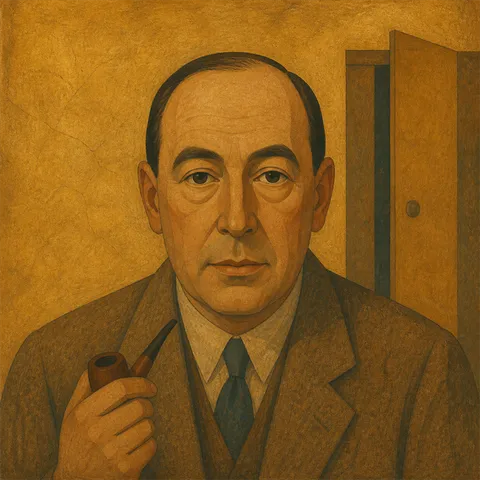 C. S. Lewis
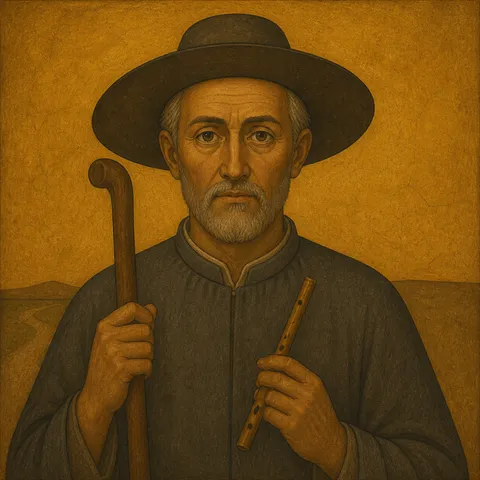 Hryhorii Skovoroda