How many people have looked, and whether the one person in the third row is clapping. You keep a running estimate of what others think of you and update it several times a day, without ever calling it that. Most of the decisions built on that estimate get taken before you notice taking one, which is where this route starts.
YOUR COMPASS ON THIS ROUTE
STATION 1 / 12
I only post the photos the people watching will like, and I see nothing wrong with that.
Smith explained why you retake the photograph without ever seeing the audience. We judge ourselves, he argued, by imagining how we look to a fair and well-informed observer, a spectator assembled out of other people's eyes and then installed inside the chest. Posting what the watchers will like is that mechanism running with the imagined observer swapped for a measurable one. Smith turns sharp at the distinction he draws next, between praise and praiseworthiness: wanting applause is one appetite, wanting to deserve it is another, and only the second gives a person any footing once the hall is empty. The fourth retake of the same street is the test he would apply here. A tea going cold on the windowsill is what the measurable observer charges for each retake, and Smith would enter it with the rest of the day's expenses.
It is only the weakest and most superficial of mankind who can be much delighted with that praise which they themselves know to be altogether unmerited.
Aristotle put honour at the top of the external goods, which makes a brass plate a serious object in his hands. Great public spending he counted as a virtue in its own right, magnificence, and he expected a man of means to fund a chorus or a temple and to be named for it; holding the money back would be the defect. The condition is the one his whole ethics runs on: honour is the prize attached to excellence, so it has to be paid for something done. A donor plate on a corridor wall satisfies him when the gift was real and the sum was proportionate to the giver. A month's salary from a student is disproportionate in his arithmetic, and that is how he would read the card. He also held that a great-souled man wants honour from people whose judgment is worth something.
and this is honour; that is surely the greatest of external goods
Cicero refused the split the card proposes. Glory, on his account, follows virtue the way a shadow follows a body, and a man who does something worth doing will be spoken of, because that speaking is part of how a republic notices its own good. Office gave him reasons to hold this: a consul governs by reputation, and a lawyer nobody trusts wins nothing for his client. In On Duties he presses harder, arguing that the expedient and the honourable never truly come apart, and that anyone who thinks he has found a case where they did has miscounted somewhere. Working for recognition therefore describes almost everybody who works well. The researcher pinning another acceptance letter to a crowded board is doing what Cicero did with his speeches, and Cicero's own end shows what the practice can cost.
Augustine caught the hook in himself and wrote it down. The love of praise, he says, solicits other people's votes in order to establish some excellence of one's own, and it survives being reproved, since it then takes pride in the reproof. A man who despises glory can end up glorying in the contempt, at which point the contempt has stopped being contempt. He knew this from the inside: the Confessions are a public document in which the author examines his own motives for making a public document. A landing outside a neighbour's door, a week after the bag was carried up, is his case at domestic scale. What he would refuse is the conclusion that the good deed was therefore worth nothing. The deed stands; the appetite that grew on it afterwards is a separate item, and it wants watching.
often glories more vainly of the very contempt of vain-glory
Boethius worked out the value of a lasting name while waiting to be executed for treason. Philosophy, the woman who visits his cell, does the arithmetic for him: measure any span of fame against eternity and the comparison cannot even be set up, since a finite number and an infinite one will not stand in a ratio. She adds the geography, that the earth is a point and the inhabited part of it smaller still, so a reputation locked inside one language reaches almost nobody. His hardest question comes last, and it concerns the beneficiary. If a man is wholly gone, the glory belongs to nobody at all. Two workers lifting a stone slab into place while an old man waits at the gate is the scene his argument was written against. He had held the highest office in the state and lost it inside a year.
when ye think on future fame, fancy it an immortality that ye are begetting for yourselves
Marcus Aurelius wrote his reminders at night, in a tent on a frozen frontier, and the setting is what gives them their weight. A man governing an empire hears praise all day and has to decide what it is worth, and his answer keeps returning to the same measurement: look at how fast everything is forgotten, and notice that the people who did the praising are gone already. Reputation is an external for him, outside the one thing a person controls, which is what he does with his own mind. A column of comments rising on a screen while an ordinary street slides past the bus window is his whole doctrine in a single frame. He would add a caution the card leaves out. Treating an insult as nothing is a discipline, and a man who merely pretends the storm is small has done none of the work.
as for praise, consider how many who once were much commended, are now already quite forgotten, yea they that commended them, how even they themselves are long since dead and gone
Epicurus built a school behind a garden wall and advised his students to pass through life unnoticed. The advice follows from an argument: fame puts your peace into the keeping of people you cannot control, and a mind that needs their attention has taken on an appetite with no ceiling. What he wanted for a person was ataraxia, a settled calm, and he found it purchasable with bread and with friends who stay. The Garden admitted women and slaves, so the company he chose was small and unimpressive by Athenian standards. A young man watching a bus pull away with his suitcase aboard while his grandmother stands at the stop is trading exactly what Epicurus warned about. He would decline to call the trade irrational. He would say the buyer has misjudged the goods, since a famous year arrives with a new set of masters attached.
Hume filed the love of a good name among the strongest springs in the human frame and declined to be embarrassed about it. Pride, on his account, rises when we see our own qualities reflected in the approval of other people, and the reflection is what makes a quality feel real; take away every witness and the pleasure thins out. Deleting a post that drew nothing is therefore a sane response to a signal, sane in the way that leaving a cold room is sane. Near the end of his life he wrote his own obituary, a short account of a cheerful man, and he cared how it would read. What he would refuse is the moral case against the impulse, since a passion built into the machine cannot be scolded out of it. He would ask instead which audience you let hold the switch.
Machiavelli separated the two things the card puts on one line and then said which of them governs. A prince has to seem merciful and faithful, and he should be those things whenever he can afford them; the trade forces him to know how to do otherwise when circumstances press. Men judge by the eye, in his reading, because most of them will never get near enough for anything else, so appearance is the operative fact. He wrote from a village after being tortured and exiled by the returning Medici, with fourteen years of diplomacy behind the argument, and he thought the moralists had been describing princes who never existed. A young man in a barber's chair studying the back of his own head is his subject on a domestic budget. The cost he stated plainly: this is a technique for holding a position, and it promises nothing about the man holding it.
Socrates had the vote in front of him and answered it in the room. Told he could go free on condition of dropping the questioning, he refused in the courtroom itself, naming an obedience that outranked the verdict, and promised to keep practising philosophy for as long as he had breath. The reasoning is in the Crito: in any craft you follow the one person who understands, and a majority of the uninformed yields a loud number with no expertise inside it. Five hundred jurors were no qualification. A student standing to speak in a full hall while the rows around her stay seated is inside the same arithmetic, with a nickname for a penalty where he had hemlock. His position carries an edge the archive keeps visible: a fanatic has certainty of exactly this shape, and Socrates put his own life up as the collateral.
Men of Athens, I honour and love you; but I shall obey God rather than you
Kierkegaard published most of his major books under invented names, and he meant the device to do philosophical work. Johannes de Silentio and Climacus each argue a way of living from the inside, so a reader meets a position with nobody standing behind it to appeal to, and the decision lands where he thought it belonged, on the single individual. Against that he set the crowd, which he called untruth, because a hundred people sharing one judgment dilute the responsibility until none of it rests anywhere. Writing at a kitchen table at night under a photograph of a cat can be either move. It is his if the false name lets you say something you will stand behind when somebody asks. The other case he would name without softening: a mask that cancels answerability is the crowd operating with one member.
Hegel would read the offer as a misunderstanding of what a person is. Self-consciousness, on his account, arrives only through another self-consciousness: I become determinate for myself when somebody else acknowledges me, and the famous passage about master and servant studies how badly that can be arranged. Work is where the acknowledgement gets its material, since the object made carries the maker's mind out into a world where it can be seen. A woman handing a finished frame across a bench to a man who drives it away has produced the work and broken the circuit that completes it. He would grant that the frame is good, and hold that something in her stays unfinished while her name is kept off it. History is the only court he trusts to rule on any of this, and it takes its time.
One axis ran through all twelve stations: whether being seen completes a person or spends him. Honour as the prize of a deed sits at one end, the forgotten name in the cell at the other, and between them stand the men who simply manage how they look. Your swipes have already placed you somewhere on that line, which is long and has no midpoint worth recommending. The record on Kierkegaard against the crowd opens from the far end of it; the record on Cicero opens from the near one.
SOURCES
Adam Smith, The Theory of Moral Sentiments, III.2 (tr.: укр. ред.) · www.gutenberg.org
Aristotle, Nicomachean Ethics, IV.3 (tr.: W. D. Ross; укр. ред.) · classics.mit.edu
Augustine, Confessions, Book X (tr.: E. B. Pusey; укр. ред.) · www.gutenberg.org
Boethius, The Consolation of Philosophy, II.7 (tr.: H. R. James; укр. ред.) · www.gutenberg.org
Marcus Aurelius, Meditations, Book VII (tr.: укр. ред.) · www.gutenberg.org
Plato, Apology, 29d (tr.: Benjamin Jowett; укр. ред.) · www.gutenberg.org
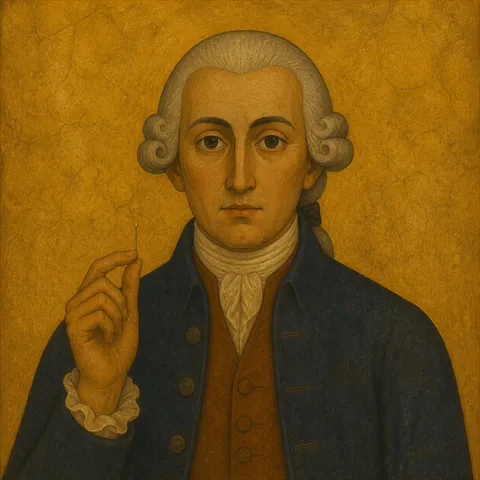 Adam Smith
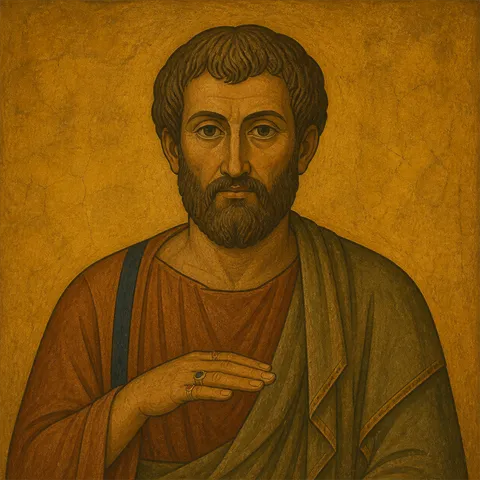 Aristotle
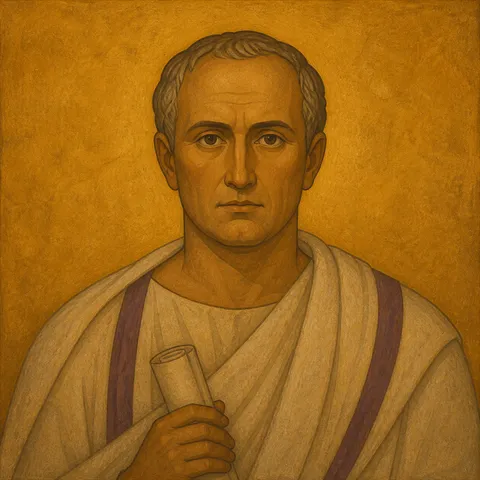 Marcus Tullius Cicero
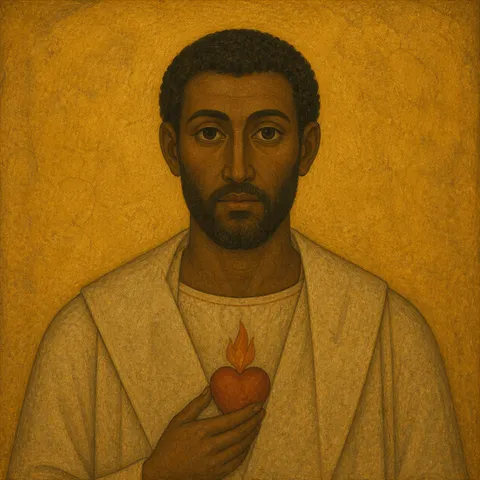 Augustine of Hippo
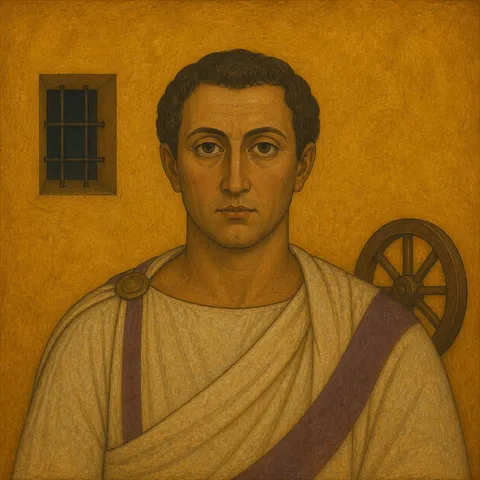 Boethius
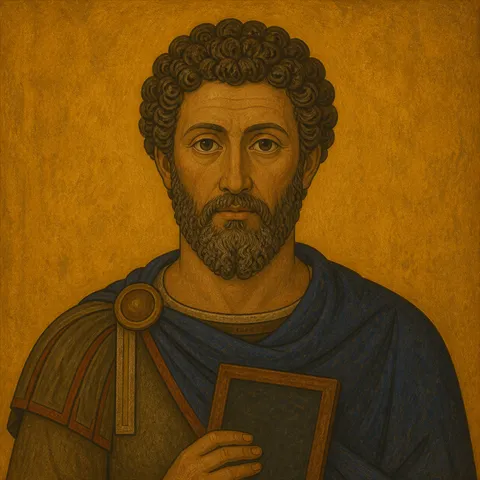 Marcus Aurelius
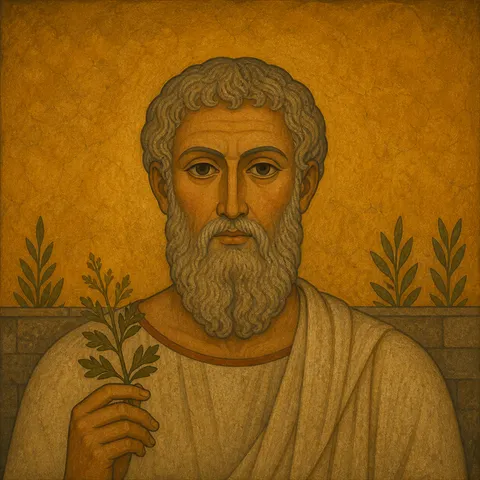 Epicurus
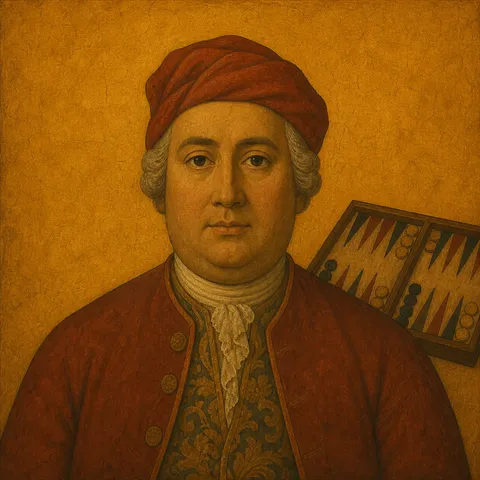 David Hume
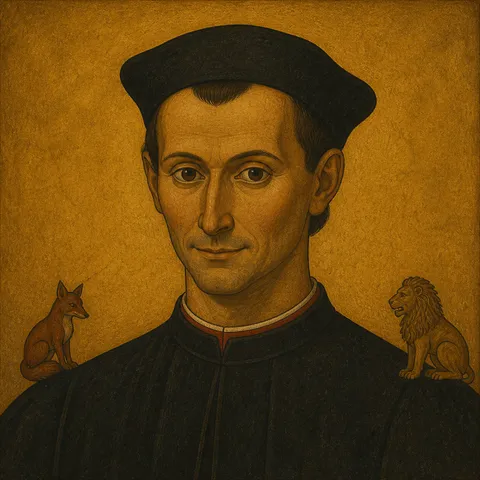 Niccolò Machiavelli
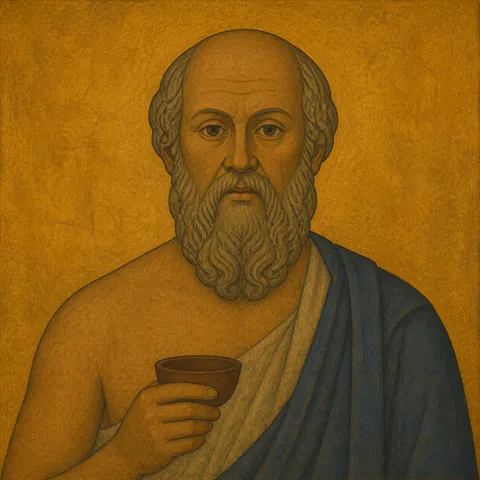 Socrates
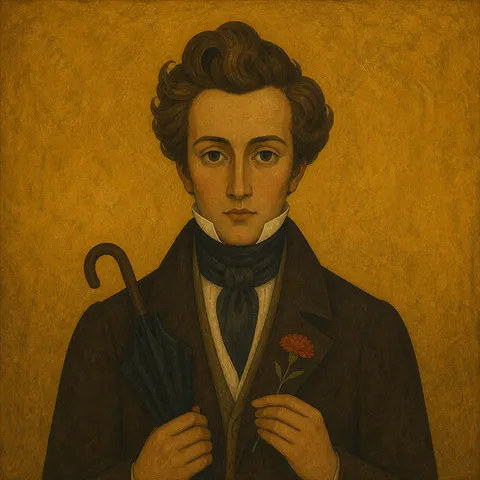 Søren Kierkegaard
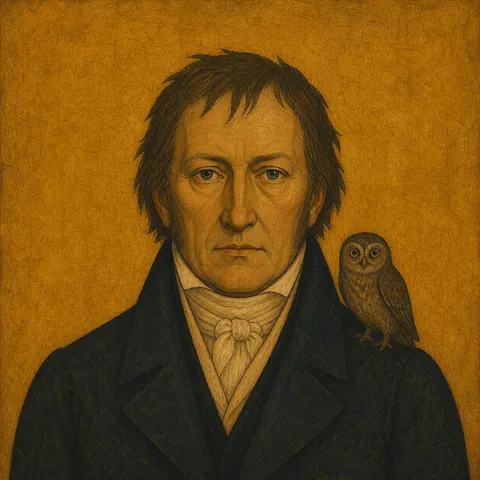 G.W.F. Hegel