You know which hours of your life you remember warmly, and you almost never ask why those. Whether happiness is a state that happens to a person or a skill assembled over years. Whether it needs a witness. Thirty cards are behind you; ahead stand twelve people who asked these questions with no psychology on hand.
YOUR COMPASS ON THIS ROUTE
STATION 1 / 12
Only a decent person can be happy; a scoundrel gets satisfaction and nothing more.
Aristotle refused to treat happiness as a feeling. Eudaimonia names an activity, the exercise of what is best in a human being across a whole life, which is why a scoundrel is unavailable for it. A man who cheats well and enjoys it is running the operations of a soul at odds with itself, and the pleasure taken there reports on his condition while measuring nothing about his life. The word for a good life and the word for a good man belong to one analysis. Hence the swallow that makes no summer: one fine afternoon, like one successful theft, settles nothing. Aristotle leaves a gap that honest readers notice. Fortune counts; poverty and dead children can wreck a life built correctly, and he says so without repairing the damage. Your yes on this card denied the scoundrel his claim.
Human good turns out to be activity of soul in accordance with virtue, and if there are more than one virtue, in accordance with the best and most complete.
Epicurus sorted wants by whether they have a bottom. Hunger has one and bread closes it; thirst has one. The wish to be seen as a man who has arrived has no bottom, because its measure sits in somebody else's yard. From that he draws a practical conclusion about money: what nature asks for is small and quickly reached, while what opinion asks for recedes as you approach it. The Garden outside Athens ran on water and plain food, with cheese on a feast day counted as luxury, and people who could have lived broadly chose narrowly in order to guard less. He was no ascetic on principle; he reckoned that the anxiety attached to possessions costs more than the possessions return. Your yes said that the roof and the bread close the account. Epicurus would ask what you spend on the storey above them.
Nature's wealth at once has its bounds and is easy to procure; but the wealth of vain fancies recedes to an infinite distance.
The Meditations open with a list of debts. Before any doctrine, Marcus writes down what he owes each person who shaped him: his grandfather for the government of his temper, his mother for plain living. The whole first book is that inventory, compiled by a man running an empire through plague and a frontier war, and it reads like the notebook on this card. He would recognise the practice and correct one thing. The point is accuracy about what you have been given, and a steadier mood arrives as a by-product; once the mood becomes the aim, the exercise turns into a technique for feeling better and loses its object. Schopenhauer would say the good feeling is only the pause before the next want. Your yes keeps the notebook going anyway, and Marcus kept his for years with no expectation of readers.
From my grandfather Verus I learned good morals and the government of my temper.
Paul writes to a Greek city that ranked wisdom at the summit of human achievement, and he moves something else into the position. The thirteenth chapter of the first letter to Corinth lists the highest attainments available to a religious man and prices each at nothing without love. The claim is structural. A life can be complete by every measurable mark and remain empty, because the thing that makes a person count is a relation to somebody else. He wrote it to a congregation splitting into factions over which teacher they followed, so the passage is an intervention in a quarrel and was never a wedding text. Your yes on this card said that a life without love failed regardless of its achievements. Paul had entered his own achievements in that column and written them off in one sentence.
Though I have all faith, so that I could remove mountains, and have not charity, I am nothing.
Augustine's account explains this card better than most psychology manages. Desire in a human being aims past every object it lands on, so arrival is followed by a small vacancy, and hunting up trouble for yourself is one of the ways that vacancy gets filled. He had run the experiment on himself with rhetoric, a career and an audience in Milan, and he reports the pattern without flattering himself: the thing obtained stopped counting on the day it arrived. The famous opening sentence of the Confessions states the diagnosis. Pleasure stays real in his account. His claim is that finite goods cannot carry infinite weight, and that whoever demands they should will break them. Your yes described the pattern from inside. Augustine would tell you the pattern is information about the size of the appetite.
Thou hast made us for thyself and restless is our heart until it comes to rest in thee.
Aquinas takes Aristotle's analysis and adds a distinction that changes the card. Imperfect happiness is available in this life, in friendship and in work that suits a person, and every piece of it can be interrupted. Perfect happiness is the vision of God, and nothing inside time supplies it, which is why he holds that no one should be called happy without qualification while he can still lose everything. Hence the caution about a thirty-year-old. Solon's rule stands in the Summa for the reason it stands in Aristotle: a life is judged whole, and the whole is not yet in. Aquinas was no gloomy writer about the present. He says the imperfect kind is real and worth building. Your yes accepted the qualification, which at thirty is the hardest part of his position to hold.
Smith's first book asks how a self-interested animal arrives at moral judgement, and the answer runs through other people's eyes. We learn to assess ourselves by imagining how a well-informed and impartial observer would see us, and that observer, assembled out of a lifetime of watching and being watched, becomes the conscience. Take the others away and the instrument never forms at all. So the feed that makes you unhappy is a coarse version of the mechanism that made you a person capable of unhappiness about it. Smith described the trap as well: we admire the rich with a readiness that has nothing to do with their merit, and the wish to better our condition follows us from the cradle to the grave. Your yes wanted the window shut. He would ask which window you would still be human without.
Mill inherited a doctrine that counts pleasures and amended it so that it counts kinds. Anyone who has known both a coarse satisfaction and a demanding one prefers the demanding one, he argued, even where it delivers less contentment, and the preference of those competent to judge is the only evidence on offer. That is how he keeps utilitarianism from recommending the well-fed fool. His critics pressed the cost of the amendment hard: the higher pleasures turn out to be the ones educated people happen to like. Mill knew the case from inside. At twenty he collapsed under a childhood engineered for intellect and came back through Wordsworth, having found that a mind trained only to analyse loses the capacity to feel. Your swipe ranked the two lives. Reaching his own ranking cost him a breakdown.
It is better to be a human being dissatisfied than a pig satisfied; better to be Socrates dissatisfied than a fool satisfied.
Schopenhauer's argument starts below psychology. What a person is, under the appearances, is will: a blind striving with no object of its own, which is why satisfaction never holds. A want is a lack; filling it removes the lack and leaves nothing positive behind, so pleasure is negative in his technical sense and pain is what actually gets felt. Life swings between the two states, wanting and then boredom. From there comes the practical advice this card asks about: aim low, since avoiding great suffering is achievable while great happiness is a fiction. He was the first European philosopher to read Buddhist texts seriously, and he took the resemblance as confirmation. Your swipe accepted his trade or refused it. Nietzsche, who adored him at twenty, spent the rest of his life arguing that the trade impoverishes the buyer.
Kierkegaard spent his working life attacking one arrangement: a person who exists as a specimen of his class, his nation or his congregation. The crowd is untruth, he wrote, because inside it responsibility disperses and nobody is left to answer. What he wanted instead was the single individual, who stands before God with no representatives and therefore has to become somebody in particular. Needing a witness for your own happiness fits that diagnosis exactly. A joy requiring an audience is borrowing its reality, and the borrowing stays invisible while the audience holds. He knew the price of what he was recommending. He broke off an engagement to Regine and wrote about it for the rest of his life, mostly in books published under other names. Your no claimed that a person can be happy with nobody watching.
Nietzsche framed the question as a thought experiment with a demon. Suppose you were told that this life returns identical, every pain and every humiliation in the same order, forever. He asks how you would take the news, and the answer measures what you have made of yourself. Saying yes requires having stopped wishing the past away, and that for him is the real labour, since a person who edits his own history is still being governed by it. He was no cheerful writer about suffering. Suffering in his account is the material a character gets shaped from, and he lived in a body that handed him headaches lasting days. Your yes on this card passed his test. His question is whether you answered about your life or about a summary of it.
Camus built everything on a refusal to be consoled by anything he judged untrue. The absurd names a mismatch: a person who asks for meaning, and a universe with no answer prepared, and the honest position holds both halves without patching either. Hope of the metaphysical kind he treated as a way of leaving the room. Sisyphus is his figure for the other exit, and the line about imagining him happy means that a man who sees his situation completely has taken back the one thing available. Camus was not cold about comfort. He grew up in two rooms with an illiterate grandmother and a nearly deaf mother, and he wrote about the light on the Algerian coast as a good in itself. Your yes preferred the clear view and paid the tax on it.
Two measures ran through these stations. One counts happiness as an activity built up over years and visible from outside. The other counts it as a condition of the soul, where the main work is the removal of pain and disturbance. Your swipes have already placed you between them, and the hours you remember warmest know something about the placing. Two records stand open beside this route: the one on a restless heart, and the one on a quiet empire of understanding.
SOURCES
Aristotle, Nicomachean Ethics, I, 7 (tr.: W. D. Ross; укр. ред.) · classics.mit.edu
Epicurus, Principal Doctrines, XV (tr.: R. D. Hicks; укр. ред.) · en.wikisource.org
Marcus Aurelius, Meditations, I, 1 (tr.: George Long; укр. ред.) · classics.mit.edu
Paul of Tarsus, 1 Corinthians 13:2 (King James Version) (tr.: укр. ред.) · en.wikisource.org
Augustine, Confessions, I, 1 (tr.: Albert C. Outler; укр. ред.) · en.wikisource.org
John Stuart Mill, Utilitarianism, II (tr.: укр. ред.) · www.gutenberg.org
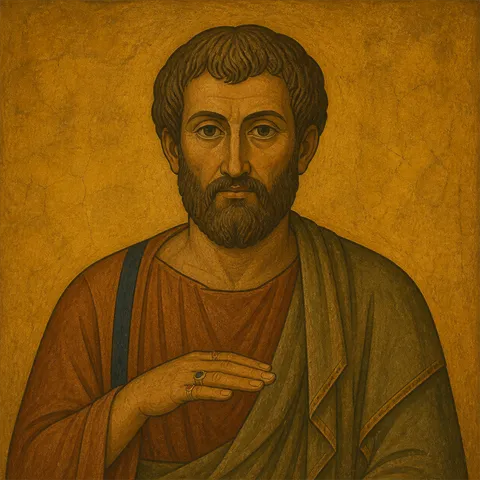 Aristotle
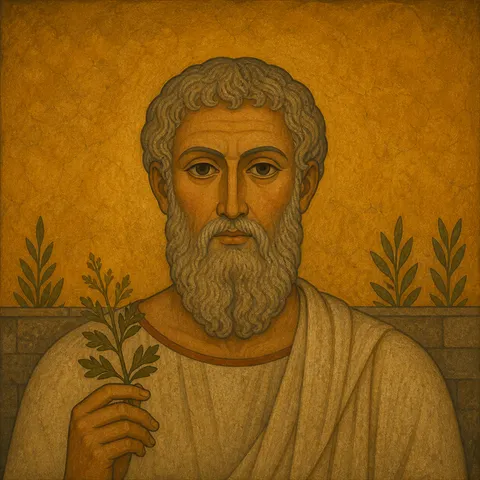 Epicurus
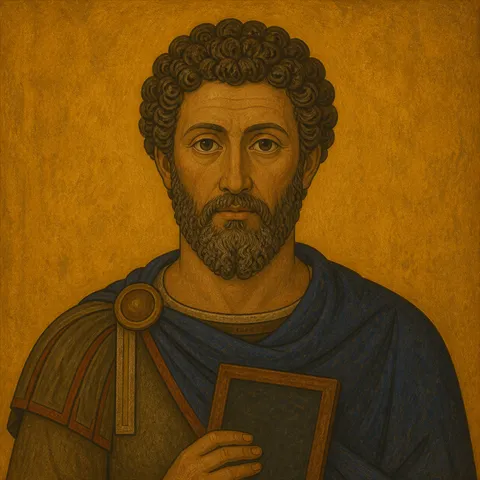 Marcus Aurelius
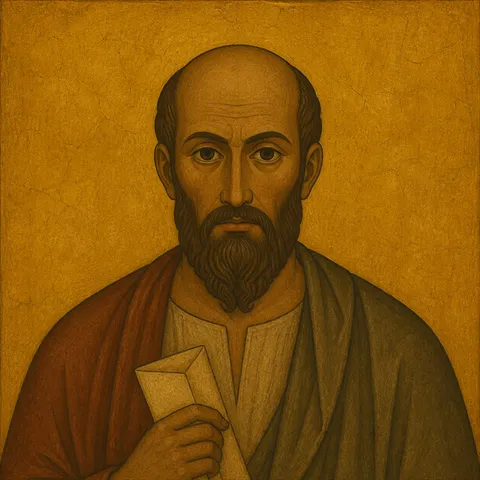 Paul of Tarsus
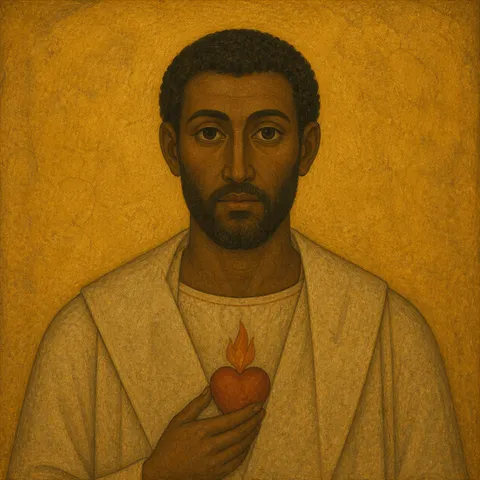 Augustine of Hippo
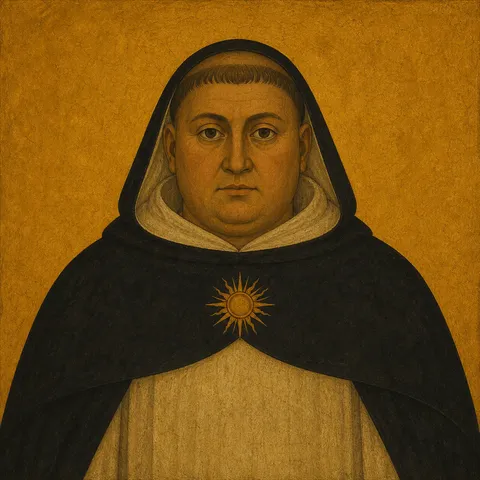 Thomas Aquinas
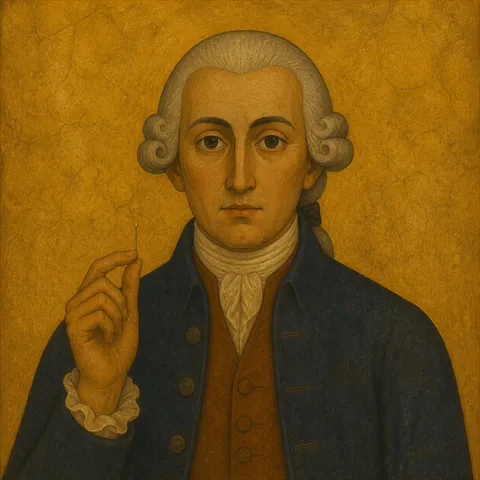 Adam Smith
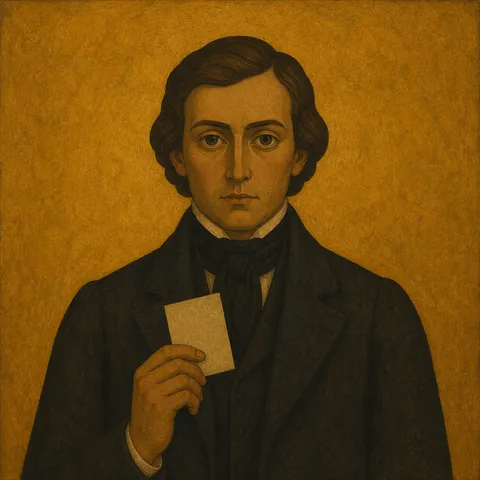 John Stuart Mill
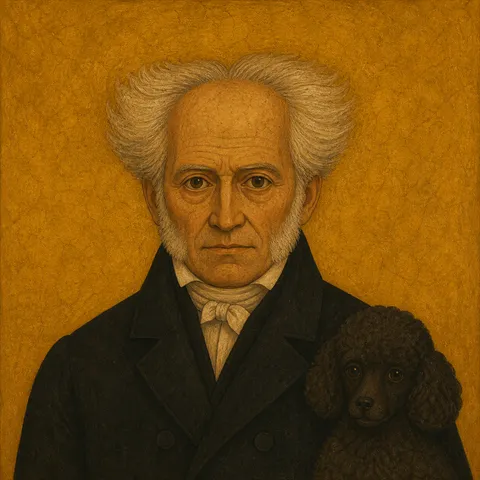 Arthur Schopenhauer
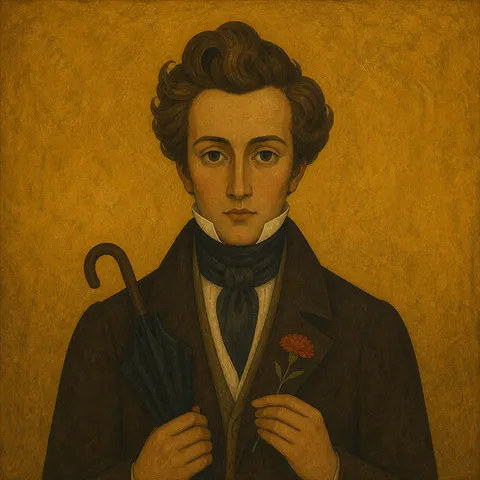 Søren Kierkegaard
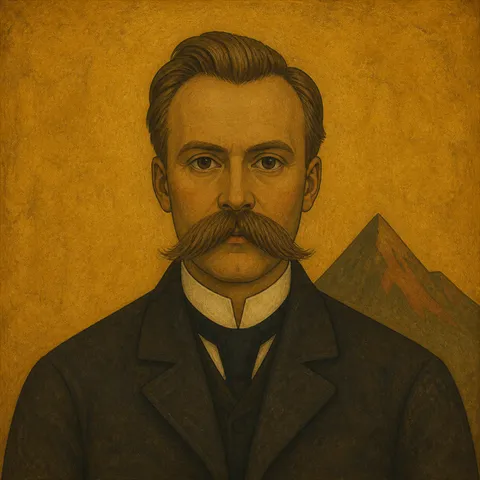 Friedrich Nietzsche
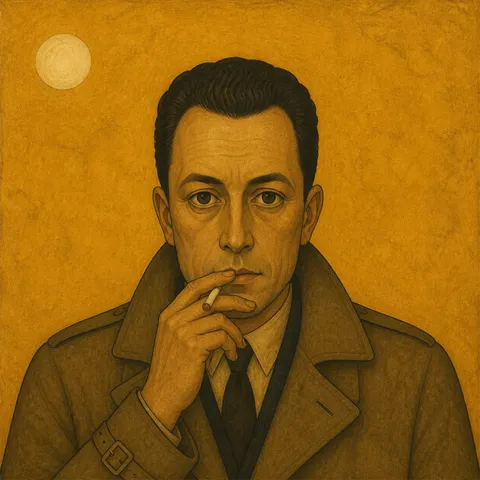 Albert Camus