A thousand put on a match on Friday. Three months of savings and a resignation letter in the drawer, or a guarantor's signature a friend is asking you for. Every time, you reckon something up in advance and then choose with your gut anyway, without a name for the force that decides for you in the last minute.
YOUR COMPASS ON THIS ROUTE
STATION 1 / 12
You put a thousand on a match once a week and count it as entertainment you pay for.
Smith was a professor of moral philosophy, and he described people long before he took up describing markets. Among the commonest faults he counted the conceit with which everyone rates his own abilities, and he added a less noticed one: an equally absurd confidence in his own good fortune. Then comes his observation about the arithmetic of gambling. A lottery lives on a small skew carried by every healthy man in reasonable spirits, and Smith insisted that there are no exceptions to it. Calling a thousand a week on a match entertainment you pay for would be permitted by him to anyone who can write down his own annual figure and get it right. He would add that security is the first object of a prudent man's care, and that we learn to judge ourselves through the eyes of an impartial spectator who sits inside the breast and keeps no flattering accounts.
The chance of gain is by every man more or less over-valued, and the chance of loss is by most men under-valued
Aristotle built every virtue as a middle between two failures, and courage in his account stands between the fear that runs from everything and the confidence that charges at everything. The middle is not arithmetical: circumstances fix it each time, and the man who can find it is the man with experience. Then he draws a distinction people usually walk past. The brave man acts for the sake of what is noble, which is why he knows when a thing is not worth the loss; the rash man wants to look brave and most often mixes daring with fright inside himself. A second-floor flat is burning and the fire crew is on its way – Aristotle would ask how much you know about smoke and about floor beams. He would not forbid an act that someone's life depends on. He would decline to praise it until he saw that a reckoning had actually happened.
He again who exceeds in confidence in respect of things fearful is rash.
Cicero held the office of augur and wrote a whole book against divination. In On Divination he takes the signs one at a time – the flight of birds, cracks in a liver, dreams, lots – and shows that no connection runs between them and what they promise. The Academic in him insisted on hearing both sides, so the book is built as a dialogue in which his brother Quintus defends the rites. Hence his conclusion. A rite may be useful to a state, and Cicero abolished none of them; certainty was simply what he failed to find inside them. The shirt you were once lucky in falls under that measure easily. He would add that if it steadies you before an important day, it is working on your hands and has no purchase whatever on the order of things.
Boethius wrote the Consolation in a cell awaiting execution, with a consulship and the noblest name in Italy behind him. Philosophy comes to him and starts with property: everything Fortune gave remained her own, and she takes back what is hers. Then Fortune herself answers, and the answer is cold. Turning the wheel is her trade; whoever rode it up agreed to the descent, and demanding constancy of her amounts to demanding that she stop being herself. Hence his reckoning for you. Handing over half your future earnings for the certainty that a venture will not fail means buying what this market does not sell. Boethius would add that some things were never on loan from Fortune: your own judgment, and whatever a person has already done. The wheel takes back neither of those, since the wheel never gave them.
if it takes to standing still, it ceases to be the wheel of Fortune
Aquinas distinguished precepts, binding on everyone, from counsels, to which only some are called. Obligation follows an order of charity: your own come first, since their needs rest on you, and a stranger's admiration for your act weighs nothing in that account. Then he brings in prudence, whose first part he numbered as foresight, the skill of seeing a consequence while it is still far off. A life laid down for a stranger he called the summit of love and never converted into a rule. Hence his position on your card. A deed nobody has the right to demand is, for Aquinas, a deed precisely because it cannot be demanded: a demand would turn it into work, and turn the reward into wages. He would add the uncomfortable part: whoever declines has to say his own order of charity out loud and see whether it is real.
Machiavelli looked at Fortune as a river in flood: the spate carries off trees and buildings and nobody stops it, yet in a quiet season men build dikes and channels, and then the water runs where they dug. Hence his division, which he offered as the border between helplessness and self-assurance. Refusing your own share means giving away everything. Then he makes his most disputable move. Fortune, he wrote, favours the bold, being a woman who enjoys the company of the young; the cautious lose the occasion while they are still measuring. Turning every step over and almost always doing the safer thing is a choice in which Machiavelli saw a slow loss. He would add that times change, and a man who will not change his habits along with them is ruined by his own temperament.
Fortune is the arbiter of one-half of our actions, but that she still leaves us to direct the other half, or perhaps a little less
Bacon climbed to Lord Chancellor from a modest branch of his family and wrote about fortune as a man who had moulded his own. Outward accidents matter, he granted: favour, opportunity, the death of others, a moment that fits a man's virtue. Even so, the mould of a man's fortune lies mostly in his own hands, and the commonest external cause of one man's rise is another man's folly. Then comes his method, the same one he turned on nature. An opportunity is tested by trying it, and whoever has never tried knows nothing about his own strength; knowledge grows out of experiment, and respect for authority is no substitute for it. Putting a third of your savings into one company's shares at twenty-two would earn his approval on a condition he himself kept badly: count the loss you can carry, and take on nothing above it. He died in debt.
chiefly, the mould of a man's fortune is in his own hands
Hume showed that about the future we hold no proof whatsoever. Every conclusion we draw about what will happen rests on the supposition that what is coming will resemble what has gone, and that supposition has nothing under it: experience speaks only of what has already occurred. In the place of proof we run on habit, and habit works well for exactly as long as circumstances hold steady. Then comes his demand about self-assessment. A person who came out whole from ten risks has a sample, no rule emerges from it, and the darkest part is that her own untaken steps stay invisible to her. I tell a justified risk from foolishness quite well, and so far I have not been wrong is a sentence in which Hume would recognise habit wearing the costume of method. About his own judgments he wrote more carefully than about anyone else's.
Burke held society to be a contract binding the living to the dead and to the unborn, and property has a special standing inside that contract. Each generation receives it on lease: keep it in repair and pass it on. Selling what you hold for others he called a breach of the terms, which is why the confiscations in Paris angered him more than the slogans did. Then he adds his own caution. A man, he says, works with a small private stock of reason and holds together thanks to a bank built up by his predecessors; a risk that stakes that bank costs more than it looks like to the man staking it. Your parents' flat as collateral for your venture is exactly that case. Burke demanded no timidity of you. He demanded a separate line in the accounts for what you borrowed from people who never saw your plan.
Epicurus is read as a preacher of pleasures, and his own life did not match the reading: bread and water, a little cheese on a feast day; the Garden admitted women and slaves as equals. He divided desires into the necessary and the empty, and built his whole therapy on having none of the empty sort, since a person who wants nothing superfluous gives Fortune nothing to grip. Even so, one thing he set above every good that wisdom prepares – friendship, because friendship is what makes a life safe and worth the living. Going into a venture you disbelieve in for the sake of a friend who staked everything on it is precisely where his arithmetic interrupts itself. Epicurus would ask about the sum: how much can you help with and still keep the calm in which his whole aim consists.
Kierkegaard described choosing as the minute in which a person is left without support. To venture is to lose your footing for an instant, and that is what makes every real step frightening; whoever will not venture spares himself the dizziness and loses at the same time the self he was to become. Anxiety he called the dizziness of freedom, a state in which a person sees her own possibility with nothing to hold on to. His Abraham walks up the mountain with no procedure available to confirm that he heard rightly. Fearing the loss of what you have more than you regret what you never tried is a position Kierkegaard described first and named the quietest of all despairs: whoever never staked herself has nothing to lose, and has therefore already lost it. He added that he promises no balanced life in exchange.
Nietzsche wrote about health as a piece of work, and the work was done on him by his own illness: failing eyes and years in Alpine villages where he walked six hours a day. Hence his distrust of everything that is guarded too carefully. A life given no weight to carry grows weak, and an animal kept warm stops being what it was; fate he demanded that one love as it fell out, including the part of it that hurts. Seeking out cold water and a steep hill for yourself is his prescription exactly, and he would add that the seeking has to be your own, since hardening imposed from above trains obedience. He drank water himself and had contempt for wine. Discipline in his hands means choosing a load, and there is no contempt for the body inside it.
The route drew one axis: risk as a craft in which most of it depends on you against risk as a stake the wheel places for you. One end measures and builds dikes; the other guards what the wheel will take anyway. Your swipes have already put you somewhere between those ends, and the cards where you paid out of your own pocket say most about where. Read those again. Two doors stand open: a man in a cell who had lost everything, and the record on a house of faith that knew how to distinguish.
SOURCES
Adam Smith, The Wealth of Nations, I.10 (tr.: ред.) · www.gutenberg.org
Aristotle, Nicomachean Ethics, Book III (tr.: ред.) · www.gutenberg.org
Boethius, The Consolation of Philosophy, Book II (tr.: H. R. James; ред.) · www.gutenberg.org
Niccolo Machiavelli, The Prince, XXV (tr.: W. K. Marriott; ред.) · www.gutenberg.org
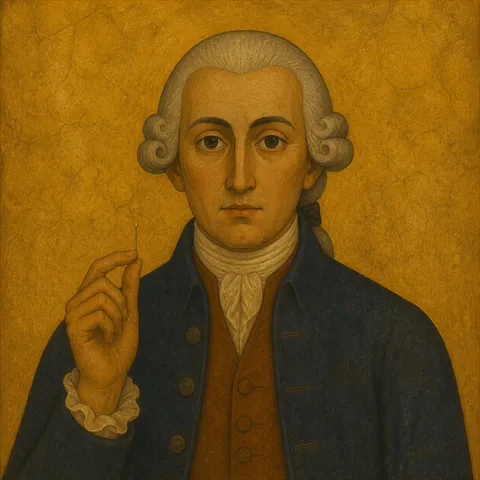 Adam Smith
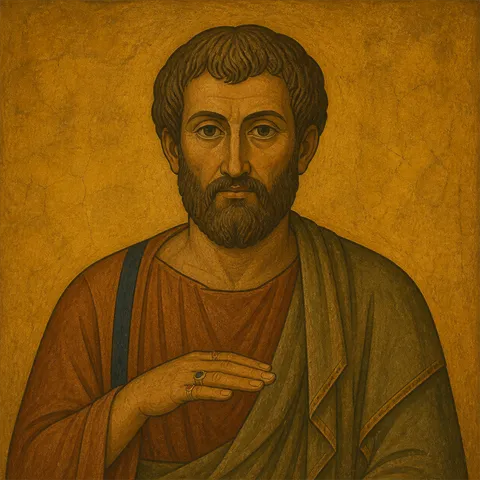 Aristotle
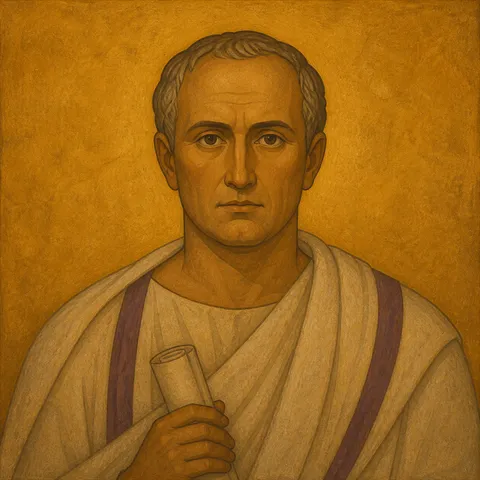 Marcus Tullius Cicero
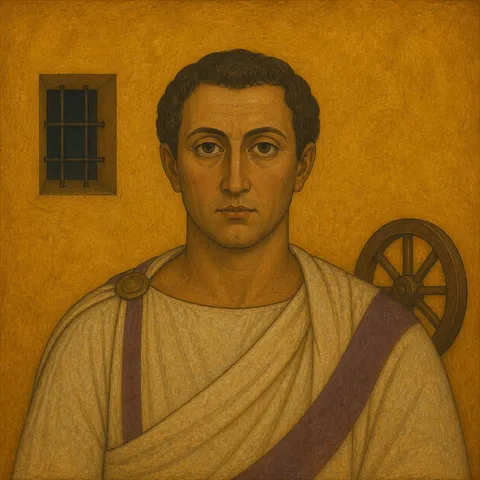 Boethius
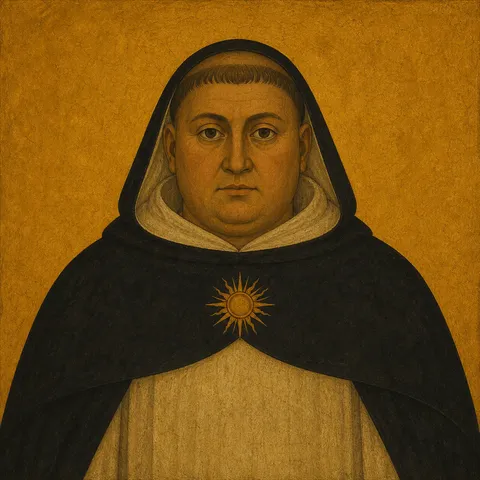 Thomas Aquinas
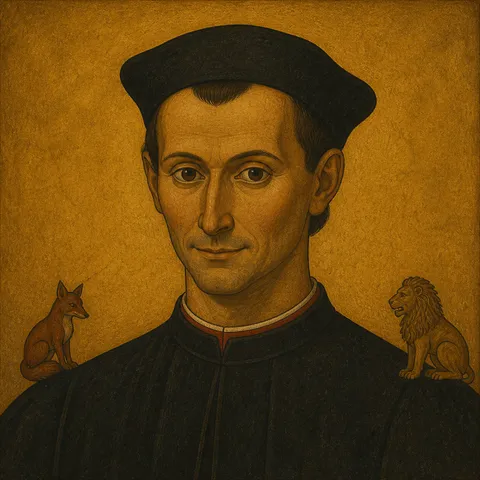 Niccolò Machiavelli
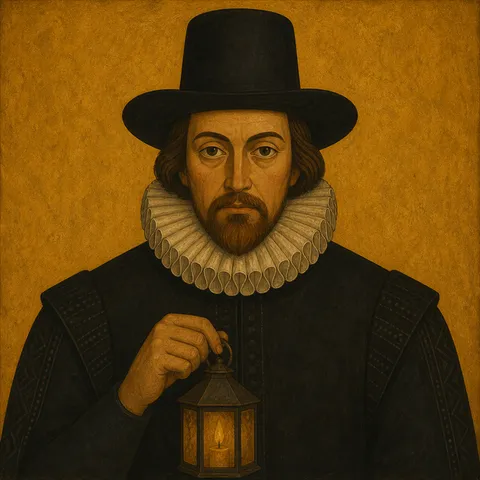 Francis Bacon
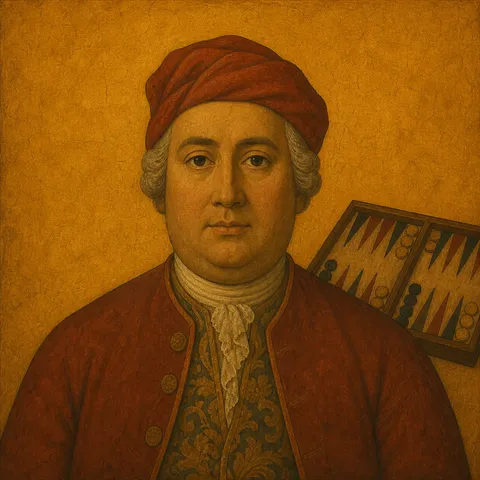 David Hume
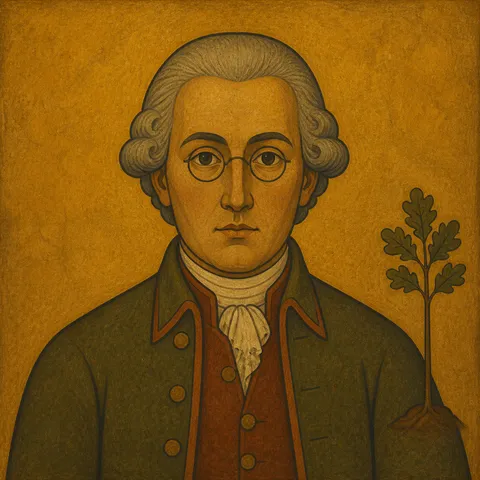 Edmund Burke
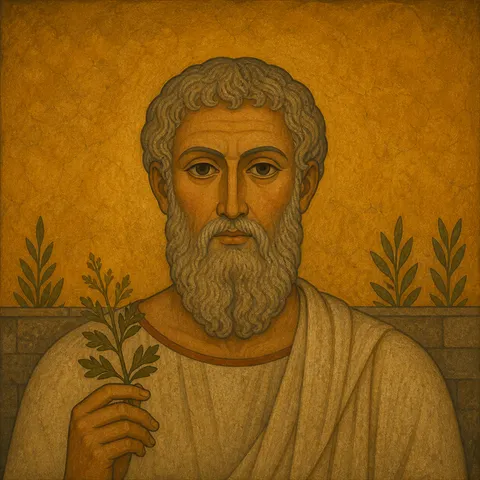 Epicurus
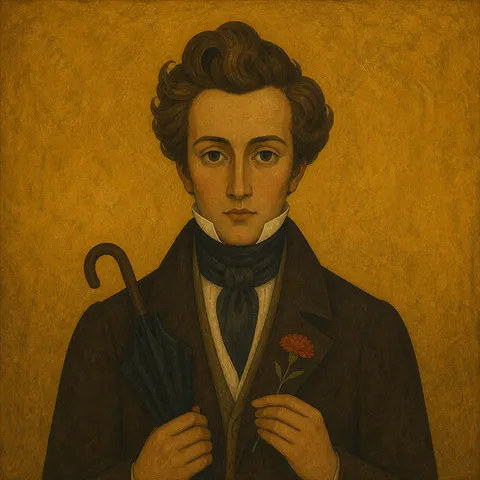 Søren Kierkegaard
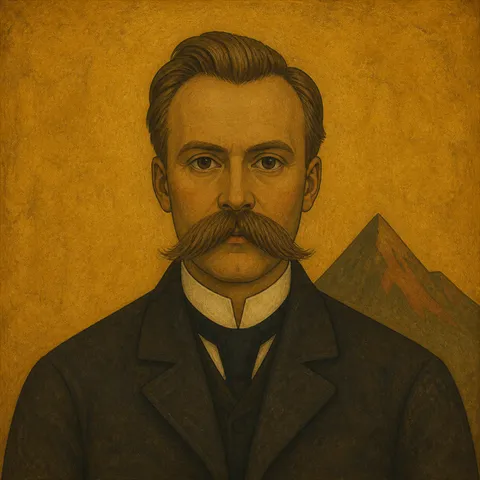 Friedrich Nietzsche