A table where everyone agrees, and the question turning over on your tongue. A document that ruins a fine story, and a friend whose word you take against three other accounts. Every day you decide how many things you are entitled to say you know, and what you would pay for one answer that has actually been checked.
YOUR COMPASS ON THIS ROUTE
STATION 1 / 12
When everyone around me agrees, I spoil the agreement with a question nobody asked for.
Socrates wrote nothing, and his way of getting at truth survives as a transcript of cross-examination. He would ask a man for a definition of piety or of courage, then watch it come apart with him. The yield of such work looked like nothing: no doctrine at all, and fewer false certainties in whoever had been talking. The oracle called him wisest, which he took as a riddle and solved this way: other men do not know and think they know, while he had stopped at the first half. That is where his method turns into an ethical act. Truth arrives only once it has been pulled out by a question, and the question has to be asked at the moment when agreeing is comfortable for everyone. Spoiling the agreement in a room is exactly what the hemlock was for, and he had the chance to skip it until his last day. At his trial, where a recantation was expected, he asked the jury to define piety.
Plato described prisoners chained in a cave, facing a wall on which a fire behind them keeps the shadows of things moving. They give the shadows names, and nothing else enters their experience, so their judgments about the world are consistent and check out against one another. That is what makes the cave frightening: inside it, everything fits. Then comes his move. The man whose legs are untied and who is led up into the sun meets a searing pain in his eyes first, and once he is returned he loses at the shadow game to companions who never left. If you were shown that you live inside somebody's dream and wanted to know it, Plato would recognise the man turning his head. He only warned that the road up hurts, and that down below you are laughed at for having taken it.
Men would say of him that up he went and down he came without his eyes
Aquinas defined truth as the agreement of the mind with the thing, and in that formula the order matters. The thing stands first, the mind is measured against it, and whoever measures has no vote in what the measurement says. Hence his calm in argument: an error stays a discrepancy that somebody can point at. Behind the language of agreement stands his whole architecture of knowledge, where grace perfects nature, so that the truth reason demonstrates and the truth revelation delivers share one author and cannot contradict. A belief that helps you live is, on this reckoning, no candidate for truth at all: it can be useful and false in the same breath, and Aquinas would separate those two compliments in his first paragraph. That people need consolation he knew better than most, writing for a century that died of plague. He looked for his consolation in what is actually there.
Augustine took an inventory of what he knew from other people's mouths, and the inventory came out devastating. He had not seen which parents he was born to; the cities he had read about stood there without his testimony; the physician he let cut him was working on trust, and no experiment had produced any of these beliefs. From this comes his account of belief: friendship itself cannot stand without it, since in a friend we trust what we have no way of checking. Then he makes a move people expect less of him. His trust comes with sorting, and a witness is weighed by what he has staked himself, which is why he filed his nine years among the Manichees under his own errors. The rule that nothing counts as true until you have seen it yourself would be taken up by Augustine and turned round to show how many things a person believes against it before lunch.
so many of friends, so many of physicians, so many continually of other men, which unless we should believe, we should do nothing at all in this life
Machiavelli wrote from the village he had been exiled to after the rope, and he wrote for a man who has to keep power. He discarded the question of what a ruler should be and put in its place the question of what a ruler must do. The answer is ugly: promise freely and break promises when need requires, since men judge with their eyes, and what they judge by is how a thing turned out. Truth has a price in his ledger, and the price gets paid outside the study. A document that ruins a fine story about a town is capital withdrawn from circulation: the pride that held people together evaporates in a week, and nobody has the strength to gather it twice. He would add that you have done a favour to whoever comes trading in that town next. The historian in him was as good as the adviser, which is why he knew what an opened archive costs.
Bacon described the mechanics by which a person misses systematically. The understanding, once it has laid hold of some proposition, drags everything it meets into agreement, and evidence against it either goes unobserved or gets dismissed by a distinction, purely so that the first conclusion survives. His illustration is superb. In a temple a man is shown the votive tablets hung up by those who escaped shipwreck and is pressed on whether he now acknowledges the power of the gods; he asks in return where the portraits are of the men who drowned after making the same vows. The rule that follows is plain: people believe readily what they would like to be true. Taking a friend's word when three other people tell it differently is a case where his mechanics run both ways, since your affection for her has laid hold of a proposition too.
But where are the portraits of those who have perished in spite of their vows?
Descartes set out to take apart every belief he held, and he did it once, at the foundations. In the Meditations he sits by a stove and supposes a powerful deceiver: the senses fall, mathematics wobbles, and what remains is that doubting is thinking. Then comes the rule from which the whole new science grew, that nothing is to be accepted as true unless it presents itself to the mind clearly and distinctly. Hence his attitude to haste. A fast decision takes on commitments nobody has inspected, while a decision postponed a month costs exactly a month. Putting a decision off while everyone around you has already made theirs is something Descartes would endorse outright, since this is how he kept his own conclusions to himself for years. He would add the uncomfortable part: some people postpone in order never to decide at all, and clarity has nothing to do with it.
The first was never to accept anything for true which I did not clearly know to be such
Hume pressed empiricism until it broke, and it broke in a useful place. Knowledge comes from impressions, so any meaningful claim has to measure with number and quantity or else point to experience that can be repeated. The rest, he wrote, rests on words. Checking, for him, means a repeatable trial that other hands can run. Hence his famous advice about a library, which is a methodological demand wearing the costume of vandalism. A claim that no possible check could reach differs in nothing from its own denial, and arguing about it means moving air. He wrote the line in Edinburgh, having read the divinity volumes more attentively than their defenders did. He was no dry man about this: he played backgammon, and he derived morals from feeling. What he called empty was only what wears the look of knowledge while risking no defeat at all.
Commit it then to the flames: for it can contain nothing but sophistry and illusion.
Russell reduced his demand to a single proportion: hold a belief with exactly the strength its grounds supply, and slacken your grip as the grounds weaken. In logic he lived by it, since the three volumes of Principia Mathematica were written to show precisely what arithmetic rests on. The virtue he found missing in people he called the will to doubt, a readiness to keep a question open for as long as it is open. Hence his verdict when faith and experiment part company. Where they disagree about one fact, the side without a procedure for checking is the side that gives way. He was a logician, and the proportion carries a technical sense for him: a ground has to be the kind of thing you could write out. There is an awkwardness in it as well: a proportion wants a number, and most of our grounds have none, which Russell admitted is where the work of taste begins.
Kierkegaard wrote under invented names, each of them defending a way of living, since about how to live he refused to speak from the height of a system. His thesis: a truth that concerns a person's own existence becomes true for her only once it has been appropriated in passion. Knowing that I will die and living as a man who will die are two conditions, and the first hands the second over to nobody for free. His example is Abraham on the mountain, where no objective procedure can say whether he heard God, which is why the decision falls to a single individual. Hence his place on your card. Someone you love changes your mind faster than a table of figures, and Kierkegaard would see there the way a conviction enters a life at all. He would add that the table remains right about whatever it is that the table measures.
Nietzsche put the value of truth itself in question. He asked where the will to it came from and why we take it as self-evident that truth serves us better than deception; the falsity of a judgment, he wrote, is no objection to a judgment, and a judgment is to be weighed by how much life it feeds. Then he turned on his own side. The capacity to take no consolation when none is available he prized above almost everything, and it is what he praised in the sober ancients. Hence his rule for you. Giving up the comfortable explanation of your own life with nothing to put in its place is precisely the act in which he saw strength. Read it beside his demand of eternal recurrence: the one who holds is the one willing to live this same life again, now without the explanation.
Wittgenstein wrote two philosophies, and the second demolished the first. The younger man held that meaningful language pictures facts: a sentence matches a state of affairs or fails to, and that is the whole of it. Back in Cambridge he saw that words live inside activities he called language games, each with its own rules for what counts as done. Watch how truth is used in a courtroom: there it means established by procedure, with witnesses and a burden of proof. Between friends the same word means what you did not hide when you could have, and no procedure appears anywhere. He found no common essence in this, only a family resemblance. Indifference to truth is absent here: every game carries a rigour of its own, and failing happens inside it. The confusion starts when the rules of one game are carried into another.
The route drew one axis: truth as a procedure anyone can repeat against truth as something a person has to take upon herself. One end prizes the check, the other prizes a willingness to carry the consequence. Your swipes have already put you somewhere between those ends, and the cards where truth cost you your peace or your good name say most about where. Read those again. Two doors stand open: the trial of a man who would not stop asking, and the cave that somebody climbed back down into with ruined eyes.
SOURCES
Plato, Republic, Book VII (tr.: Benjamin Jowett; ред.) · www.gutenberg.org
Augustine, Confessions, VI.5 (tr.: E. B. Pusey; ред.) · www.gutenberg.org
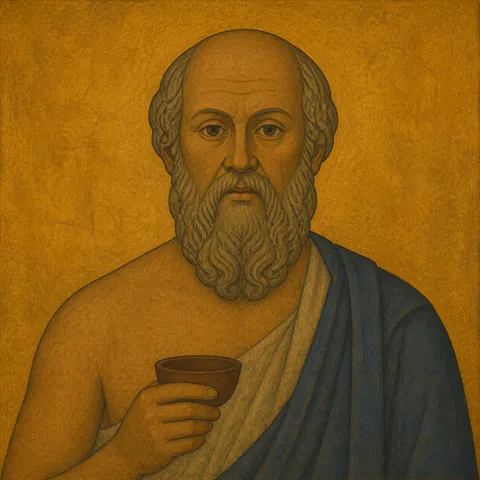 Socrates
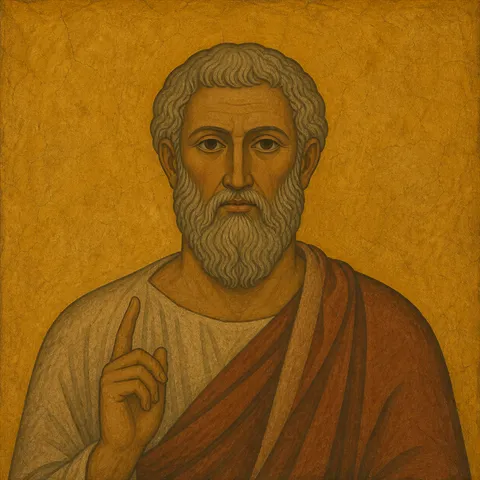 Plato
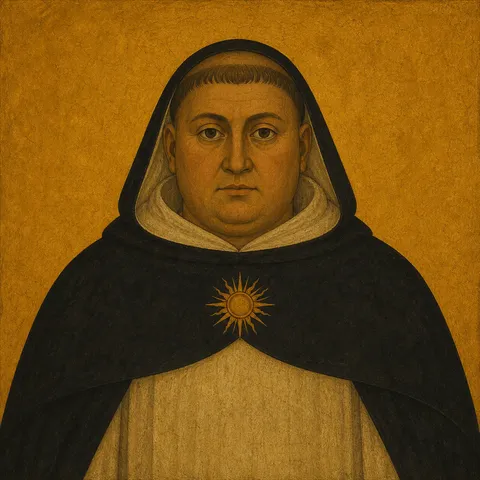 Thomas Aquinas
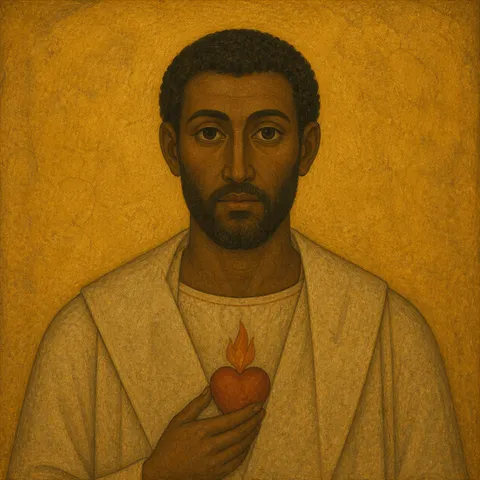 Augustine of Hippo
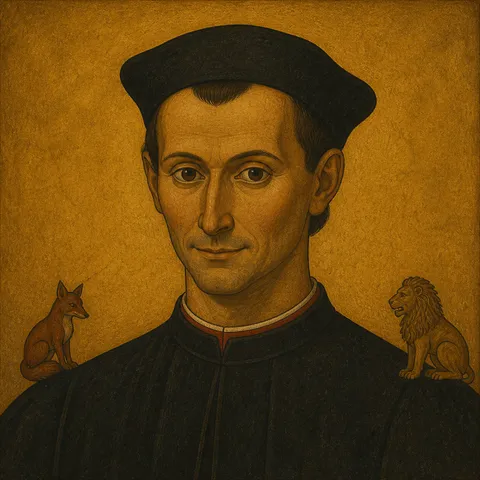 Niccolò Machiavelli
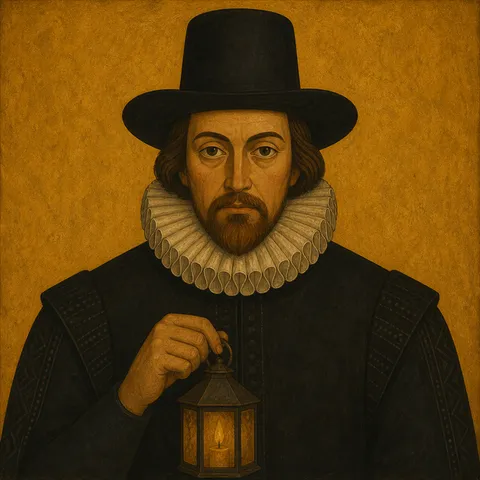 Francis Bacon
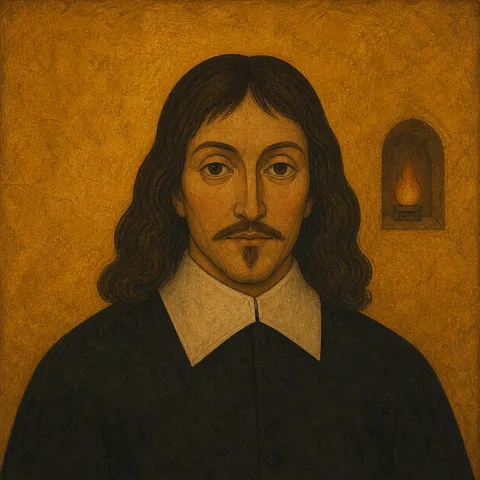 René Descartes
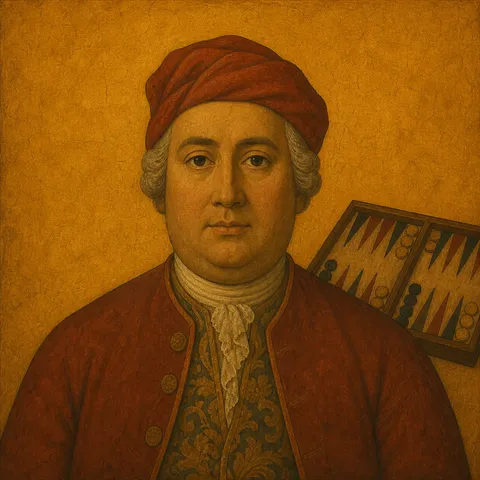 David Hume
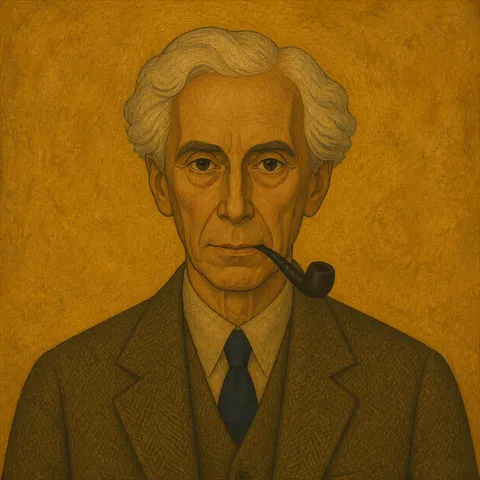 Bertrand Russell
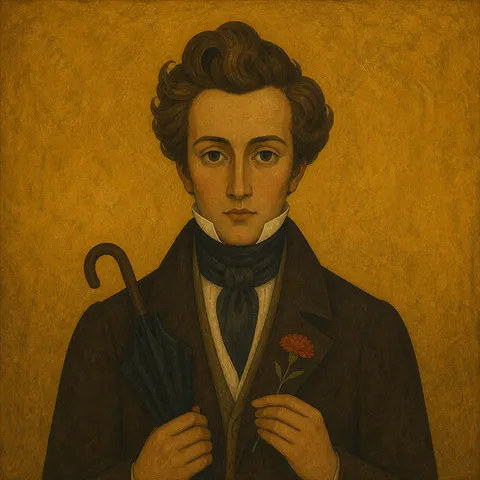 Søren Kierkegaard
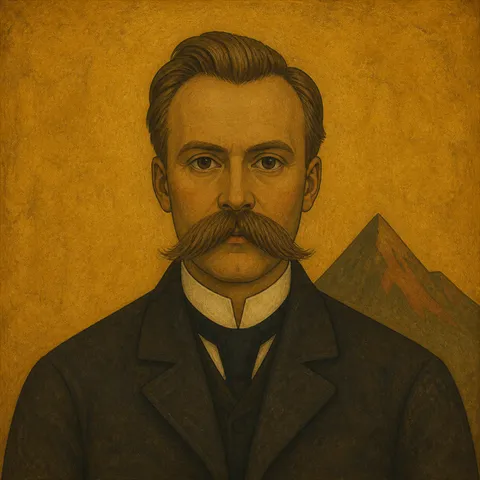 Friedrich Nietzsche
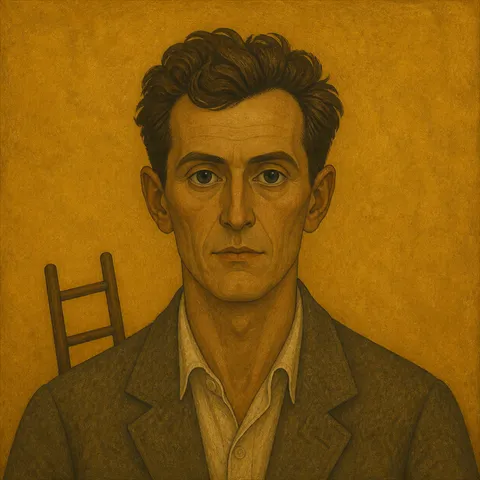 Ludwig Wittgenstein