You have caught yourself switching languages at the till, swallowing a correction, saying nothing because nothing you had was exact enough. Underneath all of it sits one question: whether a word is a tool you pick up, or the ground you are already standing on. Thirty cards asked you. Here twelve people answer.
YOUR COMPASS ON THIS ROUTE
STATION 1 / 12
I write more easily the things I cannot say out loud.
Plato put his objection to writing into the mouth of an Egyptian king. Theuth brings the new art to Thamus expecting praise and hears instead that it will plant forgetfulness in the soul: whoever can look a thing up stops carrying it. The second charge is heavier. A written page keeps its composure. Ask it a question and it repeats the sentence it had before, in the same tone, to everyone alike. A living speaker doubles back, rephrases, notices which listener has gone pale. Plato wrote dialogues for that reason, and kept his hardest teaching for the talk of the Academy. So a page that feels easier than a room is doing exactly what he warned about: you say the thing without standing there while it lands. You keep your sentence, and the answer only a face can give goes missing.
Aristotle met the same question and answered in one dry line the West then stood on for two thousand years. Spoken sounds mark what happens in the soul; letters mark the sounds. The marks differ from people to people, the states of soul beneath them do not. Which makes the bond between a word and a tree a contract, renewable, entirely ours. He was far from indifferent to it. The Rhetoric weighs which word will land with which audience; the Poetics praises a metaphor for setting a thing before the eyes. Craft is built on top of convention. His claim is that nothing in the sound obliges the tree to answer to it: a Greek and a Scythian name one trunk and think one thought. Swiping yes puts you on the side of the contract, and it costs you the conviction that some word was destined for the thing.
Spoken words are the symbols of mental experience and written words are the symbols of spoken words.
Cicero had a practical problem. Greek philosophy existed and Latin had no words for it, so every time he sat down to explain the Stoics to a Roman senator he had to invent. He minted qualitas for the Greek poiotes, pressed moralis into the service of ethics, widened humanitas until it carried a whole ideal of formation. In the letters he apologises for the novelty and then uses it anyway, sometimes offering two coinages and asking his reader to choose. His argument is plain: a language grows when it is asked to do work it has never done. Latin obliged, and Europe went on thinking in the vocabulary of a lawyer from Arpinum. Coining a word mid-translation is his trade with his risk attached. A coinage nobody adopts stays private noise; one that catches will outlive the book it was made for.
Boethius did the arithmetic. The Western empire was gone, Greek was draining out of Italy, and the whole of Aristotle stood on the far side of a language his countrymen were ceasing to read. He announced a plan: render all of Plato and all of Aristotle into Latin and show that the two agreed. He finished a fraction of it – the logical works – before a treason charge and an execution at Pavia ended the project. That fraction carried the West for seven hundred years. Until the twelfth century, Aristotle reached Europe through Boethius or he did not reach it. Three years for one book looks extravagant until you see how much a single reader's labour can hold open. He spent a career on a shelf he would never use, and the schools that grew from it spoke in the words he had chosen for them.
Augustine tried to remember learning to speak and found the scene from the inside. Adults named something and turned toward it as they spoke; he watched where they looked and guessed. The wanting came first, though. Before any word he was crying, thrashing his limbs, straining to get something out of people who would not understand, which is why he calls the infant an exile inside his own noise. In On the Teacher he presses it further with his son Adeodatus: a word teaches nobody anything, it only points, and pointing works where the hearer already has something inside to look at. The sentence you finally finish is a report on a thought that was there before it, unlit. You needed the words to see it clearly. Having it was another matter.
When they called some thing by name and pointed it out while they spoke, I saw it and realized that the thing they wished to indicate was called by the name they then uttered.
Hume asked what a promise is made of and found nothing in nature answering to it. Move your lips, form the sound: no new quality has entered the world, no bond a microscope could catch. The obligation arrives from elsewhere, from a practice everyone keeps because each of us needs the others to keep it, and it holds exactly as far as that interest reaches. Hence his cool view of honour. A word given in a room where nobody can check it rests on the speaker's character and on the small dread of becoming a man whose word is air. Paper recruits the sheriff. Hume paid his debts and composed his own obituary; he kept his promises scrupulously and still declined to pretend they were sacred. Preferring honour to a signature is a wager on how dense your circle is.
Smith's moral philosophy runs on an imagined witness. We cannot see ourselves, so we build a spectator who is neither friend nor enemy and seat him in the breast. Then we ask him how the thing we are about to do looks. Propriety is his verdict, and it covers speech as closely as it covers money. Correct a man's grammar with three people listening, then ask that spectator what he sees: one person acquiring a small elevation while another pays for it in front of witnesses. Smith valued accuracy highly; he lectured on rhetoric years before he wrote about markets. His test is where a correction lands. The same information passed on quietly costs nothing and teaches more, which is why he counts the choice of moment as part of the moral content of what you say.
Hegel read a language as the self-knowledge of a people written down. Spirit does not hover above history; it comes to itself through institutions and through the words in which a nation thinks its own thoughts. A people that has borrowed its vocabulary is thinking inside a house built for somebody else's family. He was proud of lecturing philosophy in German while the prestige still belonged to Latin, and he told his students he was teaching philosophy to speak German. The clumsy months belong to the logic of the thing. Whatever becomes yours has a stretch where you hold it badly, and that awkwardness is the price of genuine acquisition. He would ask what stands on the far side of the delay: a mind thinking in the language it also lives in, with no interpreter posted between the two.
Russell gave his best years to making sentences behave. The theory of descriptions was born from a nuisance: 'the present king of France is bald' looks as though it names somebody, and there is nobody. His analysis unfolds it into claims about existence and uniqueness that can be true or false, and the ghost king evaporates. Out of that came a programme. Most philosophical trouble is grammar taken for metaphysics, and the cure is a language where every word carries a definite logical job. Beauty was no enemy of his; he wrote English clean enough to win a Nobel in literature. His position was that ornament concealing a muddle is worse than a plain sentence that exposes one. Trading eloquence for exactness is his bargain, and the bill comes due when you have to move somebody precision was never going to move.
Nietzsche came into philosophy out of philology, which is to say he had spent years reconstructing what dead men meant and knew precisely how that work is done. Every reading selects, emphasises, drops things. In the early essay on truth and lying he argues that a word never held the thing to begin with: it froze one nerve-stimulus into a sound, and generations of use wore the coin smooth until the smoothness started passing for objectivity. An author's intention is therefore one more interpretation, reconstructed by a reader with appetites of his own, and the demand to stop there is usually a demand for authority. He would add that the blade turns on him too. Taking a text as only what its writer meant looks modest, and the modesty he reads as a wish to be excused from the labour of interpreting.
Wittgenstein worked as an engineer before he worked on logic, and the Tractatus reads like a specification. A sentence has sense when it pictures a possible arrangement of things; the rest of what we say is machinery turning without load. He closes the book with a single line and stops. The silence there is no mood. It marks the boundary where a proposition stops doing work. What lies past it – ethics and the sense of the world – shows itself in how a life is led. He spent the next twenty years dismantling that picture and allowed that ordinary speech has dozens of trades besides describing. Even so, whoever would rather stay quiet all evening than say something approximate keeps faith with the early book and pays its price: the room talks on, and a rough phrase sometimes carries more than a perfect absence.
Whereof one cannot speak, thereof one must be silent.
Heidegger's case against smooth translation is a history lesson. The Greeks said aletheia, which he reads as the stepping out of hiding of what had been hidden; the Romans wrote veritas, correctness, a property of statements. Physis, the surging up of what grows, became natura, stuff with a nature. Word answered word, and an experience dropped out of the world. He called language the house of being, and the image is exact for his purpose: a house is entered, never carried. That is why he mined German etymology and hyphens until his prose became a scandal, and why he held that thinking happens in one particular tongue or nowhere. A translator can move the content across. The reader of the translation stands in another house, at windows facing a different street, and the sentence reaches him already housed.
The route drew one line between two claims: that a language is a set of agreed tokens, tradable without loss, and that it is a place you think from and cannot leave without moving house. Your own position on it was settled earlier, on the cards where speaking cost you something – the evening you stayed quiet, the correction you swallowed. Read those again and see which claim your hand was voting for. Two doors stand open: the lawyer from Arpinum who built Europe's vocabulary, and the cell where a condemned man chose which books the West would keep.
SOURCES
Aristotle, On Interpretation, 1 (16a) (tr.: E. M. Edghill; укр. ред.) · classics.mit.edu
Augustine, Confessions, I.8 (tr.: A. C. Outler; укр. ред.) · en.wikisource.org
Ludwig Wittgenstein, Tractatus Logico-Philosophicus, 7 (tr.: C. K. Ogden; укр. ред.) · en.wikisource.org
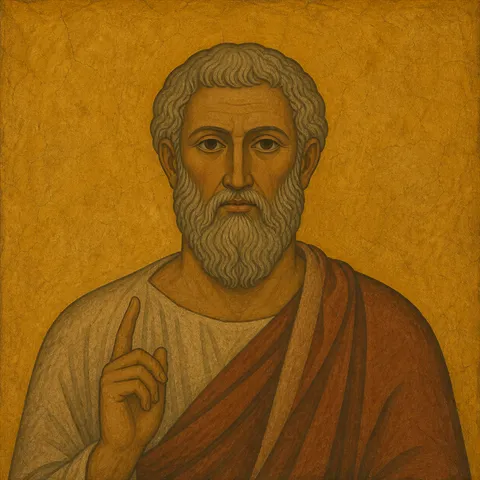 Plato
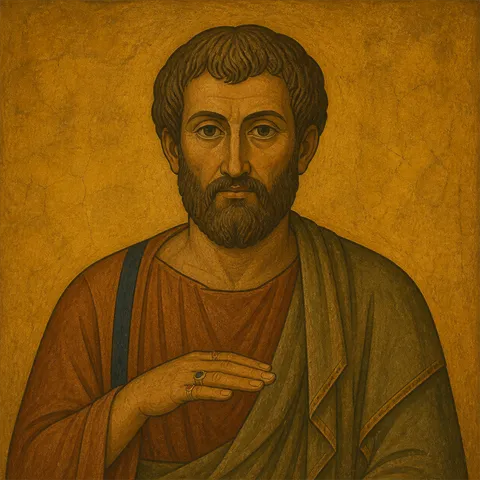 Aristotle
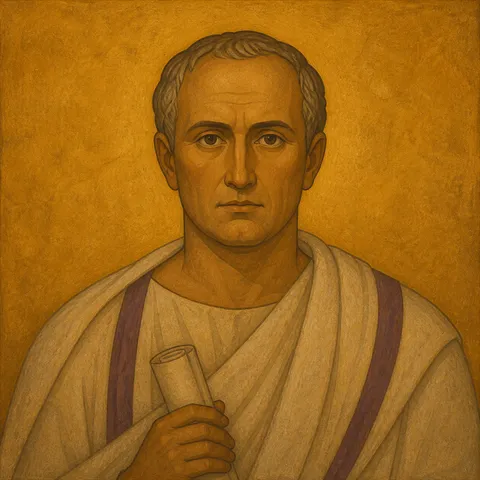 Marcus Tullius Cicero
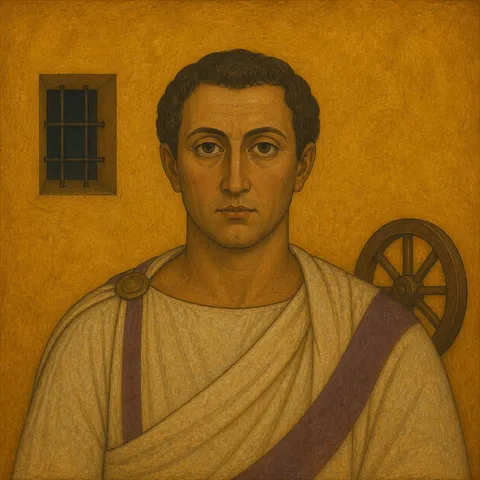 Boethius
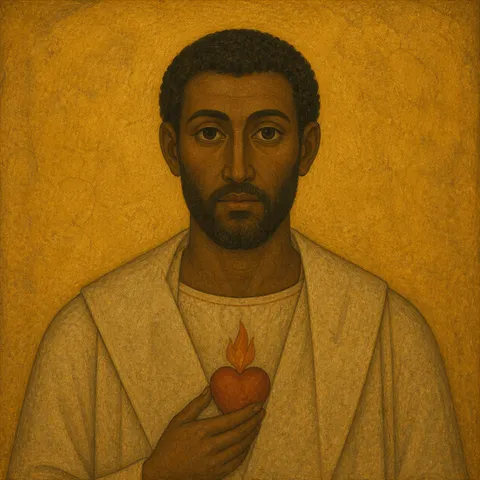 Augustine of Hippo
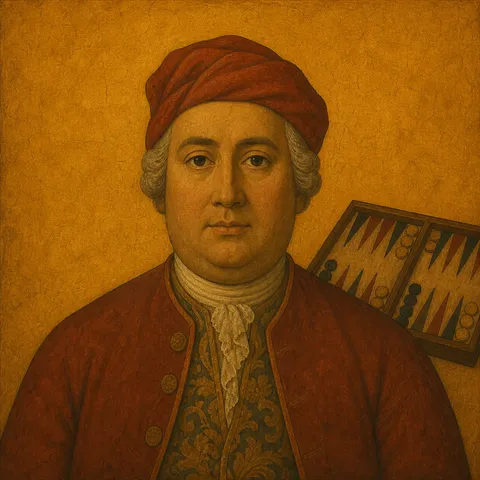 David Hume
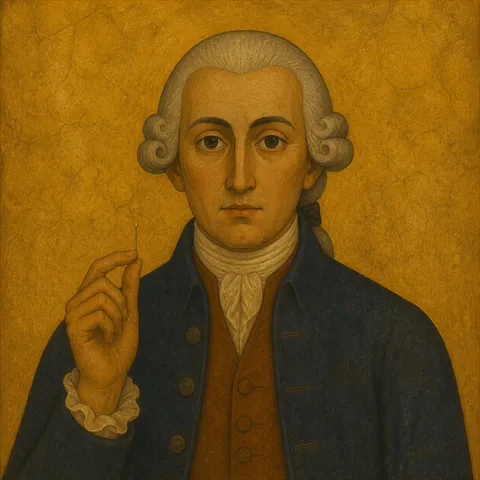 Adam Smith
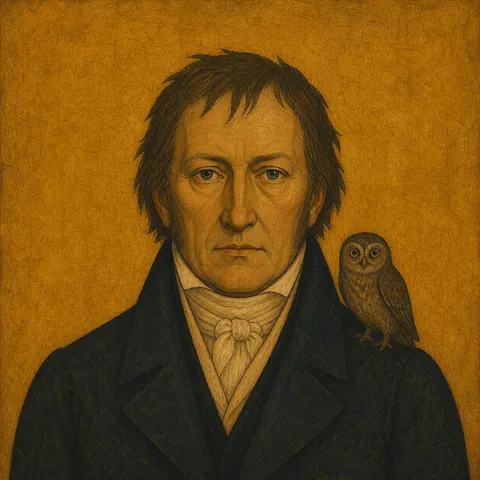 G.W.F. Hegel
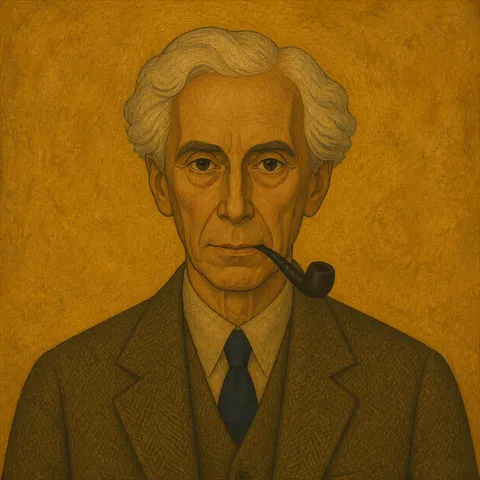 Bertrand Russell
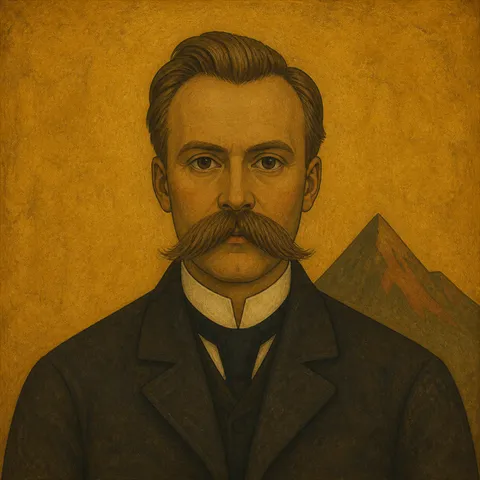 Friedrich Nietzsche
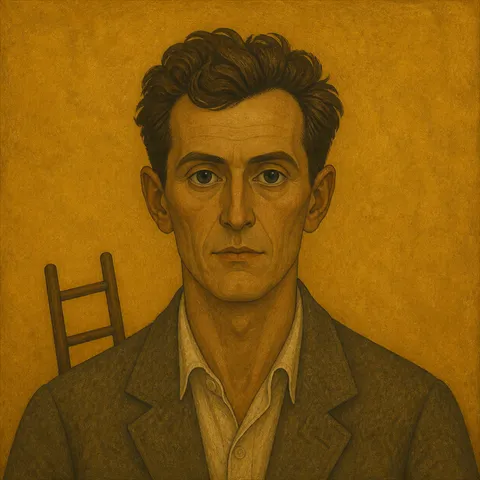 Ludwig Wittgenstein
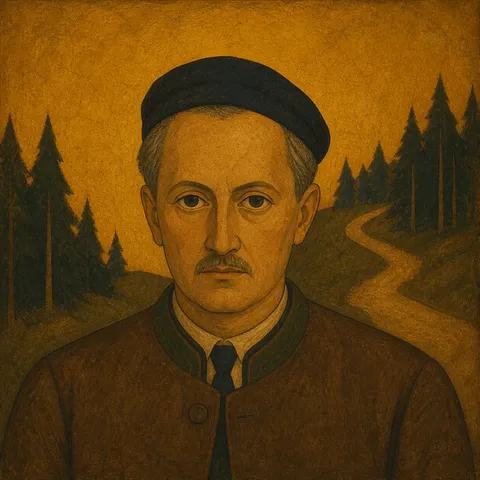 Martin Heidegger