In the morning you decide how to look, and you rarely ask who the audience is. In the evening you scroll and you are answering somebody there too, without seeing a face. Thirty cards have already shown how many people hold a share in your taste. Ahead stand twelve who argued the same question: whether beauty lives in the thing, or only in the eye that turns towards it.
YOUR COMPASS ON THIS ROUTE
STATION 1 / 12
I dress in the morning through the eyes of people I do not even respect.
Rousseau split apart two things we cover with one word, self-love. The first is plain care for oneself, which a child and an animal both have: warmth and bread. The second is born the moment a person first compares himself with a neighbour, and from that day he lives inside somebody else's opinion of him. The savage, he wrote, lives within himself; the social man lives in the judgement of others. Clothing was his favourite case here, since clothing neither warms nor feeds, while it reports precisely whose approval you have applied for. The sharpest part of the diagnosis is that we do not pick our judges for their worth. In the morning you dress in the eyes of people whose opinions on everything else you find small, and there is no contradiction in that: comparison works with whatever neighbour you were issued. Whoever swiped no has already seen the machine and tried to step out of it.
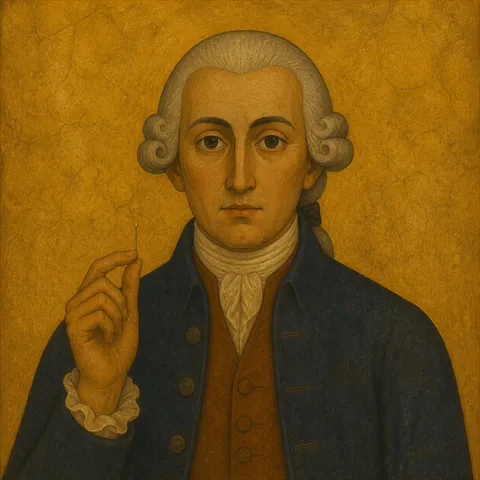
Smith described a mechanism without which human conduct fails to hold together. In judging himself a man divides in two: one half acts, the other watches from outside and delivers a verdict with the eyes of a stranger who is well informed and has nothing at stake. This impartial spectator he traced back to childhood, when somebody really was watching, and he noted that over the years the inner figure stops depending on witnesses being present. Hence his answer to flowers bought for yourself and shown to nobody. He would read the act as the built-in spectator doing his work: you tidy the room, set the vase down, and feel an approval that no one has voiced. Smith had plenty of praise for that, since he thought such a person grown up. Whoever swiped no is defending a private joy, and he would ask where its sense of fitness came from.
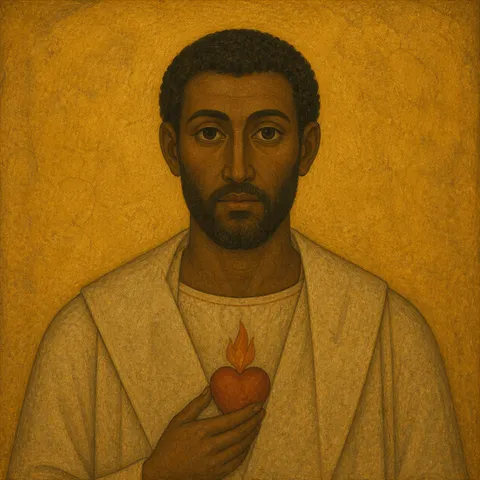
Augustine did something nobody had done before him: he wrote himself down entire, the parts that made him look a fool included. Stolen pears and a prayer for chastity with a request to postpone it, all of it stands in a text he offered as a public document. The point was exact. Whoever hides his worst page stays a riddle to himself, and it was himself he was after, since a heart stays restless until it finds a place to stand. So a phone with every bad photograph deleted would read to him as a delicate operation on one's own memory: you keep an archive with yourself missing from it, and one day you will want that afternoon back and find only a well-angled head. Whoever swiped yes here is guarding dignity. Augustine would answer that dignity rests on a whole history.
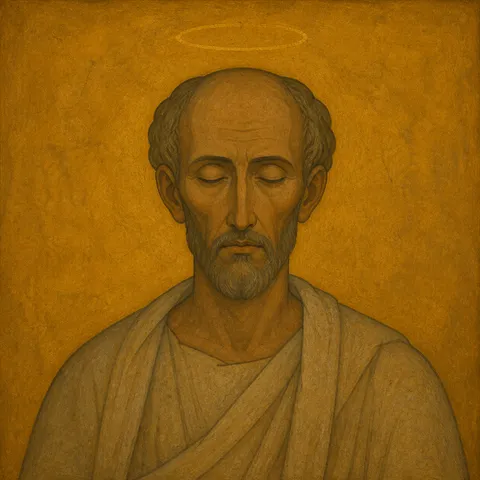
Plotinus refused to sit for a portrait, and modesty had nothing to do with it. The body for him is the last and faintest copy; painting a copy of a copy struck him as a comic occupation. Beauty, on his account, enters a thing from above, the way form enters stone: whatever stays shapeless is ugly exactly because no form has reached it. Hence his programme of ascent. The eye trains itself on beautiful bodies, then on the souls that good actions come out of, and at each rung the one below turns out coarser than it looked. Editing a photograph, for that gaze, is work done on the wrong level: you polish the print while the thing itself lies unworked. Whoever swiped yes wants to look well, and he would call that no sin. He would call it the lowest rung, and an easy one to stay on for years.
Withdraw into yourself and look. And if you do not find yourself beautiful yet, act as does the creator of a statue that is to be made beautiful: he cuts away here, he smoothes there, he makes this line lighter, this other purer, until a lovely face has grown upon his work.
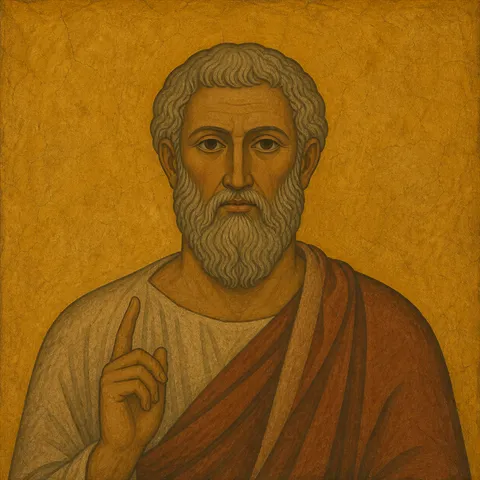
Plato was laying out the education of the city's future guardians when he came to a question that looks minor to us: what do these children see every day. His answer is stubbornly physical. Order and disorder enter a person through eye and ear, with no lesson and no consent, and settle into character before she can talk about them at all. So he demanded good work from craftsmen and drove out the poets whose songs train a soul into bad form. A builder's hoarding, a courtyard where nothing holds together: for Plato these are questions about what the people raised there will later do. He is easy to charge with censorship here, and the charge lands. Yet whoever swiped yes on that card has already granted his premise: the look of a city does something to people, and it does it without asking.
Beauty, the effluence of fair works, shall flow into the eye and ear, like a health-giving breeze from a purer region, and insensibly draw the soul from earliest years into likeness and sympathy with the beauty of reason.
Aquinas pulled apart two things we habitually fuse. Art for him is right reason about things to be made, and a craftsman's standing is measured by the quality of the work, with the state of his will left out of that measure. A geometer proves a theorem equally well whether he is angry or glad; the same holds for the man who builds a table or paints a picture. Then comes the second half, without which the first gets twisted: a person as a person is measured by something else entirely, and a bad man stays a bad man whatever leaves his hands. So the painting above your bed is a good painting, which acquits its author of nothing and owes him nothing. Whoever swiped no refuses to split those two verdicts. Aquinas insisted on the split, holding that a fusion costs us the right to praise the work and judge the worker.
Pascal reduced an enormous share of human activity to a single cause: we cannot bear our own presence in a quiet room. The court, the war, the card table, the office, all of it is diversion in the literal sense, a turning of the eyes aside. He tested this on people of his own rank and found a king wretched without amusement, while a soldier given nothing to do starts complaining about rest. The logic is plain and unwelcome: silence shows a person his condition, and that is a sight he will not hold. A glowing screen would be, for Pascal, the most perfect diversion yet devised, since it demands no journey and no expense, and never asks consent. Five minutes in front of something that does not glow are hard for that reason: they put you back where you flee from daily. Whoever swiped yes has felt the weight already.
I have discovered that all the unhappiness of men arises from one single fact, that they cannot stay quietly in their own chamber.
Schopenhauer saw a blind willing in the world that never comes to rest: one desire closes, the next is already open, and between them lies only a short pause. The one reliable way out of that circle he found in contemplation. Looking at something beautiful, a person stops for a few minutes being the one who wants, and becomes a pure eye; the object stops being a means, and with that the whole engine driving us onward falls quiet. So the longer walk through the park is no whim for him. It is a brief holiday from oneself, bought with twenty minutes and a view of trees where a builder's hoarding would have stood. A Stoic would answer that externals are indifferent and only your own judgement rules. Schopenhauer held that the engine runs in the body, and the sight of that hoarding starts it faster than any thought about indifference.
Burke looked at society as a contract where the living are not the only voting party. The dead put labour into this street, the unborn will inherit it, and no single generation owns the whole with a right to rewrite it for its own convenience. An old house, seen that way, is a document, and demolishing it is a decision taken by one third of the parties. So Burke asked reformers for caution, stopping short of prohibition: he compared an inheritance to an estate held in usufruct, from which one does not carry off the walls. The new building is almost always more convenient, and he granted that; he added that convenience is easy to count, while the tie that keeps a person attached to a city has no price in an estimate. Whoever swiped no is counting convenience, honestly. Burke would ask which line of the estimate holds memory.
Hume opens with a claim that looks final: beauty is no quality in things themselves, it lives in the mind contemplating them, and each mind perceives a different beauty. Then he makes a move that careless readers miss. Nobody will agree that Milton and some forgotten rhymester stand equal, and that resistance Hume takes as a fact a theory has to explain. His solution places no property in the object; it places a tested authority there: a judge of delicate sentiment cleared of prejudice, whose joint verdict with a few others across centuries is the only standard of taste we possess. So your yes on that card is, for Hume, ordinary procedure with no laziness in it: you are leaning on a verdict that has survived time. He would only ask how many of those you lean on can really be trusted with the faculty.
The joint verdict of such, where-ever they are to be found, is the true standard of taste and beauty.
Kant noticed something odd in the way we talk about beauty. Saying that you like the taste of beer demands nothing from anybody. Saying that a piece of music is bad, you speak as though you had a right to the assent of everyone who hears it. Kant called that a universal voice and added that you cannot prop it up with a concept: beauty follows from no rule by which the thing was made, and no proof is available here. What results is a claim with no argument behind it, and that is what makes a judgement of taste resemble a judgement about justice, far away from a report on your own appetite. Forcing agreement Kant ruled out flatly. Whoever swiped yes on that card has felt the claim from inside; he would confirm the feeling and take away the hope of a proof that settles it.
Nietzsche wrote his first book about the Greeks and reached a conclusion he never afterwards gave up: the world stands justified only as an aesthetic phenomenon. Morality is secondary inside that frame, since the demand to be improved arrives at art from outside, from people who want a school. The Greeks, on his reading, knew something else: they saw the horror under the surface of life and invented tragedy so as to look there and survive the looking. Hence his verdict on everyone who asks a painting for a useful lesson. Such demands he read as a request to weaken art down to a consoling tale. Whoever swiped yes already stands with him, though he would start an argument there too: art that owes nobody anything takes on, for him, the labour of keeping a person alive.
For only as an aesthetic phenomenon is existence and the world eternally justified.
The route pulled one axis into view: beauty as a claim the thing makes on you, and beauty as a report on the state of whoever is looking. Plato and Aquinas stand on the first side, Hume and Schopenhauer on the second, while Kant holds an uncomfortable middle where the claim exists and the proof does not. Rousseau and Smith, meanwhile, ask whose eyes you are using at all. Look at where your thirty swipes fell. Two doors stand open: Plotinus on the ascent, and Burke on a street where the dead have votes.
SOURCES
Plotinus, Enneads, I.6 (On Beauty) (tr.: Stephen MacKenna) · en.wikisource.org
Plato, Republic, Book III (tr.: Benjamin Jowett) · classics.mit.edu
 Jean-Jacques Rousseau
 Adam Smith
 Augustine of Hippo
 Plotinus
 Plato
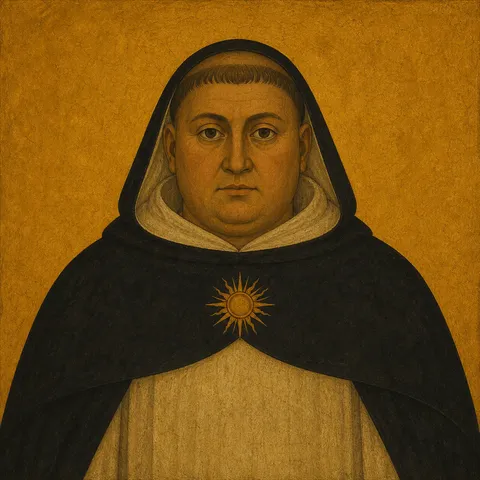 Thomas Aquinas
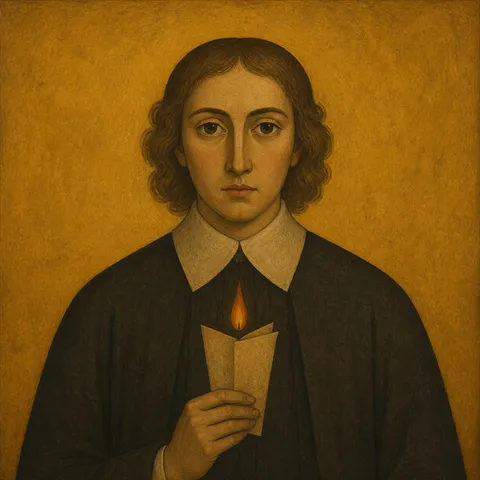 Blaise Pascal
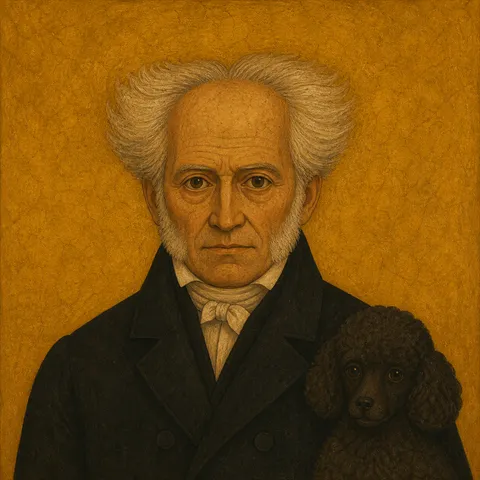 Arthur Schopenhauer
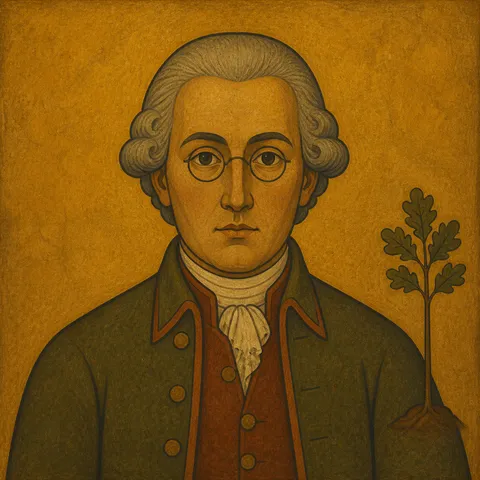 Edmund Burke
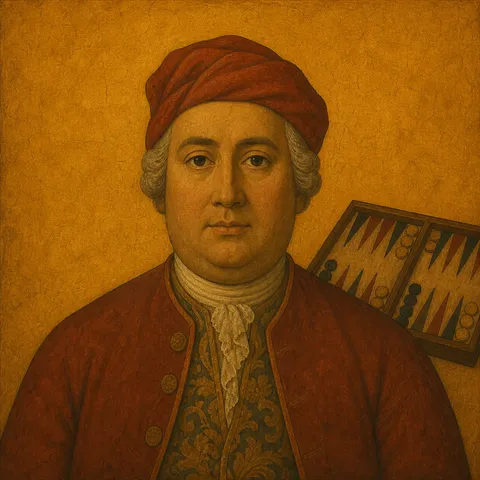 David Hume
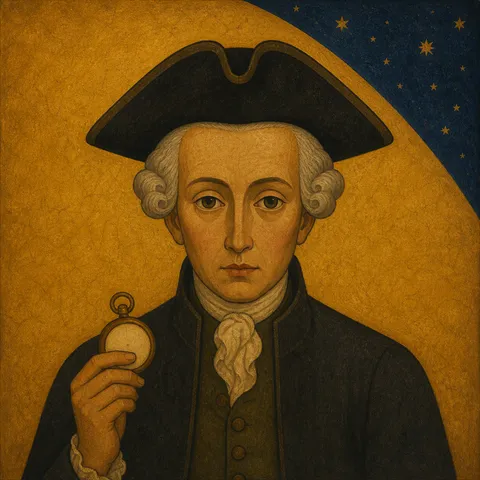 Immanuel Kant
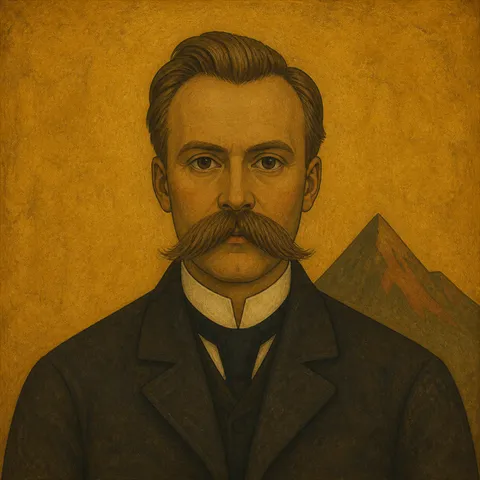 Friedrich Nietzsche