You put off the thing that matters most to you, and you watch yourself do it. An evening disappears into a phone, a week disappears into a week, and then somebody asks where the year went. The question underneath is older than any calendar: whether time is a stock you hold, or the stuff you are made of. Eleven answers here, each with a price.
YOUR COMPASS ON THIS ROUTE
STATION 1 / 11
It is due at nine tomorrow and you sit down to it at eleven at night.
Aristotle looks at someone who has known about the deadline since noon and sits down to the work at eleven at night, and he finds neither laziness nor ill will. He finds akrasia, weakness of will: the right judgement is there in the person, lying the way knowledge lies in a sleeper, and at the necessary moment nobody wakes it. Then comes the move that makes the position his. Virtue, for Aristotle, is a matter of habit, and habit is assembled out of the acts that look smallest. A man who takes up the lyre daily becomes a lyre player; a man who works at night becomes someone able to work only at night. So the evening is what interests him, and the work handed in by morning interests him less: the work gets accepted, the habit you carry onward. He would add something sober. Night work can be good. What goes missing is the hour of choosing, because the clock has begun to choose for you.
For the things we have to learn before we can do them, we learn by doing them, e.g. men become builders by building and lyreplayers by playing the lyre; so too we become just by doing just acts.
Marcus Aurelius wrote his notes in a tent on the Danube frontier, and he opens the fifth book by talking himself out of bed. There is no advice to anyone in it. A man who owns the known world argues with himself before first light, because the body wants to stay under the blankets, and he wins the argument by recalling what he was brought into the world for. The Stoic move is plain and hard: your judgement of a thing is in your power, the thing itself rarely is. The hour before dawn belongs to you because nobody wants anything from you in it yet; after that the day belongs to other people. An alarm at five, on this reckoning, recovers the one stretch that office and family have not yet taken. The bitter part is his too. The same coaxing recurs for years, so rising never did get easier for him.
In the morning when thou risest unwillingly, let this thought be present – I am rising to the work of a human being.
Epicurus counts years differently from the way ambition counts them. The pleasant has a limit set by the body: water stills thirst and bread stills hunger, and past that limit there is nowhere to add, only variety, paid for with the fear of losing it. Hence his goal, ataraxia, a calm in which the soul is sufficient to itself. Hence also his advice, odd to modern ears: keep clear of public affairs, live quietly in a garden with a few friends, because public life inflates want past every limit. Forty calm years he would take without hesitating, since longer time on his reckoning adds nothing to pleasure; it extends what was already in it. The caution is his own. He kept the Garden for the sake of conversation, and a calm bought by giving up people does not balance in this ledger. He traded away the stormy years and never traded the friends.
In the eleventh book of the Confessions Augustine takes a question that looks like a schoolboy's and kicks the ground out from under it. The past is gone, the future has not arrived, and the present, measured honestly, has no duration at all. Where, then, is the time we measure? His answer turns the whole business around: we measure it inside ourselves, since the soul holds the trace of what has passed and the expectation of what is coming. Anyone living as though time were endless is disposing of his own expectation, and the stock he thinks he holds was never there. The same Augustine wrote down his prayer for chastity with the words 'only not yet' attached, and let it stand without excuse. He knew this arithmetic from inside: the future in it is always longer than the past, because memory already has weight and expectation has not begun to weigh.
If no one asks me, I know what it is. If I wish to explain it to him who asks me, I do not know.
Boethius wrote the Consolation in a cell at Pavia while waiting for execution, which is what makes his calm expensive. Philosophy arrives in the shape of a stately woman and starts with the wheel of Fortune: whatever she gave remained hers, and what she takes back is her own. The finest turn of the book comes later. Eternity he defines as the whole and simultaneous possession of endless life, which divides it from mere duration: whatever lives in time has a present that falls out of its hands every moment. God, seeing all of it at once, sees your choice as well, and sees it precisely as a choice. From here comes his answer to anyone who says the hurry exists only in his own head. The world is indeed indifferent to your schedule, because the schedule belongs to you. The irony is his own. The man who wrote this had a date, and other people had set it.
Eternity is the possession of endless life whole and perfect at a single moment.
Pascal asked an odd question: why does a man who has everything need to go hunting? The answer costs more than it looks. He does not want the hare; he wants the chase, because in the chase there is no room left in which he might hear himself. Whatever fills that room Pascal called diversion: gaming, office, war, other people's business. Diversion works by turning a person away from the one thought he will not walk up to on his own, which is his mortality and what to do about it. Somebody who cannot survive five minutes of boredom is the least weak of all, on this account; he simply hears the silence better and runs sooner. A feed on a phone is the most perfect of rooms in which no sitting is required. Pascal himself computed stakes in interrupted games and built a machine for his father's columns of figures, so he knew the lure of occupation from inside.
Bacon lived the life of a man with a two-hundred-year schedule. For two millennia, he argued, the Western mind had spun ready-made premises and ground out mountains of brilliant empty disputation; to know nature you have to interrogate her, gather observations, run trials, climb from the single fact to the rule. The method he called induction, the book the Novum Organum, a new instrument. The point of the whole enterprise sits in one word: anticipation. Knowledge is worth to Bacon exactly what it yields in advance power, and power here means being able to say what Thursday holds. So anyone for whom a ten-year plan is wasted labour is refusing the one thing the human mind can add to a life. He also wrote an essay on Fortune, concluding that a man may be the smith of his own. The smith of his own fortune lost the Lord Chancellorship a few years later over bribes.
Hume ran an experiment anybody can repeat: he looked inward and searched for the one who does the looking. He found warmth, light, pain, a thought about supper, and nobody behind them. Hence his conclusion about the self as a bundle of perceptions succeeding one another with inconceivable rapidity. The identity we ascribe to ourselves he traces to the work of imagination: memory supplies similar links, and imagination spins between them a thread the links themselves do not contain. A reader for whom an act from ten years ago is no longer his business is standing on half of this argument. The other half is inconvenient. Hume derived morals from the sentiments people actually have, and shame over something old belongs there; the link holds as long as memory keeps supplying it. He himself, the most cheerful of philosophers, escaped his own conclusions over supper with friends and a game of backgammon.
I never can catch myself at any time without a perception, and never can observe any thing but the perception.
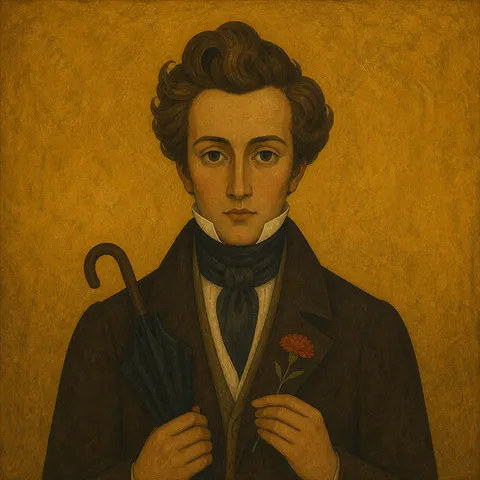
Kierkegaard had a day of his own like that and went back to it all his life: the engagement to Regine Olsen, which he broke himself and wrote about to the end of his short forty-two years. Out of that wound he drew a distinction worth holding on to. Recollection turns a person backward and makes the past handsomer than it was. Repetition faces forward and demands that the same thing be taken up again, this time with the price known. Anyone who would give a year for one replayed day is bargaining with recollection, and recollection always wins, because a day bought by imagination comes without risk. Anxiety, for Kierkegaard, is the dizziness of freedom: a person looks into his own possibility and grabs the railing of the past. He never let go of that railing himself. The book about repetition was written by a man who never went back to Regine.
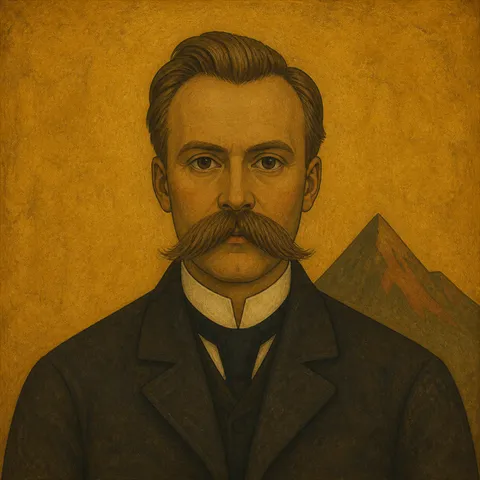
Nietzsche took forgetting to be labour, and refused to see it as a hole in the memory. The capacity to shut the doors of consciousness he called the doorkeeper of mental order: without it a person has no room left for anything new and stands inside his own past like an animal unable to leave off what it has already eaten. Memory, on his genealogy, grows out of debt: whoever made a promise had to remember, and it was the creditor who taught the human animal to hold a date inside. So the wish to surrender the power of memory for one erased recollection would find him more sympathetic than any moralist. Then comes his own trap. The same Nietzsche set the test of eternal recurrence: would you live this very life again, exactly as it was, including the hour you want cut out. Erasing one thing and signing for all of it stand side by side in him, each holding the other.
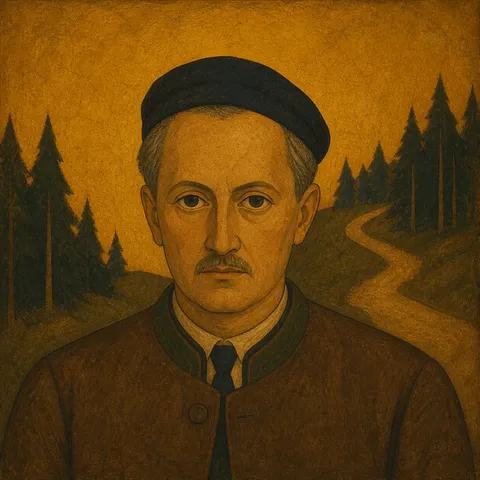
Heidegger starts from something plain: you wake up inside a language you did not choose, a family you did not assemble, a century nobody consulted you about. This he called thrownness. A clean start from tomorrow would mean wanting to be a thing without a history, and a human being is never that: whatever you already are enters every possibility you still have. Then comes his move. Thrownness he reads as material, and the material becomes yours at the moment you take it over, in place of hauling it behind you as somebody else's weight. The second half of the thought comes from finitude: in front of your own end the impersonal talk about how one lives loses its grip, and the choice becomes mine for the first time. The hard part of this position is that both halves have to be held at once. The past does not erase, and that is why it is yours.
Eleven stations ran along one axis: time as a stock to be spent against time as the stuff a person is made of. Bacon and Marcus Aurelius stand on one side for different reasons, Augustine and Heidegger on the other, each for his own. Your swipes have already placed you somewhere on that line, and it is worth looking at where. Two doors out of here: record 12 on the diversion you cannot look away from, and record 10 on a man who wrote about eternity from a cell.
SOURCES
Aristotle, Nicomachean Ethics (tr.: W. D. Ross) · classics.mit.edu
Marcus Aurelius, Meditations (tr.: George Long) · classics.mit.edu
Augustine, Confessions (tr.: Albert C. Outler) · www.ccel.org
Boethius, The Consolation of Philosophy (tr.: H. R. James) · en.wikisource.org
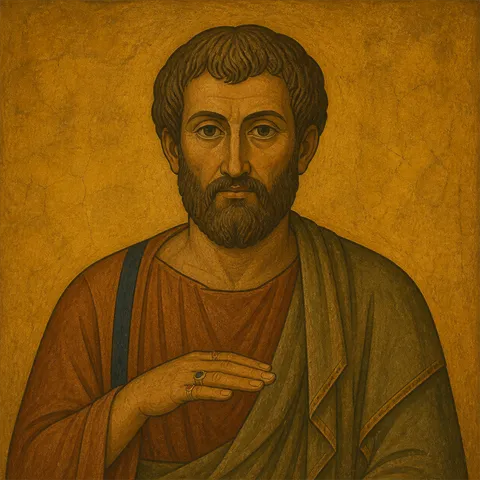 Aristotle
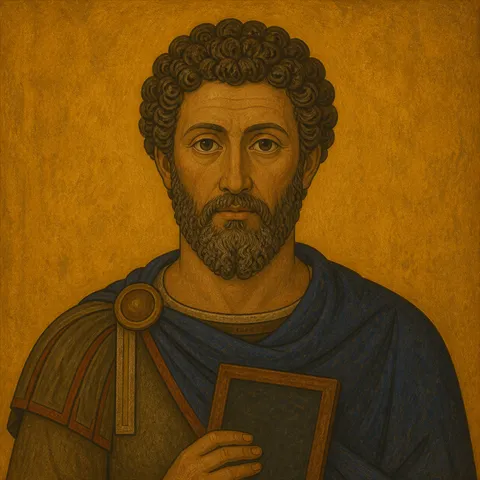 Marcus Aurelius
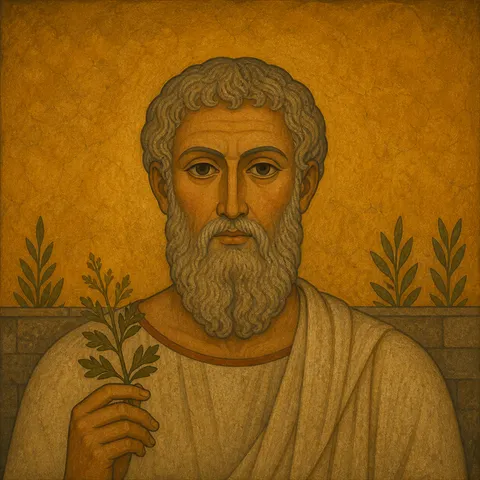 Epicurus
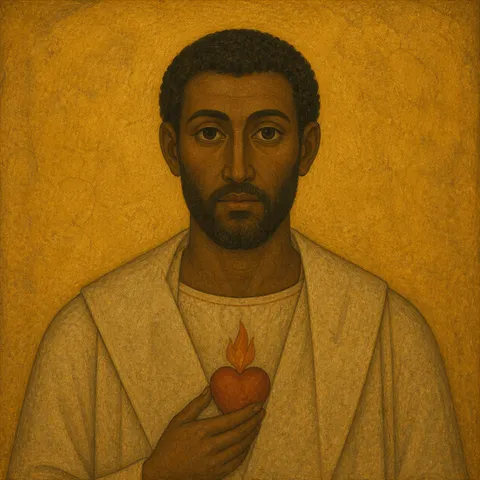 Augustine of Hippo
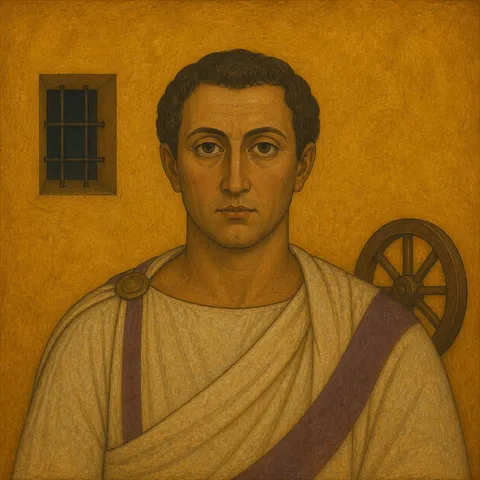 Boethius
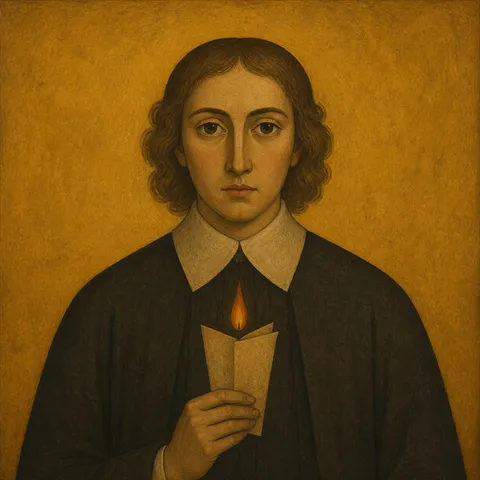 Blaise Pascal
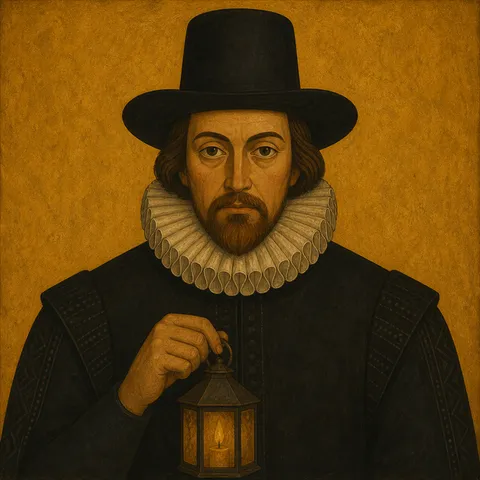 Francis Bacon
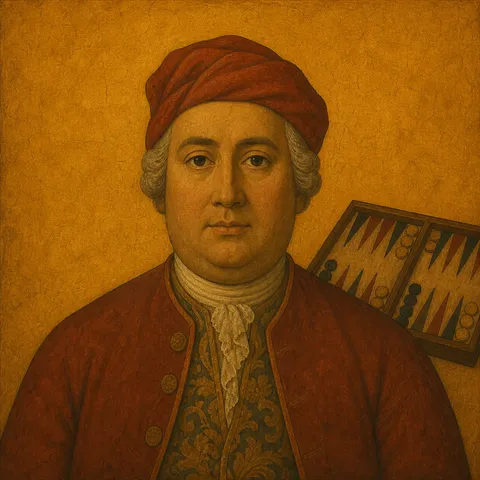 David Hume
 Søren Kierkegaard
 Friedrich Nietzsche
 Martin Heidegger