Everyone keeps a version of the day for their mother, a number rounded in a report, a story about himself he has stopped checking. The small untruths are the interesting ones, since nobody seems harmed and something gets bought with them. This route follows one question through the archive: what does a lie actually cost, and who ends up paying for it.
YOUR COMPASS ON THIS ROUTE
STATION 1 / 12
Your mother asks if you are eating properly. For the fourth month you say yes, and you do not call it a lie.
Augustine wrote a whole treatise to sort lies by weight. On Lying counts eight kinds, and the lightest is the one that harms nobody and spares somebody pain. He kept it on the list anyway, for a reason that concerns the speaker more than the listener. A person who says what he does not hold in his heart splits into a voice and a witness, and the witness has nothing left with which to believe the voice. Augustine knew the pressure of your card from inside it. Monica followed him from Thagaste to Carthage to Milan, worrying aloud over his soul while he arranged his life so that the conversation would never happen. What interests him is the fourth month. One reassurance is a word; a habit of reassurance is an arrangement, and the person it shelters best is the one who speaks it.
Aquinas drew a line Augustine had almost no use for, between a lie and a concealment. A lie asserts what you take to be false, and it is wrong in every case. Withholding depends on the situation: you owe a truth to whoever has a right to it, and only as far as that right reaches. A servant asked about his master's money need not open the accounts; a physician need not announce everything he sees to the first person who asks. In the Summa the whole argument rests on speech serving a community, and a community holding together through an order of obligations that settles who may know what. Your twenty-year secret may well pass this test intact. Aquinas would check two things only: whether a single word was said against the truth, and whether the one kept in the dark had any right to ask.
Kant was handed the hardest case ready-made. Benjamin Constant put to him the murderer at the door who asks whether your friend is inside, and in 1797 Kant answered with a short piece, On a Supposed Right to Lie from Philanthropy. He permits silence and he permits a flat refusal to answer, while forbidding exactly one move, the untruth. His argument looks past the room. A lie spoils the source of right itself, since once a word stops meaning what it says, contracts and testimony lose their footing, and the damage lands on humanity in general, far wider than the person in front of you. Kant would take your hospital yes apart coldly and without reproach. He would ask how many varieties of silence you tried before deciding this person could survive no truth at all.
Cicero worked your advertising card through a concrete case, and the case is commercial. An honest man brings grain from Alexandria to a hungry Rhodes and knows that more ships are behind him with the same cargo. Today's price is high; tomorrow it drops. Must he speak? Antipater says he must. Diogenes says his only duty is to tell no falsehood, and he may hold whatever price he likes. Cicero sides with Antipater, since concealment is already a deed: to stay quiet where another man is deciding on the strength of your words is to mislead him without one false sentence. From here comes the governing claim of De Officiis III, that the expedient never conflicts with the honourable, and whoever sees a conflict has already miscounted. Cicero would weigh a stretched advertisement the same way, by what the buyer will do once he believes it.
Machiavelli turned the question of lying around with one move. He stopped asking what a person should be and started asking what will happen to him. Chapter XVIII of The Prince says it without decoration: it serves a ruler to look merciful, faithful, humane and religious, while actually holding those qualities at all times is a luxury politics usually punishes. What follows is an observation cheaper than any morality and, over short distances, more accurate. The extra year on your CV works exactly this way. The panel reads a sheet of paper, the sheet is you, and whoever checks it will do so later and somewhere else. Machiavelli would answer you in his own currency. He would have you count how many more times that sheet must be shown, and which of those readers can reach the old records, since an exposed appearance goes down together with the post.
"Every one sees what you appear to be, few really know what you are."
Plato put falsehood in the same cabinet as medicine, and that settled the rest. Republic III reasons that a lie is useless to the gods and useful to men now and then, the way a drug is useful, and drugs are dispensed by physicians. The conclusion most readers flinch from follows directly: the right to a useful untruth belongs to whoever answers for the whole, and to nobody else. A private citizen lying to the rulers looks, in this scheme, like a patient lying to his doctor about his symptoms. Your card puts an actual physician at the bedside, where Plato would feel at home. A diagnosis is information that acts, and it acts differently depending on who hears it and when. Mill would answer that a grown person disposes of herself and must have every fact. Plato would ask who in the room can see the whole cloth.
"If any one at all is to have the privilege of lying, the rulers of the State should be the persons."
Socrates was handed an offer your card does not even reach. The jury had voted; a few conciliatory sentences were all that remained, an admission of some guilt and a request for exile. The words lay on the table and they would have saved his life. He said something else instead: he would go on walking through Athens questioning people, whatever it came to. The logic is plain, which is why it is hard to repeat. Socrates held that a person lives inside his own claims, so that if you have spent thirty years arguing that pretended knowledge is the worst condition, your last sentence cannot be a pretence, since it rewrites everything said before it. Your own line about telling the truth at the cost of the job runs the same account in smaller figures. Socrates would ask whether you have priced it yet or are still imagining the price.
"I shall never alter my ways, not even if I have to die many times."
Bacon opened the Novum Organum with a catalogue of the errors a mind makes against itself, and called them idols. There are idols of the tribe, shared by everyone; idols of the market place, arriving through language; idols of the theatre, inherited from other people's systems. And there are idols of the cave, one set per person, moulded out of an upbringing and the books read too early. What makes these last ones peculiar is that from inside they are invisible. You never catch yourself filtering the evidence, because the filter is you. Hence his insistence on experiment: nature must be interrogated with an instrument and a written record, since no one can serve as his own witness. The story about yourself that you decline to check is a cave in Bacon's exact sense. He noticed in his essay on truth why it holds so well.
Mill comes at your family dinner from a direction nobody expects of a utilitarian. He did weigh acts by their consequences, so he would grant that a quarrel across the table is pure damage spread over everyone sitting at it. On Liberty then adds a second column, and a longer one. An opinion nobody contests stops being a conviction and hardens into an inherited formula: people repeat the words with the arguments forgotten, and under the first real pressure the formula gives way. This is why even a false opinion should be spoken, since the true one is tested on it. A truth about a family behaves the same way. The unasked question does not go anywhere; it simply keeps steering decisions that were never discussed. Mill would keep his own limit here: grown people in a private matter, with nobody compelled. He would ask whose peace the silence protects.
Rousseau wanted a world without curtains. In his story a person is spoiled by the eyes of others: once we begin comparing ourselves and tending the impression we make, a need to look like somebody else appears, and with it the lie itself. His cure was total openness, and he undertook to demonstrate it on himself. The Confessions opens with a promise to display a man in all the truth of nature and closes as a book in which biographers have spent two centuries netting distortions, convenient gaps of memory and rewritten motives. In the Reveries he takes his own old inventions apart and finds the same spring in each, a fear of appearing worse than he is. The edited version of a life that parents receive is something Rousseau understood better than anyone. He would note who the editing serves, and that an editor comes to believe his own fair copy.
Sartre separated a lie from bad faith with one observation. A lie needs two people, one who knows and one who is led. In bad faith a single person plays both parts, which promotes the question of how I can fail to know what I know from a curiosity into the central problem. His answer is that what a person hides from himself is his freedom. The waiter who plays the waiter a shade too carefully makes a thing out of the role and pretends the role decides for him. I am like that, there was no other way, it is my character: all one construction. A lie repeated until you half believe it does not even require the repetition, on Sartre's account. It is enough to have agreed once that the matter is out of your hands. He would leave you an uncomfortable detail. Naming your own bad faith concedes the choice is still yours.
Nietzsche converted the question of lying into a question of strength. Whether people lie did not interest him, since he took that for obvious. What certain untruths do to last for centuries interested him a great deal, and he looked for the answer in genealogy: every value serves somebody, and you can see who feeds on it by noticing whom it puts at ease. The comforting untruth on your card has a precise reading for him. It measures how much reality this person can still hold with open eyes, which is why he made the amount of truth a spirit can bear without anaesthetic into the measure of that spirit. His own difficulty sits in the same place, and he never hid it. He traced the drive to truth itself back to an interest, so his demand to look straight has no higher court to appeal to. That, he would say, is its price.
Two measures ran through these stations. One weighs a lie by the harm it actually does and lets the small ones through. The other weighs the word itself and finds every untruth already too expensive, whatever it saves. Your swipes have put you somewhere along that line, and probably not where you would place yourself if asked. Record 05 shows Cicero working through the hard cases at trading speed; record 08 holds the man who first wrote down what it feels like to be split in two by a sentence.
SOURCES
Francis Bacon, Essays, Civil and Moral: Of Truth · www.gutenberg.org
Niccolò Machiavelli, The Prince, Chapter XVIII (tr.: W. K. Marriott; укр. ред.) · www.marxists.org
Plato, Republic, Book III (tr.: Benjamin Jowett; укр. ред.) · classics.mit.edu
Plato, Apology (tr.: Benjamin Jowett; укр. ред.) · classics.mit.edu
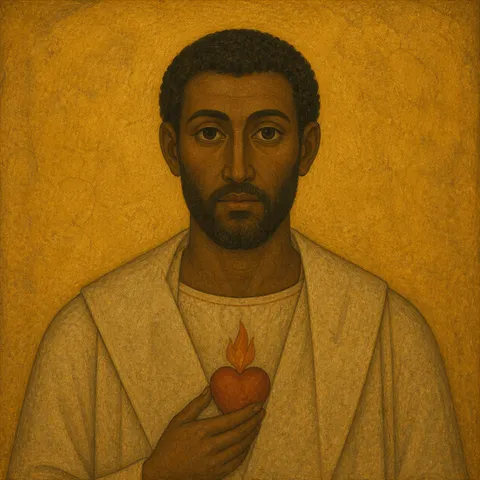 Augustine of Hippo
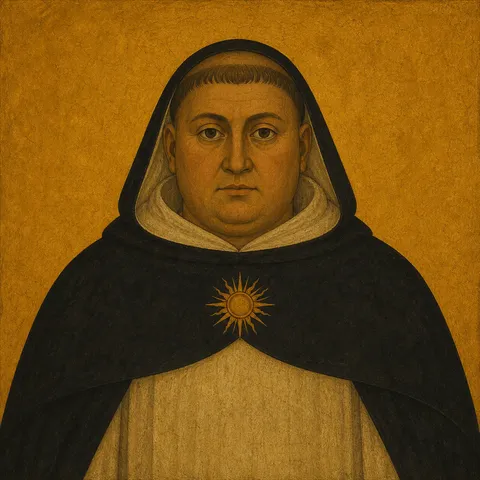 Thomas Aquinas
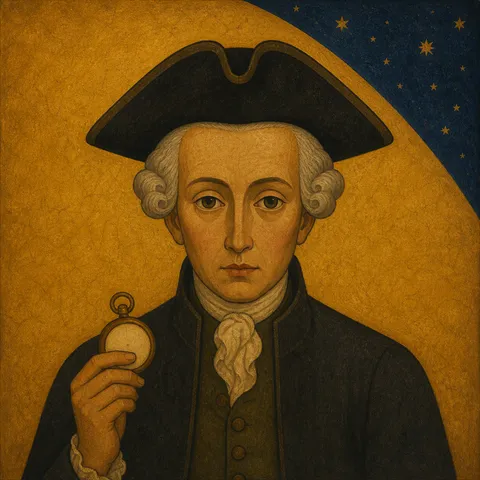 Immanuel Kant
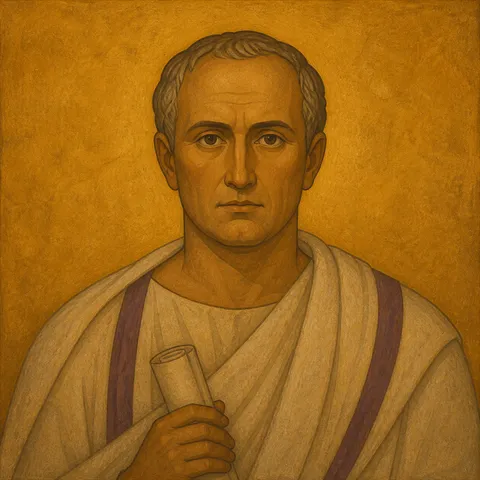 Marcus Tullius Cicero
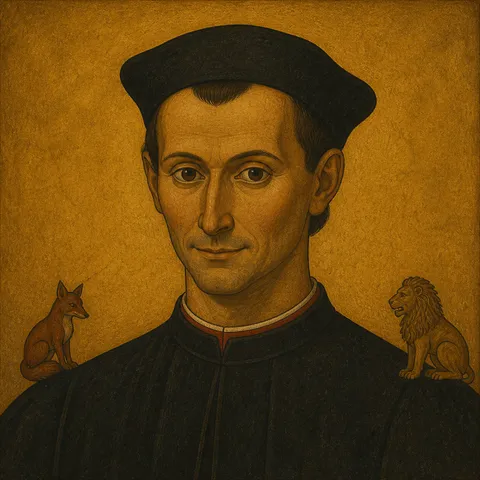 Niccolò Machiavelli
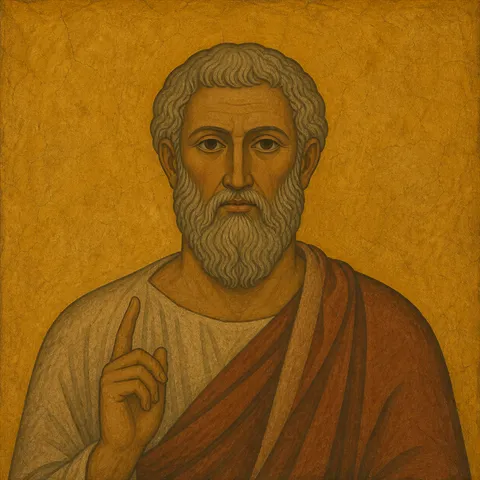 Plato
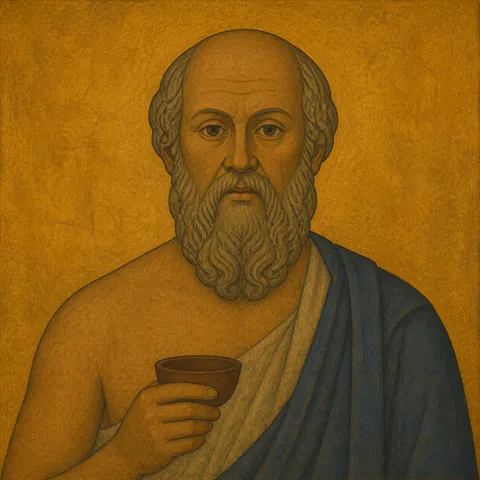 Socrates
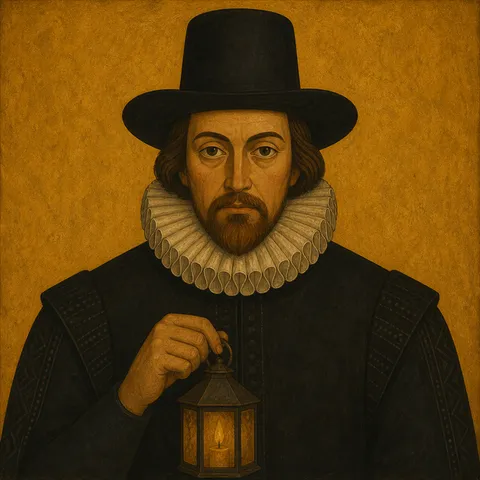 Francis Bacon
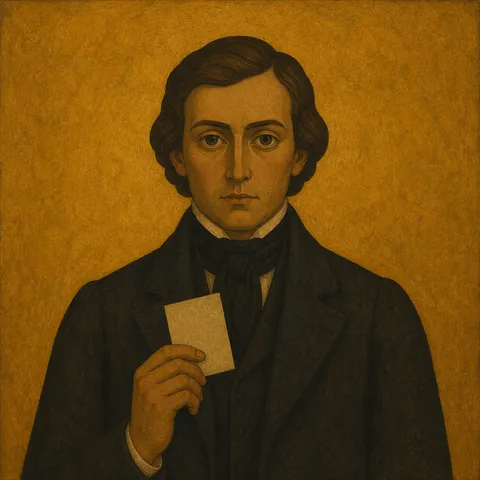 John Stuart Mill
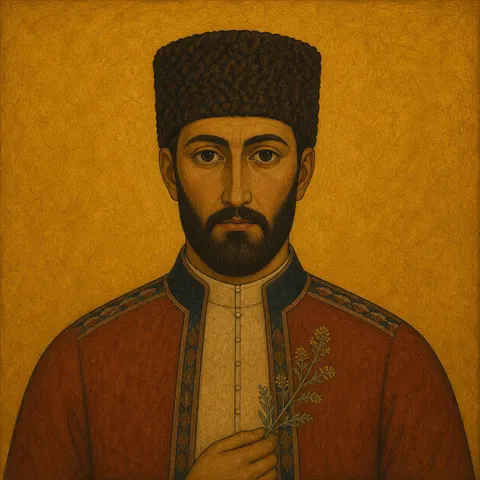 Jean-Jacques Rousseau
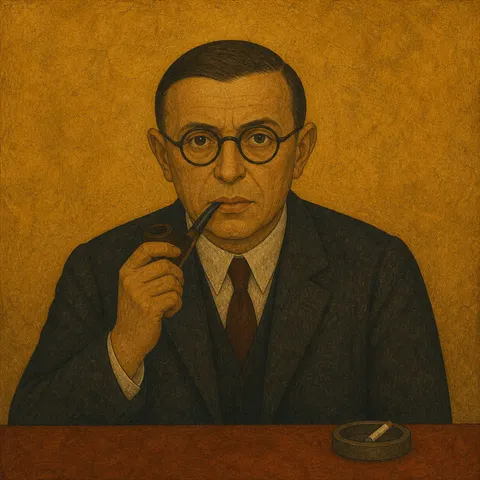 Jean-Paul Sartre
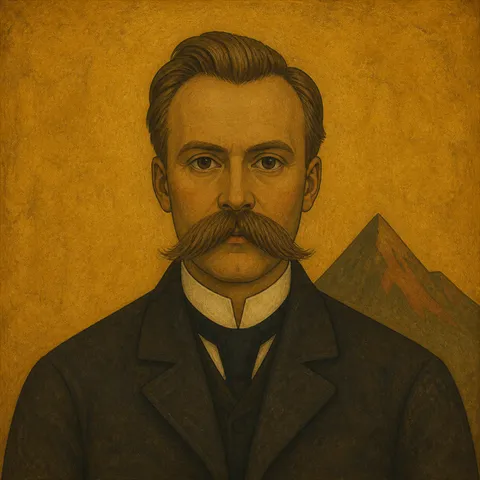 Friedrich Nietzsche