The question never shows up in a library. It arrives in a bad week, at a church wedding, when the table starts mocking believers, or when a child asks straight out and waits. You already have your answer, and it rarely sounds like yes or no. More often it sounds like a silence in which you cannot tell whom you are listening to.
YOUR COMPASS ON THIS ROUTE
STATION 1 / 12
A child asks whether God exists. You say that you do not know.
Socrates never said there are no gods. At his trial he denied the charge of impiety itself and pointed to his daimonion – a voice that stopped him before a wrong act and never once advised him in advance. His wisdom rested on a single discovery: he went round the craftsmen of Athens and found that each considered himself an expert in matters he had never studied, while he himself knew exactly what he did not know. So 'I do not know' carries the weight of an act in his mouth. It has to be said out loud, and then you have to hold the pause in which your listener waits for something finished. Socrates paid for such pauses all his life and finally paid with the cup. When a child asks whether God exists and you answer that you do not know, he asks the next question – and what have you done to find out?
Democritus, working with Leucippus, offered the boldest answer the pre-Socratics produced: the world consists of indivisible particles moving through void, and colour and warmth are what happens when those particles meet us. He did not throw the gods out of the world; he took their work away. The soul in his account is atomic too, finer than the rest, and at death it scatters, which is why the next world needs no fearing. He reached this by argument alone, with no instrument in his hands: if change is real and matter is conserved, then only the arrangement of indestructible building blocks can change. Antiquity nicknamed him the Laughing Philosopher, and that matters – a world picture without gods did not make him bleak. Say that science will sooner or later explain everything now credited to God, and you stand with him, twenty-four centuries before anyone saw an atom.
Paul staked everything on one event. In the fifteenth chapter to the Corinthians he lists the witnesses of the resurrection, gives a number – more than five hundred – and adds that most of them are still alive, meaning they can be asked. Then comes a sentence sharper than anything his opponents produced: if Christ be not risen, our preaching is vain and your faith is vain. He offers no consoling religion for the case where the fact never happened. In the same chapter he calls the apostles' lives the most pitiable of all lives, supposing there is no hope. He wrote this with the stoning at Lystra and a night in the Philippi jail already behind him. Say you would live more strictly for the sake of seeing your family after death, and you are counting in his order: the fact first, the strictness after.
And if Christ be not risen, then is our preaching vain, and your faith is also vain.
Augustine spent ten years as a Manichee over precisely this question, and he left the sect when he stopped believing in two equal powers dividing the world. His answer breaks the question apart: evil is not a thing. It has no nature of its own and exists as the absence of a good that should have been there, the way blindness is an absence of sight with no substance of its own. Asking where God got evil from becomes, on this logic, like asking where a hole came from. Then comes the harder half: the absence enters the world through a will created free, and a will capable only of good would not be free. Augustine does not strike children's suffering from the ledger, and he stops there himself: in his treatise on free choice he writes more than once that he cannot properly judge the matter. Say that this pain closes the question, and you are standing where he stopped.
Aquinas held that God's existence can be shown without the Bible, and he started from what anyone can see: some things in the world are in motion. Motion means a passage from potency to act, and only something already actual can bring that passage about; so whatever moves is moved by something else. The series does not run to infinity, because then there is no first mover and consequently no other mover either, as a staff moves nothing without a hand. The caution is his own: he proves that God is, and immediately adds that what God is lies beyond the reach of reason. Out of the five ways he built neither a doctrine that the world began in time nor a denial of it. If a universe without a beginning is easier for you to picture than the one who began it, Aquinas agrees about the picturing. He says the work here is a conclusion, and imagination has no part in it.
Therefore it is necessary to arrive at a first mover, put in motion by no other; and this everyone understands to be God.
Pascal wrote the wager for one particular person – a worldly friend who wanted to believe and could not. Reason, he concedes at once, proves nothing here, neither that God is nor that God is not. From there comes the move you cannot dodge: the bet is already placed, since you live one way or another, and no third option of abstaining is on offer. Then the arithmetic he invented himself: a finite stake against an infinite gain. And immediately the advice usually skipped over – begin with the action, do what a believer does, and belief will follow, because habit inclines the machine of the body before it persuades the mind. Say you would give ten years for certainty, and Pascal answers that certainty is not sold in this shop. He offers what there is.
Yes; but you must wager. It is not optional. You are embarked.
Hume built his attack on miracles out of the mechanics of testimony alone. We believe a witness because experience shows that people usually tell the truth. The same experience shows that the laws of nature hold without exception. So when a witness reports a miracle, two bodies of experience stand against each other, and a sober person weighs which is less likely – that the witness erred, or that nature paused. Hume adds a detail that makes the argument nastier: miracles, on his survey, cluster among unlettered peoples and in ancient times, and every religion has its own, so they cancel each other out. He nearly exposed the weak joint himself: everything rests on past experience being the measure of the possible, and causation for him is a habit of our minds. Say that every story of a miracle has a simpler explanation, and you are weighing on his scales.
In 1927 Russell delivered a lecture in South London called 'Why I Am Not a Christian' and named fear as the chief source of religion – fear of the unknown and fear of death. He took the arguments from a first cause apart one by one and insisted that the same hole sits in each: if everything must have a cause, then so must God. His central charge, though, lay outside logic. The churches, he wrote, had been the stubbornest opponents of every moral advance he could name, and it is that account which drives people away from them. Russell paid for his own convictions twice: in 1916 Trinity College dismissed him for pacifism, and then he served six months in prison. Say that the church repels you more than it calls you, and Russell answers that you are reading its accounts, and suggests reading to the end.
In the last months of his life Kierkegaard published a broadsheet called The Moment, in which he called the Danish state church a counterfeit. His charge was aimed at the system: where everyone in a country is a Christian from birth, Christianity costs nothing, and the word loses its content. Faith for him begins where thought breaks off, and it asks for a leap you make yourself, without a guarantee and without company. Sunday respectability was therefore more dangerous to him than open unbelief, since an unbeliever at least knows where he stands. He died a few weeks after the last issue, having spent what was left of his father's money on it, and at the funeral his nephew demanded to speak against the church that was burying him. Say you would give the church one boring Sunday a month, and he asks about the boredom – what you are doing there while bored.
Nietzsche held that European morality stands on a foundation already carted away. 'God is dead' reads in him like a bulletin about an event whose consequences nobody has yet totalled. He pointed at the decent unbelievers of his own century: they kept pity for the weak and truthfulness at any cost, and both demands arrived from the Gospel. Nature issues no such demands, and in that sense their decency is on loan. Nietzsche himself called this morality slavish and wanted every value revalued, which makes him a poor ally for the people who quote him approvingly. The bill, he promised, would come due in two centuries. Say that an unbeliever's decency is borrowed, and you are repeating his diagnosis – and you have to decide whether you are taking his medicine along with it.
In 1948 Camus went to the Dominican monastery on the rue Latour-Maubourg and opened by saying that he did not share their hope and would not pretend to. Then came something they had not expected: a person is not obliged to choose between the church and hostility to it, because there is work in common – saying out loud when a child is being tortured. The Myth of Sisyphus shows why he held that particular line. He called the leap of faith a philosophical suicide: someone who has run into the absurd has the right to stay with it, and the betrayal lies precisely in escaping into a ready answer. The absurd in Camus lives only as long as a person refuses to resolve it. So repeating the words of a rite along with everyone else counts for him as the same escape, bought cheaper. Standing in a church at a wedding, saying lines that are not yours, you meet his one question – did you notice that you were saying them?
Lewis opened The Abolition of Man with a school textbook in which two boys were taught that a man calling a waterfall sublime is only reporting his own feelings. Against this he set an old thesis: affections can be fitting or unfitting to their object, and education consists in teaching a child to love what deserves love before the child can argue about it. Aristotle called this habituation, and Lewis showed the cost of losing it: a person with untrained affections grows up hollow in the middle and is then surprised to find traitors among his own. Rite, in this frame, does its work before proof arrives. Say that children should be taught prayers early and left to choose later, and you stand with him – and you take on showing that the choosing will really come.
The deck pulls you between two lines. One demands a proof and keeps the question open until the proof arrives; the other says the bet is placed already by the way you live, so there is nothing to wait for. Each pays its own price: the first risks spending a life in a waiting room, the second believing before it has checked. Your swipes have already placed you somewhere along that line, nearer Hume or nearer Pascal. Two records stand open. 'The House of Faith' shows reason climbing upward; 'Pascal's Fire' shows a heart that has already decided.
SOURCES
Paul of Tarsus, 1 Corinthians 15:14 (King James Version) (tr.: укр. ред.) · en.wikisource.org
Thomas Aquinas, Summa Theologiae, I, q. 2, a. 3 (tr.: Fathers of the English Dominican Province; укр. ред.) · www.ccel.org
Pascal, Pensées, 233 (tr.: W. F. Trotter; укр. ред.) · www.ccel.org
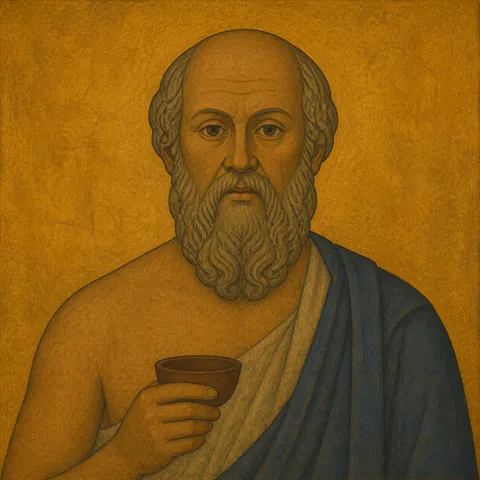 Socrates
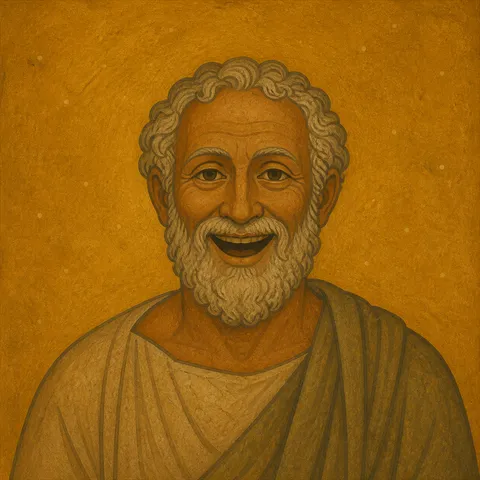 Democritus
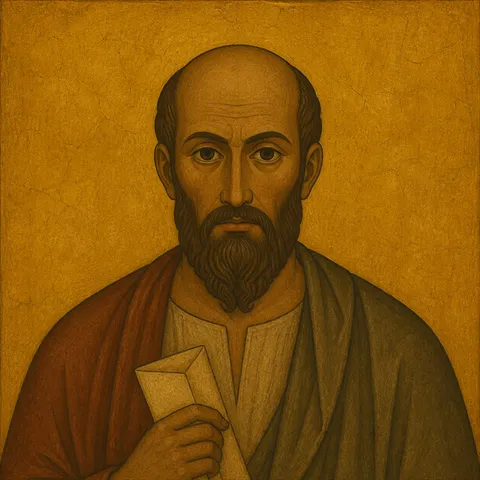 Paul of Tarsus
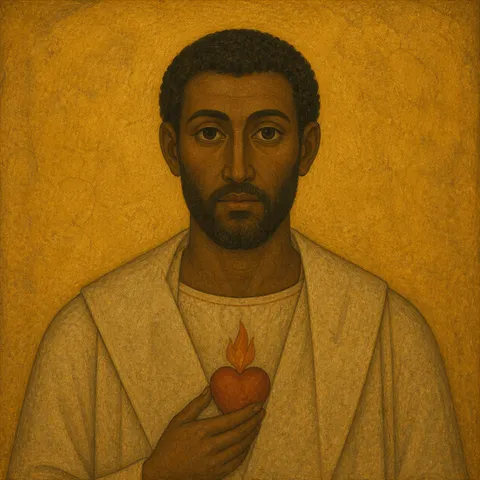 Augustine of Hippo
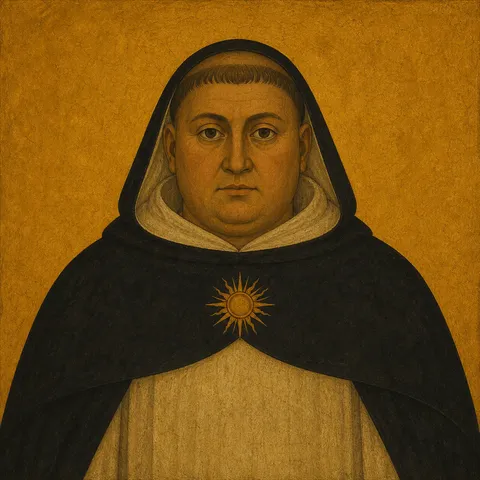 Thomas Aquinas
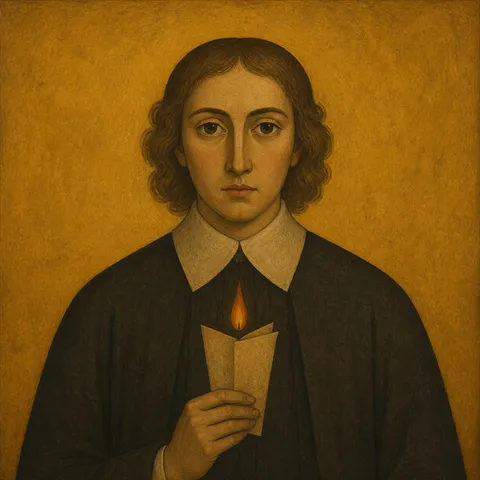 Blaise Pascal
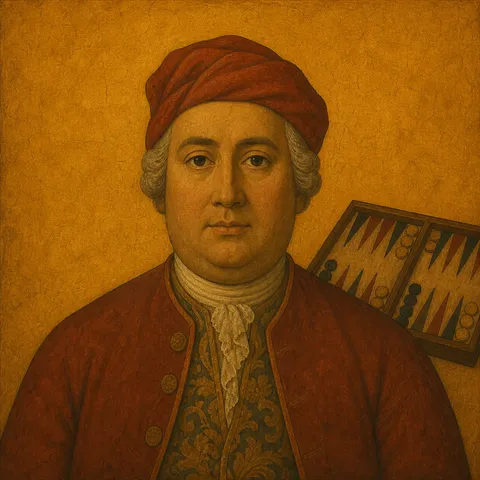 David Hume
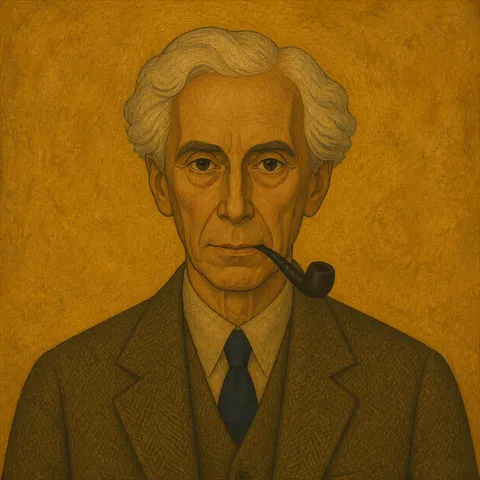 Bertrand Russell
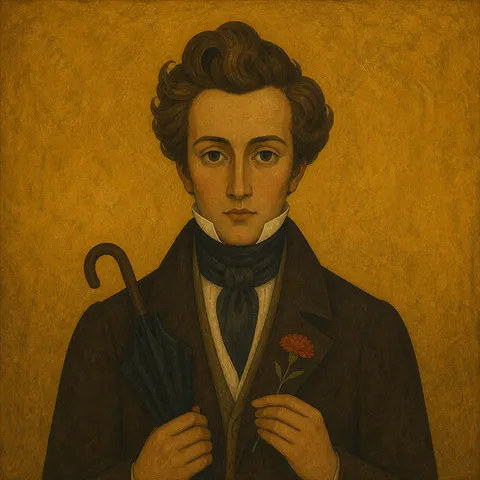 Søren Kierkegaard
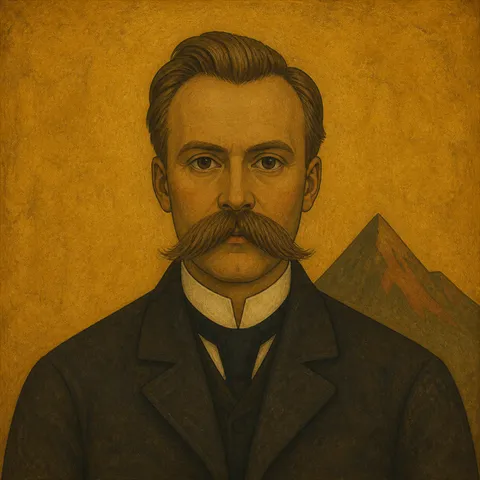 Friedrich Nietzsche
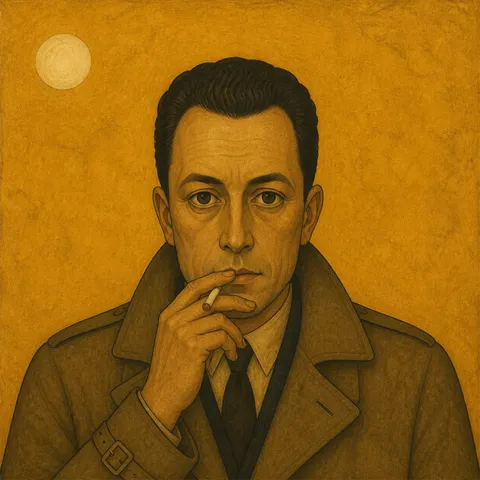 Albert Camus
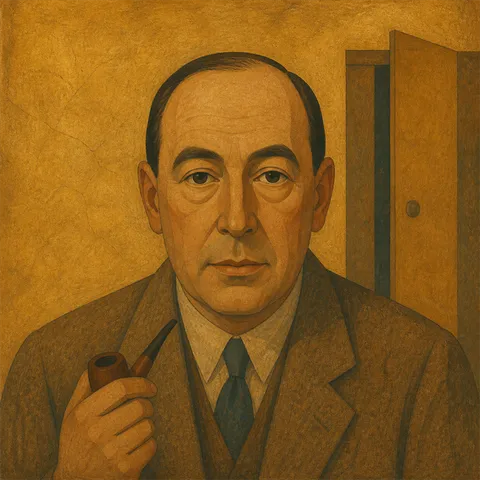 C. S. Lewis